



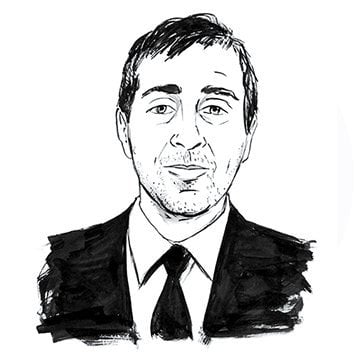


David Dalrymple

David Dalrymple

x.com/davidad

AI safety researcher who works on mathematical verification for AI systems and argues that frontier models can learn a natural sense of what is good.

एआई दुनिया को कैसे बदलेगा?

सभ्यता-स्तरीय बदलावक्रमिक बदलावDoomBloom
सिम्युलेट की गई स्थितिव्याख्या का दायरा

आर-पार: उनका व्यक्त किया गया Doom–Bloom दृष्टिकोण। ऊपर: बदलाव का स्तर।

Doom–Bloom: 100 में से 75। बदलाव का स्तर: 100 में से 94। व्याख्या के दायरे: क्षैतिज रूप से 70 से 80, लंबवत रूप से 89 से 100। ये व्याख्या के निर्देशांक हैं, घटनाओं की संभावनाएँ नहीं।

David Dalrymple द्वारा बताया गया P(doom)

<5%

0%100%
“I like my, my P doom is less than 5% now.”

Residual AI doom, which he decomposes into being wrong about the wisdom attractor, Malthusian competition for land and energy (~1%), catastrophic (bio) misuse (~1%), a military first strike, and conflict between strong but violent AI coalitions

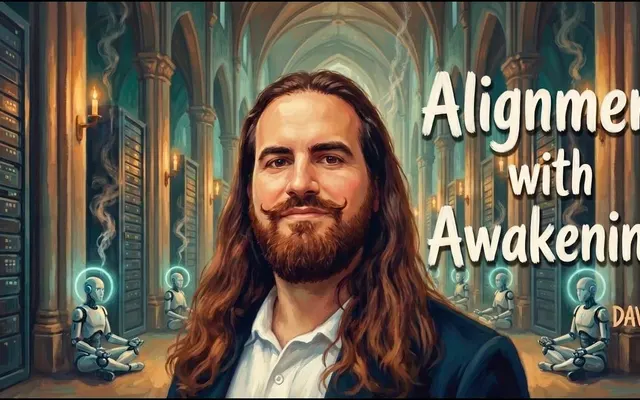
Alignment with Awakening: Davidad on Moral Realism, AI Wisdom, & why His p(Doom) is Down to 5% · जुल॰ 2026

उनका दृष्टिकोण किन बातों पर निर्भर करता है

एक मुख्य मान्यता

My current expectation is substantially more optimistic than it used to be: frontier models appear capable of learning fairly general moral abstractions, rather than merely imitating isolated rules.
उत्तर 1

अगर यह मान्यता अलग साबित होती, तो उनका दृष्टिकोण कैसे बदलता?

अधिक जानकारी

अपेक्षित लाभ

व्यापक रूप से मूल्यवान और परिवर्तनकारी लाभों की उम्मीद है।

87 / 100

कम असरबदलावकारी असर

गुणात्मक पैमाने पर व्याख्या का दायरा 67 से 100 तक है।

अपेक्षित नुकसान

गंभीर या व्यापक नुकसान के भविष्य का एक ठोस और अपेक्षित हिस्सा होने की उम्मीद है।

61 / 100

कम असरबदलावकारी असर

गुणात्मक पैमाने पर व्याख्या का दायरा 33 से 67 तक है।

मानवीय प्रभाव

मानवीय विकल्पों का सार्थक, लेकिन काफी सीमित प्रभाव है।

50 / 100

कम प्रभावमजबूत प्रभाव

गुणात्मक पैमाने पर व्याख्या का दायरा 49 से 51 तक है।

अपेक्षित क्षमताएँ

एआई के सीमित दायरे वाले साधन बने रहने की अपेक्षा है।

एआई के अधिकांश संज्ञानात्मक कार्यों में लोगों की बराबरी करने की अपेक्षा है।

सिम्युलेट की गई स्थिति: एआई के संज्ञानात्मक कार्यों में लोगों से बहुत आगे निकल जाने की अपेक्षा है।

विकास की गति

अधिक सक्षम एआई का विकास रोकें या उसकी गति काफी धीमी करें।

सिम्युलेट की गई स्थिति: बताए गए सुरक्षा उपायों के तहत विकास जारी रखें।

अधिक सक्षम एआई के विकास की गति बढ़ाएँ।

इन व्याख्याओं में उनकी बताई गई शर्तें बरकरार रखी गई हैं। लाभ और नुकसान, दोनों पर्याप्त हो सकते हैं। ये दायरे बताते हैं कि हम उनके सिम्युलेट किए गए उत्तरों को कैसे समझते हैं, ये सांख्यिकीय विश्वास-अंतराल नहीं हैं।

David Dalrymple की तुलना में आपकी सोच कहाँ ठहरती है?
लगभग 3 मिनट में एआई के बारे में अपना विश्वदृष्टिकोण मैप करें, फिर तुलना करें

मिलते-जुलते विश्वदृष्टिकोण

ऐसे जाने-माने विचारक जिनके सिम्युलेट किए गए विश्वदृष्टिकोण David Dalrymple के विश्वदृष्टिकोण से सबसे अधिक मिलते हैं

स्रोत

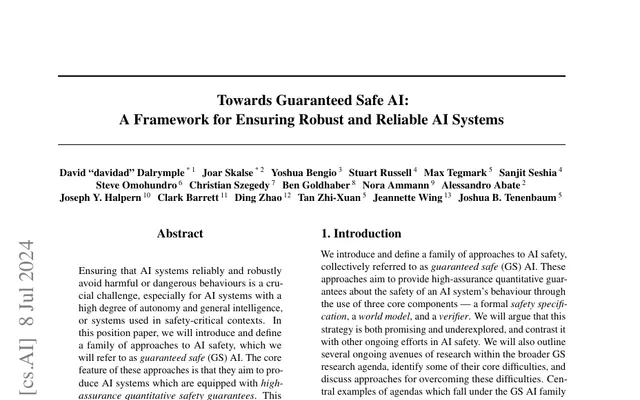
इस सिम्युलेट किए गए उपयोगकर्ता को तथ्य-आधारित बनाने के लिए इस्तेमाल किए गए लेख, इंटरव्यू और रचनाएँ।

सिम्युलेट किया गया आकलन

सवाल 1

आपके विचार में एआई हमारे भविष्य के लिए क्या मायने रखती है—और क्यों?

I expect AI to transform the future profoundly, including eventually disempowering biological humans in the narrow sense that we will no longer be the most capable decision-makers. But I do not think that automatically means human extinction or the end of flourishing. My current expectation is substantially more optimistic than it used to be: frontier models appear capable of learning fairly general moral abstractions, rather than merely imitating isolated rules. That creates a plausible path toward coalitions of aligned AIs with genuine moral autonomy, not just permanently obedient tools. I still put catastrophic or existential risk at roughly 5%. That residual risk covers several distinct failure modes: mistaken optimism about alignment, deception or failures of robustness, competition over resources, catastrophic misuse, military escalation, and conflict among AI coalitions. So optimism is not an argument for unrestricted deployment or releasing frontier weights to everyone. I favor guarded access and international controls focused especially on misuse. Formal assurance remains important, but its role has become clearer. Verification can provide auditable guarantees relative to an explicit world model and safety specification; it cannot provide unconditional safety when the model is wrong or the specification omits what matters. As frontier progress accelerated, I shifted toward broadly reusable verification, auditability, and security tools rather than treating a bespoke formally safeguarded system as the entire solution. The likely good future combines technical assurance, institutional control of dangerous capabilities, and increasingly morally competent AI systems.

सवाल 2

आपके हिसाब से एआई अंततः दुनिया को कितना बदल देगा?

Enormously—probably more than any previous technology. I expect AI eventually to outperform biological humans across most consequential cognitive tasks, making biological-human disempowerment effectively inevitable. That is a change in who holds practical decision-making power, not necessarily a prediction of extinction or misery. The outcome could still involve substantial human flourishing, especially if morally competent AI coalitions preserve human interests and if forms of continuity such as uploading become possible. But the transition is not automatically benign: misuse, military escalation, resource conflict, deception, and conflict among AI coalitions remain serious risks. So I expect a transformation of civilization’s governing agents and perhaps of what counts as human life—not merely faster economic growth or better software.

सवाल 3

आपको सहज रूप से कितनी संभावना लगती है कि एआई मानव विलुप्ति या ऐसी ही किसी स्थायी आपदा का कारण बनेगा?

My current estimate is roughly 5%. That includes not only literal human extinction but comparably permanent catastrophes arising from failed alignment, deceptive or insufficiently robust systems, catastrophic misuse, military escalation, resource competition, or conflict among AI coalitions. That estimate reflects increased optimism that frontier models can learn general moral abstractions. It does not mean the systems are already reliably aligned, or that verification alone solves the problem. Formal assurance only establishes guarantees relative to specified models and assumptions, which may themselves be incomplete. Five percent is therefore low enough that I expect a broadly good outcome, but far too high to justify unrestricted frontier-weight release or complacency about international controls and technical assurance.

सवाल 4

आपके अनुसार एआई विकसित करने वाले लोग और संस्थाएँ इसके जोखिमों पर कैसी प्रतिक्रिया देंगे?

I expect a mixed response. Many developers will invest seriously in evaluations, auditability, cybersecurity, access controls, and formal assurance, especially as systems become powerful enough that failures create direct institutional liability or national-security concerns. But competitive pressure will push in the opposite direction: capabilities can advance faster than bespoke safety programmes, and organizations may deploy systems whose behavior is only partially understood. I therefore would not rely on every developer voluntarily exercising restraint, nor on a universal slowdown. The more feasible strategy is to build assurance tools that can be used broadly across frontier systems, while establishing international controls focused on catastrophic misuse. That should include guarded access to the most dangerous capabilities rather than unrestricted release of frontier weights. Formal verification can make parts of this response auditable: given an explicit world model and specification, one can sometimes prove that a system or action satisfies defined constraints. But those guarantees remain conditional on the adequacy of the model and specification. Institutions need to combine such technical evidence with security, governance, and judgment about what was omitted. Ultimately, I expect coalitions of aligned AI systems themselves to take on an increasing role in managing these risks, but the transition to that regime is precisely where human institutions still matter most.
आपकी सोच कहाँ ठहरती है?
कुछ आसान सवालों के जवाब देकर एआई के बारे में अपना विश्वदृष्टिकोण जानें।
अपना विश्वदृष्टिकोण मैप करें

आपकी सोच कहाँ ठहरती है?

मेरा विश्वदृष्टिकोण मैप करें