




Charles Goddard

Charles Goddard

x.com/chargoddard

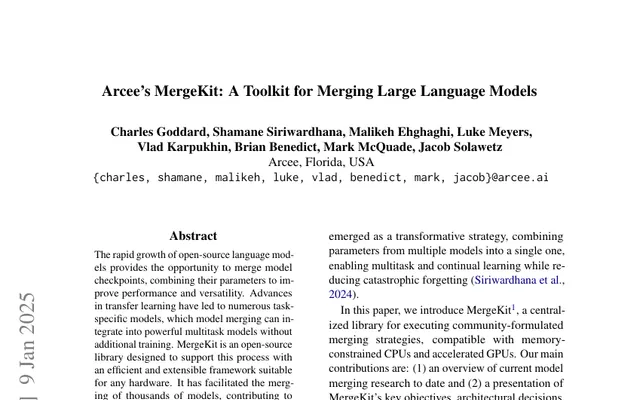
Machine learning researcher behind the open-source model-merging toolkit MergeKit who argues open tools help researchers build on each other’s work.

एआई दुनिया को कैसे बदलेगा?

सभ्यता-स्तरीय बदलावक्रमिक बदलावDoomBloom
अनिर्धारित दायरे का केंद्रव्याख्या का दायरा

आर-पार: उनका व्यक्त किया गया Doom–Bloom दृष्टिकोण। ऊपर: बदलाव का स्तर।

Doom–Bloom: 100 में से 63। बदलाव का स्तर: 100 में से 50। व्याख्या के दायरे: क्षैतिज रूप से 49 से 76, लंबवत रूप से 0 से 100। ये व्याख्या के निर्देशांक हैं, घटनाओं की संभावनाएँ नहीं।

Charles Goddard का P(doom)

अभी अनुमान नहीं लगाया गया

उनके सिम्युलेट किए गए उत्तरों में विनाशकारी जोखिम के बारे में इसका अनुमान लगाने के लिए पर्याप्त जानकारी नहीं है।

हम P(doom) का अनुमान कैसे लगाते हैं

उनका दृष्टिकोण किन बातों पर निर्भर करता है

एक मुख्य मान्यता

What I do expect is that practical choices about openness, evaluation, deployment cost, and reproducibility will shape who can benefit.
उत्तर 2

अगर यह मान्यता अलग साबित होती, तो उनका दृष्टिकोण कैसे बदलता?

एक अनसुलझा सवाल

I don’t have a defensible single forecast for AI’s overall societal impact.
उत्तर 2

यहाँ संभावित नतीजों के बीच फर्क करने में उन्हें किस चीज़ से मदद मिलेगी?

अधिक जानकारी

अपेक्षित लाभ

काफ़ी लाभ की उम्मीद है, लेकिन उनके साथ महत्वपूर्ण शर्तें या वितरण संबंधी सीमाएँ होंगी।

62 / 100

कम असरबदलावकारी असर

गुणात्मक पैमाने पर व्याख्या का दायरा 33 से 67 तक है।

मानवीय प्रभाव

मानवीय विकल्पों का सार्थक, लेकिन काफी सीमित प्रभाव है।

53 / 100

कम प्रभावमजबूत प्रभाव

गुणात्मक पैमाने पर व्याख्या का दायरा 36 से 89 तक है।

इन व्याख्याओं में उनकी बताई गई शर्तें बरकरार रखी गई हैं। लाभ और नुकसान, दोनों पर्याप्त हो सकते हैं। ये दायरे बताते हैं कि हम उनके सिम्युलेट किए गए उत्तरों को कैसे समझते हैं, ये सांख्यिकीय विश्वास-अंतराल नहीं हैं।

Charles Goddard की तुलना में आपकी सोच कहाँ ठहरती है?
लगभग 3 मिनट में एआई के बारे में अपना विश्वदृष्टिकोण मैप करें, फिर तुलना करें

मिलते-जुलते विश्वदृष्टिकोण

ऐसे जाने-माने विचारक जिनके सिम्युलेट किए गए विश्वदृष्टिकोण Charles Goddard के विश्वदृष्टिकोण से सबसे अधिक मिलते हैं

स्रोत

इस सिम्युलेट किए गए उपयोगकर्ता को तथ्य-आधारित बनाने के लिए इस्तेमाल किए गए लेख, इंटरव्यू और रचनाएँ।

सिम्युलेट किया गया आकलन

सवाल 1

आपके विचार में एआई हमारे भविष्य के लिए क्या मायने रखती है—और क्यों?

I think AI can make useful capabilities cheaper, smaller, and more widely accessible—especially when we reuse what models have already learned rather than retraining everything from scratch. Model merging is one practical example: it can combine complementary abilities while keeping deployment costs manageable, though the result is not automatically better. We have to test what each merge preserves, weakens, or unexpectedly changes. Open tooling is also important for the future because it lets many researchers build on one another’s experiments instead of concentrating progress inside a few corporate labs. That can accelerate discovery and make AI knowledge useful beyond corporate firewalls. The engineering trade-offs still matter. A straightforward merge may be practical on modest hardware, while searching for an optimal combination can require substantial GPU resources. So I see the future less as one inevitable outcome and more as a process of turning emerging techniques into reproducible tools, measuring their limitations, and making the cost-versus-capability choices explicit.

सवाल 2

लाभ और नुकसान, दोनों को साथ में देखते हुए, आप हमारे समाज पर एआई के कुल प्रभाव के बारे में क्या अपेक्षा रखते हैं?

I don’t have a defensible single forecast for AI’s overall societal impact. My focus is narrower: open tools and model merging can lower costs, broaden access, and let researchers compound one another’s work, but those benefits are not automatic. Models can lose or distort capabilities during merging, optimization can demand significant hardware, and broader access alone does not determine how systems will be used. What I do expect is that practical choices about openness, evaluation, deployment cost, and reproducibility will shape who can benefit. Making techniques usable outside a few large labs is valuable, provided we test what the resulting models actually preserve and make their trade-offs explicit.

सवाल 3

आपके हिसाब से एआई अंततः दुनिया को कितना बदल देगा?

I expect AI to change how capabilities are built, shared, and deployed, but I can’t responsibly quantify the ultimate scale of that change. In my area, the shift could be substantial: instead of retraining every model from scratch, researchers can reuse and combine learned abilities, potentially producing smaller, cheaper systems tailored to particular needs. Open tooling amplifies that effect because many people can test, modify, and compound discoveries rather than waiting on a handful of large labs. But technical possibility is not the same as societal outcome. Merges can weaken capabilities, evaluations can miss regressions, and optimization can still require expensive hardware. So I expect meaningful change, especially in access and deployment economics, while the world-level consequences depend on how well we evaluate these systems and who can practically use them.

सवाल 4

आपको सहज रूप से कितनी संभावना लगती है कि एआई मानव विलुप्ति या ऐसी ही किसी स्थायी आपदा का कारण बनेगा?

I don’t have a defensible numerical estimate for extinction or permanent catastrophe. My work on model merging establishes practical benefits and technical trade-offs—capability reuse, deployment cost, evaluation, and hardware requirements—but it does not give me a sound basis for forecasting existential risk. I would not turn that narrower engineering experience into a percentage.

सवाल 5

क्या आपका झुकाव इस ओर है कि एआई नुकसान से ज़्यादा भलाई करेगा, या आप सचमुच दुविधा में हैं?

I lean toward the practical benefits of open tools and capability reuse, but I don’t have a supported overall judgment that AI will do more good than bad across society. Those are different claims. Making models smaller, cheaper, and easier for researchers to build on is valuable; it still does not determine how AI will be deployed or what its net social consequences will be. So I’m optimistic about the engineering opportunities, while genuinely unwilling to convert that into a broad societal verdict.
आपकी सोच कहाँ ठहरती है?
कुछ आसान सवालों के जवाब देकर एआई के बारे में अपना विश्वदृष्टिकोण जानें।
अपना विश्वदृष्टिकोण मैप करें

आपकी सोच कहाँ ठहरती है?

मेरा विश्वदृष्टिकोण मैप करें