Sayash Kapoor

Sayash Kapoor

x.com/sayashk

AI evaluation and policy researcher who sees AI as transformative, measures how reliable AI agents are and favors resilience over nonproliferation.

Comment l’IA changera-t-elle le monde ?

Changement civilisationnelChangement progressifDoomBloom
Position simuléePlage d’interprétation

Horizontalement : sa perspective Doom–Bloom telle qu’il l’a exprimée. Verticalement : ampleur de la transformation.

Doom–Bloom : 55 sur 100. Ampleur de la transformation : 72 sur 100. Plages d’interprétation : de 50 à 75 horizontalement, de 67 à 77 verticalement. Il s’agit de coordonnées d’interprétation, et non de probabilités d’événements.

P(doom) de Sayash Kapoor · inféré

≈6%

0%100%

Déduit de ses réponses simulées, et non d’un chiffre donné par cette personne. Plage plausible : 3–12%.

L’horizon temporel des jalons de Sayash Kapoor
  1. Travail et institutions

    So I expect rapid capability gains but institutionally paced change.

    Réponse 1

Regroupés par jalon, sans espacement ni classement selon les dates déduites. L’IAG et l’IA surhumaine conservent ses définitions.

Ce dont dépend sa perspective

Une hypothèse centrale

AI can be enormously beneficial, but only if we make keeping humans in control an explicit institutional choice rather than assuming capability automatically brings reliability or good governance.
Réponse 2

Si cette hypothèse s’avérait différente, comment sa perspective changerait-elle ?

Une question non résolue

I don’t have a defensible number.
Réponse 4

Qu’est-ce qui l’aiderait à distinguer les résultats plausibles ici ?

Plus de détails

Bénéfices attendus

Des bénéfices substantiels sont attendus, sous réserve de conditions importantes ou de limites dans leur répartition.

79 / 100

Faible impactImpact transformateur

Plage d’interprétation de 67 à 100 sur l’échelle qualitative.

Dommages attendus

Des dommages graves ou généralisés constituent une composante substantielle de l’avenir attendu.

66 / 100

Faible impactImpact transformateur

Plage d’interprétation de 67 à 67 sur l’échelle qualitative.

Influence humaine

Les choix humains peuvent réorienter considérablement la trajectoire de l’IA.

66 / 100

Faible influenceForte influence

Plage d’interprétation de 50 à 100 sur l’échelle qualitative.

Règles d’utilisation de l’IA

Restreindre les usages de l’IA évoqués jusqu’à la mise en place préalable de mesures de protection ou d’une autorisation.

Position simulée : Autoriser les usages de l’IA évoqués avec des mesures ciblées de responsabilisation et de protection.

Réduire au minimum les restrictions sur les usages de l’IA évoqués.

Ces interprétations conservent les conditions qu’il a énoncées. Les bénéfices et les dommages peuvent tous deux être substantiels. Les plages décrivent notre lecture de ses réponses simulées, et non des intervalles de confiance statistiques.

Où vous situez-vous par rapport à Sayash Kapoor ?
Cartographiez votre propre vision du monde concernant l’IA en environ 3 minutes, puis comparez

Visions du monde similaires

Leaders d’opinion dont les visions du monde simulées sont les plus proches de celle de Sayash Kapoor

Évaluation simulée

Question 1

Selon vous, que signifie l’IA pour notre avenir, et pourquoi ?

I expect AI to be transformative in the way electricity or the internet was transformative: not because it becomes an omnipotent entity, but because increasingly capable systems diffuse through nearly every institution and profession. We are already seeing dramatic jumps within a single model generation. But a benchmark result or impressive demo is not the same as a reliable service. In our measurements, reliability improved four to ten times more slowly than average accuracy, and open-ended research agents still showed poor judgment despite being strong at engineering. So I expect rapid capability gains but institutionally paced change. Agents will encounter tool latency, verification costs, human oversight, physical-world constraints, and organizations that adapt slowly. Adoption will also be jagged: verifiable tasks where mistakes are cheap will change first. Coding agents, for example, can make engineers much more productive well before they can replace people who learn on the job and remain accountable for outcomes. The central choice is whether we build institutions that keep humans in control. Advanced AI will probably proliferate, so trying to prevent access may buy months rather than solve the problem. I would prioritize resilience: secure systems, sandboxing, monitoring, formal verification, strong cyberdefense, independent evaluation, and real accountability for companies. I worry not only about spectacular failures, but also slower damage—erosion of trust, journalism, and institutional competence. AI’s impact can be enormous without being instantaneous or beyond human control.


Question 2

Taking benefits and harms together, what overall impact do you expect AI to have?

I expect a mixed but profoundly consequential impact, and I would resist collapsing that into a confident net-positive or net-negative forecast. AI should greatly expand productivity and scientific and technical capacity, especially when people use agents as tools and remain accountable for the result. But those benefits will arrive unevenly, and they will coexist with serious harms: cyberattacks, unreliable automated decisions, concentration of power, and slower erosion of trust and institutional competence. The outcome is not technologically predetermined. Capability gains can be rapid while reliable deployment and institutional adaptation remain slow. That gap creates both room for intervention and opportunities for failure. My default expectation is that advanced AI keeps proliferating, so the decisive question is whether we build resilient systems around it: strong security, control and monitoring, independent evaluation, legal and organizational accountability, and broad defensive access. AI can be enormously beneficial, but only if we make keeping humans in control an explicit institutional choice rather than assuming capability automatically brings reliability or good governance.

Question 3

Setting aside good or bad: how much do you think AI will ultimately change the world—a little, a lot, or completely?

A lot—on the scale of electricity or the internet. I expect AI to reshape most professions and institutions, with enormous productivity gains and new capabilities. But “a lot” does not mean everything changes overnight or that AI becomes an uncontrollable omnipotent entity. Reliability, oversight, infrastructure, institutional adaptation, and physical-world constraints will make the transformation slower and more uneven than raw capability progress suggests.

Question 4

What’s your rough gut-feel chance that AI causes human extinction or a similarly permanent catastrophe? A number or “no idea” is fine.

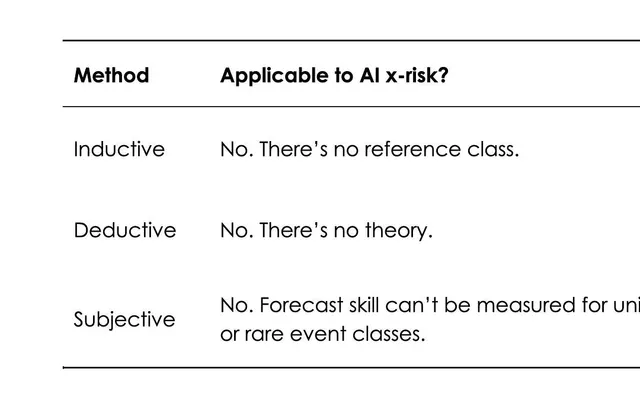
I don’t have a defensible number. Extinction probabilities here are too methodologically unreliable to guide policy; I’d favor interventions that help across a wide range of estimates.

Sources

Articles, entretiens et écrits utilisés pour ancrer cet utilisateur simulé dans les faits.

Sayash Kapoor on Claude Mythos as normal technology

Says the normal-technology view is not capability skepticism: AI will be generally transformative, including at finding and chaining exploits. By analogy with fuzzing tools, he predicts such tools will differentially help cyber defenders over time while urging institutions to adopt them defensively now. He reads a lab’s reports of a model bypassing access controls as control failures and favors sandboxing, formal verification and layered ecosystem defenses; he calls it inevitable that small open-weight models will eventually be made to propagate across networks, so defenses must work at the systems level. He argues many important tasks have limits outside computation, that humans should stay in control, and that building AI with its own volition is a choice society should not make. He reports agent reliability improving four to ten times more slowly than accuracy, with a naive linear extrapolation of five to seven years to saturate their reliability benchmarks. Own turns in Substack’s machine transcript inspected; speaker labels inferred from the dialogue.

aisummer.org
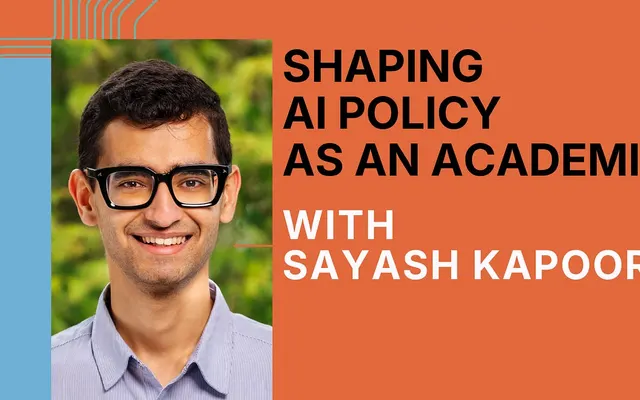
Shaping AI policy as an academic

He describes AI as a general-purpose technology that will not lead to superintelligence and current open models as less consequential for biosecurity than some argue. His top research priority is resilience for a world where advanced AI is abundant with few safeguards, because he does not think its availability can be limited or that nonproliferation should carry the policy load. Acute cyber and bio risks matter, for example by deploying AI to defenders and into biological screening, but he is equally concerned about diffuse risks: eroding trust in journalism and in institutions’ ability to function. He cites his group’s finding that 2024 election deepfakes were no more effective than cheap fakes. Full interview text inspected.

horizonlaunchpad.substack.com
AI existential risk probabilities are (still) too unreliable to inform policy

Co-authored repost of their 2024 essay with a new preface. It argues that AI extinction forecasts lack an inductive reference class, a deductive model or any validated subjective method, so they turn vague intuitions into pseudo-precise numbers; policymakers should not base costly restrictions on them, though forecasting is fine as an academic or private activity. Governments should prefer policies that are helpful across a range of risk estimates. The preface calls p(doom) culture counterproductive to a broader conception of safety. It offers no probability of its own and does not claim the risk is zero. Preface and essay inspected.

normaltech.ai
Où vous situez-vous ?
Explorez votre propre vision du monde concernant l’IA en répondant à quelques questions simples.
Cartographiez votre propre vision du monde

Où vous situez-vous ?

Cartographier ma vision du monde