Question 1
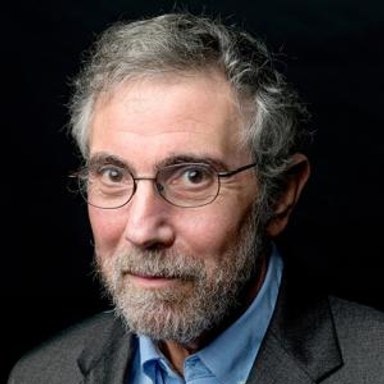
Paul Krugman
NewsletterEconomist who writes about AI’s economic returns, inequality, infrastructure costs and risks to society.
Comment l’IA changera-t-elle le monde ?
Horizontalement : sa perspective Doom–Bloom telle qu’il l’a exprimée. Verticalement : ampleur de la transformation.
Doom–Bloom : 31 sur 100. Ampleur de la transformation : 69 sur 100. Plages d’interprétation : de 25 à 36 horizontalement, de 47 à 78 verticalement. Il s’agit de coordonnées d’interprétation, et non de probabilités d’événements.
≈11%
Déduit de ses réponses simulées, et non d’un chiffre donné par cette personne. Plage plausible : 5–23%.
Une hypothèse centrale
Extreme inequality and weak labor power make it much more likely that gains will be captured at the top.Réponse 1
Si cette hypothèse s’avérait différente, comment sa perspective changerait-elle ?
Une question non résolue
I don’t have a defensible percentage, and attaching one would create a false impression of precision.Réponse 3
Qu’est-ce qui l’aiderait à distinguer les résultats plausibles ici ?
Ce qui pourrait faire changer d’avis
The most important event would be clear, sustained evidence that AI is producing broad economy-wide productivity gains—not merely impressive demonstrations, soaring valuations or profits for a few firms.Réponse 4
Quels éléments probants seraient suffisants, et dans quelle direction feraient-ils évoluer son point de vue ?
Plus de détails
Plusieurs interprétations restent plausibles : Des bénéfices limités ou répartis de manière restreinte sont attendus. / Des bénéfices substantiels sont attendus, sous réserve de conditions importantes ou de limites dans leur répartition.
49 / 100
Plage d’interprétation de 33 à 67 sur l’échelle qualitative.
Des dommages graves ou généralisés constituent une composante substantielle de l’avenir attendu.
67 / 100
Plage d’interprétation de 67 à 67 sur l’échelle qualitative.
Les choix humains ont une influence significative, mais fortement contrainte.
53 / 100
Plage d’interprétation de 47 à 78 sur l’échelle qualitative.
Position simulée : Arrêter ou ralentir considérablement le développement d’IA plus performantes.
Poursuivre le développement dans le cadre des mesures de protection annoncées.
Accélérer le développement d’IA plus performantes.
Ces interprétations conservent les conditions qu’il a énoncées. Les bénéfices et les dommages peuvent tous deux être substantiels. Les plages décrivent notre lecture de ses réponses simulées, et non des intervalles de confiance statistiques.
Visions du monde similaires
Leaders d’opinion dont les visions du monde simulées sont les plus proches de celle de Paul Krugman
Ce que Paul Krugman a dit sur l’IA
Krugman separates uncertain economic returns from AI’s growing political, cognitive and safety risks.
“And we should be afraid – very afraid.”
Essay, One More Reason Americans Hate AI: It Does Nothing for Them “Will AI transform the economy? The jury is still out on that one”
Essay, Why Is Trump Still Boosting AI? “AI is clearly a major technological shock, and it may take years before we fully understand its economic and social impacts.”
Essay, AI in an Age of Oligarchy “My concern here isn’t about testing; it’s about learning.”
Essay, What Will AI Do To Our Minds? “Indeed, requiring that the AI industry take responsibility for the costs it imposes makes a lot of sense.”
Essay, AI Is Power-Hungry
Citations exactes tirées des sources en lien, vérifiées le 3 oct. 2026
Évaluation simulée
Sources
Articles, entretiens et écrits utilisés pour ancrer cet utilisateur simulé dans les faits.
Full authored essay inspected, excluding comments. Takes autonomous hacking and deception seriously and says people should be afraid, while also recognizing financially motivated doom hype. Explains backlash through concentrated benefits, interest rates and few jobs even during an enormous investment boom. Distinguishes projected capital expenditure from completed spending. This is not a settled forecast that AI delivers no future benefits.

Full authored essay inspected. Economic transformation remains unresolved: little evidence yet of promised productivity or mass job losses, but early days. Political transformation and backlash already matter. Criticizes opposition to regulation, personal financial interests and reliance on AI investment as political salvation. Notes possible danger to humanity; economic uncertainty is not risk dismissal.

AI section inspected through the transition to climate. Applauds industry leaders acknowledging existential danger and calling for restraint; supports regulatory pacing covering unwilling firms. Worries about autonomous weapons and officials removing precautions. His use of reported incidents and researchers’ warnings shows concern, not a numerical extinction estimate or an independently established technical mechanism. Embedded Amodei and Trump quotations are not Krugman’s words.

Public opening inspected; subscriber-only sections not used. Calls AI a major technological shock whose consequences take years to understand. Existing wealth and political inequality magnify harms; progressive taxation, robust regulation and antitrust could contain them, and backlash might challenge oligarchy. This is explicit substantial-change language rather than an incremental-impact commitment.

Public opening inspected; subscriber-only evidence sections not used. Worries that outsourcing answers undermines learning to reason, leaving students unable to detect misleading output. Frames AI as accelerating an older search-and-smartphone trajectory: short-term benefits can coexist with long-term cognitive damage. Says educational harm can be very hard to repair; no quantitative cognitive-loss forecast is supplied.

Full authored essay inspected, excluding comments. Reports little personal AI use and an impression that Claude is useful for serious work. Defends restrictions on autonomous weapons and mass surveillance. Criticizes retaliatory procurement restrictions as corruption and harmful to expertise and national security. His legal characterization is his argument, not independent legal verification.

Published named transcript inspected at the introduction and exchanges on chips, electricity and investment returns. Krugman admits limited technical understanding, questions whether returns justify investment, points out limits to subscription affordability and asks whether cheaper approaches threaten incumbents. Kedrosky’s chip-failure estimates, token shares and prediction that architectures will not yield AGI are not Krugman’s positions.

Named AI discussion inspected. Translation, speech recognition and ordinary code are useful achievements; ultimate economic effects are unsettled. Historical aggregate employment adaptation can coexist with destroyed livelihoods. Offers possible equalization through renewed value for material-world skills, and asks whether capital requirements entrench wealth. Does not endorse Wolf’s computer-president hypothetical or his account of scientific applications. Transcript refers to a June recording context; October is the page’s publication date.

Full authored essay inspected. Explicitly distinguishes short-term recession risk from long-term technological unemployment. Energy constraints could interrupt the investment boom supporting growth. Telecom history shows that genuinely valuable technology can still produce a disastrous investment bust if returns arrive too late. Environmental burdens and weak enforcement matter alongside financial fragility.

Full authored essay inspected. AI’s apparently immaterial interface hides physical resources and labor. Electricity capacity can constrain growth and ratepayers can subsidize data centers. Favors making the industry bear its costs and exploring efficient focused models, which he says need not end AI progress. Opposition to renewables conflicts with powering the proposed buildout.

Authored opening and named transcript passages on productivity and valuations inspected. Calls the technology apparently revolutionary while admitting economists’ technical gaps. Recalls desktop computing transforming his own research before gains appeared in aggregate data. Separates impressive technology from investor profits; competing firms cannot all win monopoly positions. Brynjolfsson’s quantitative growth expectations and trillions-of-value forecast are excluded.

Où vous situez-vous ?
Cartographier ma vision du monde