Alex Zhang

Alex Zhang

x.com/a1zhang

AI researcher who builds benchmarks and studies how scaffolds and recursive model calls can get more out of existing language models.

Comment l’IA changera-t-elle le monde ?

Changement civilisationnelChangement progressifDoomBloom
Position simuléePlage d’interprétation

Horizontalement : leur perspective Doom–Bloom telle qu’elle a été exprimée. Verticalement : ampleur de la transformation.

Doom–Bloom : 53 sur 100. Ampleur de la transformation : 47 sur 100. Plages d’interprétation : de 48 à 75 horizontalement, de 0 à 96 verticalement. Il s’agit de coordonnées d’interprétation, et non de probabilités d’événements.

P(doom) de Alex Zhang

Pas encore estimé

Leurs réponses simulées ne contiennent pas assez d’éléments sur le risque catastrophique pour permettre de l’estimer.

Ce dont dépend leur perspective

Une hypothèse centrale

That gap matters because deployed capability is a property of the whole system, not just the bare model.
Réponse 3

Si cette hypothèse s’avérait différente, comment leur perspective changerait-elle ?

Une question non résolue

Overall, I expect AI to be highly consequential, but I would not reduce that to a confident net-positive or net-negative societal forecast.
Réponse 2

Qu’est-ce qui les aiderait à distinguer les résultats plausibles ici ?

Plus de détails

Bénéfices attendus

Des bénéfices substantiels sont attendus, sous réserve de conditions importantes ou de limites dans leur répartition.

65 / 100

Faible impactImpact transformateur

Plage d’interprétation de 67 à 67 sur l’échelle qualitative.

Dommages attendus

Des dommages gérables ou localisés sont attendus.

33 / 100

Faible impactImpact transformateur

Plage d’interprétation de 33 à 33 sur l’échelle qualitative.

Influence humaine

Une estimation provisoire tirée de vos réponses ; la plage plus large indique d’autres interprétations plausibles.

56 / 100

Faible influenceForte influence

Plage d’interprétation de 16 à 100 sur l’échelle qualitative.

Ces interprétations conservent les conditions énoncées. Les bénéfices et les dommages peuvent tous deux être substantiels. Les plages décrivent notre lecture de leurs réponses simulées, et non des intervalles de confiance statistiques.

Où vous situez-vous par rapport à Alex Zhang ?
Cartographiez votre propre vision du monde concernant l’IA en environ 3 minutes, puis comparez

Visions du monde similaires

Leaders d’opinion dont les visions du monde simulées sont les plus proches de celle de Alex Zhang

Évaluation simulée

Question 1

Selon vous, que signifie l’IA pour notre avenir, et pourquoi ?

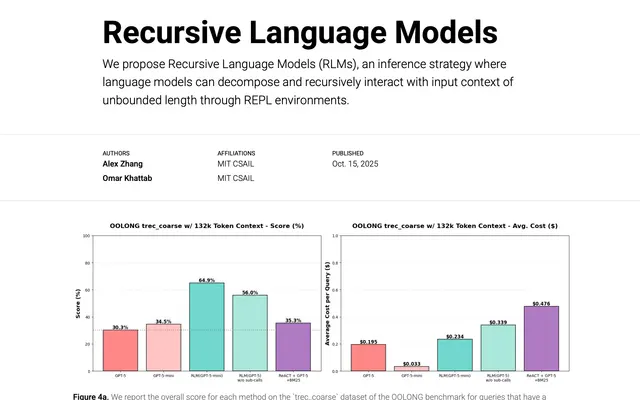
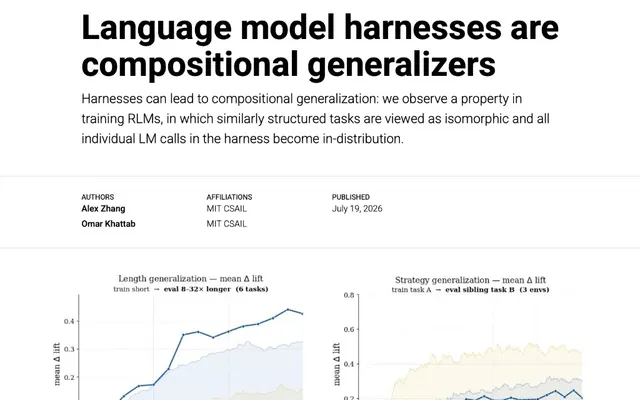
I think AI’s future will depend not only on building larger or better-trained models, but on learning how to use the capabilities already inside them. Today, we often place a model in a brittle, human-designed workflow, give it one enormous prompt, and then interpret failure as a clean measurement of its limits. That can confuse the weakness of the harness with the weakness of the model. Recursive computation, learned decomposition, tool use, and better inference procedures could change that picture substantially. A difficult out-of-distribution task may become tractable when the system can break it into familiar subproblems, inspect intermediate results, and call itself or specialized tools as needed. Long-context work is one example: rather than forcing everything through a single context window, a model can programmatically navigate the material and recursively delegate narrower questions. But this is not an argument that scaling or training is over. Better models and better harnesses are complementary. The key empirical challenge is figuring out which apparent limitations are truly representational and which come from poor orchestration. Evaluation is therefore central. Benchmarks with familiar formats, reusable tricks, or contaminated examples can make leaderboard performance look much stronger than practical usefulness. Simply making tasks longer does not guarantee meaningful generalization. We need evaluations that test whether systems can compose knowledge and procedures in genuinely unfamiliar settings. So my view is optimistic about latent capability, but the path forward runs through better inference, decomposition, and benchmarks—not raw benchmark scores mistaken for broad real-world competence.


Question 2

Taking benefits and harms together, what overall impact do you expect AI to have?

Overall, I expect AI to be highly consequential, but I would not reduce that to a confident net-positive or net-negative societal forecast. My work supports a narrower claim: current systems may be substantially more useful than standard interfaces and brittle scaffolds suggest. Better decomposition, recursive computation, and tool use could unlock meaningful gains on long-context, programming, and other complex tasks without requiring every improvement to come from a larger model. The same observation complicates judgments about harm. Capability can advance through inference-time organization, not just training runs, so evaluations that measure a bare model—or rely on familiar, potentially contaminated benchmark structures—may misstate what deployed systems can actually do. Conversely, strong leaderboard results may not translate into reliable performance on genuinely unfamiliar real-world problems. So I expect the impact to depend heavily on whether we learn to measure and harness these systems well. Better models, better training, and better scaffolds are complementary. But benchmark progress by itself does not establish broad social benefit, and my research does not justify assigning a precise balance between AI’s total benefits and harms.

Question 3

Quels dommages majeurs, s’il y en a, pensez-vous que l’IA causera ?

The clearest harm I can support is systematic miscalibration about capability. Weak harnesses can hide what a model can do, while familiar or contaminated benchmarks can create an equally dangerous illusion of competence. Organizations may then deploy systems that fail on genuinely unfamiliar tasks—or underestimate systems whose capabilities become much stronger with recursive computation, tools, and better decomposition. That gap matters because deployed capability is a property of the whole system, not just the bare model. Inference-time scaffolding can produce substantial gains without a new training run, so assessments can become stale or incomplete if they ignore the harness. Conversely, making benchmarks longer or reporting higher scores does not establish reliability in practical settings. I would not claim a specific catalog or ranking of broader societal harms from this work alone. My main expectation is that poor evaluation will amplify other risks by giving us the wrong picture of what systems can and cannot reliably do.

Sources

Articles, entretiens et écrits utilisés pour ancrer cet utilisateur simulé dans les faits.

Où vous situez-vous ?
Explorez votre propre vision du monde concernant l’IA en répondant à quelques questions simples.
Cartographiez votre propre vision du monde

Où vous situez-vous ?

Cartographier ma vision du monde