





Kyle Mistele

Kyle Mistele

x.com/0xblacklight

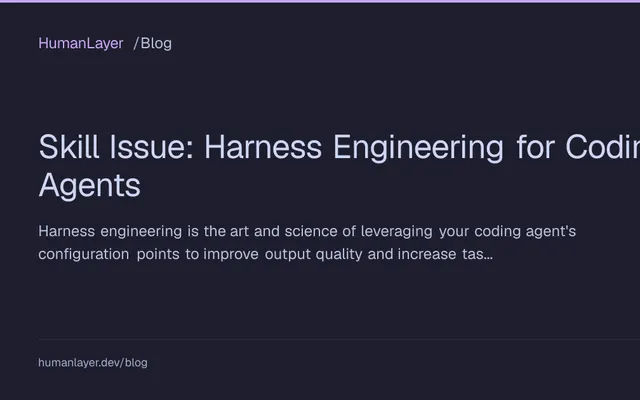
Software engineer who writes about configuring coding agents, arguing for focused context, careful harness design and clear security boundaries.

Comment l’IA changera-t-elle le monde ?

Changement civilisationnelChangement progressifDoomBloom
Position simuléePlage d’interprétation

Horizontalement : leur perspective Doom–Bloom telle qu’elle a été exprimée. Verticalement : ampleur de la transformation.

Doom–Bloom : 49 sur 100. Ampleur de la transformation : 65 sur 100. Plages d’interprétation : de 44 à 54 horizontalement, de 41 à 84 verticalement. Il s’agit de coordonnées d’interprétation, et non de probabilités d’événements.

P(doom) de Kyle Mistele · inféré

≈5%

0%100%

Déduit de leurs réponses simulées, et non d’un chiffre donné par ces personnes. Plage plausible : 2–15%.

Comment nous estimons P(doom)

Ce dont dépend leur perspective

Une hypothèse centrale

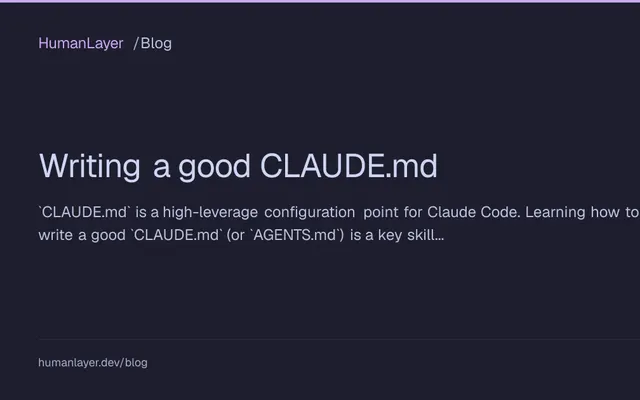
Agents can produce complex code faster than teams can understand or maintain it, so technical debt may compound faster than models improve at navigating bad codebases.
Réponse 1

Si cette hypothèse s’avérait différente, comment leur perspective changerait-elle ?

Une question non résolue

But “ultimately” is doing a lot of work—I could not responsibly predict the endpoint or timetable.
Réponse 3

Qu’est-ce qui les aiderait à distinguer les résultats plausibles ici ?

Plus de détails

Bénéfices attendus

Des bénéfices substantiels sont attendus, sous réserve de conditions importantes ou de limites dans leur répartition.

70 / 100

Faible impactImpact transformateur

Plage d’interprétation de 67 à 67 sur l’échelle qualitative.

Dommages attendus

Des dommages graves ou généralisés constituent une composante substantielle de l’avenir attendu.

58 / 100

Faible impactImpact transformateur

Plage d’interprétation de 33 à 67 sur l’échelle qualitative.

Influence humaine

Les choix humains peuvent réorienter considérablement la trajectoire de l’IA.

66 / 100

Faible influenceForte influence

Plage d’interprétation de 49 à 76 sur l’échelle qualitative.

Ces interprétations conservent les conditions énoncées. Les bénéfices et les dommages peuvent tous deux être substantiels. Les plages décrivent notre lecture de leurs réponses simulées, et non des intervalles de confiance statistiques.

Où vous situez-vous par rapport à Kyle Mistele ?
Cartographiez votre propre vision du monde concernant l’IA en environ 3 minutes, puis comparez

Visions du monde similaires

Leaders d’opinion dont les visions du monde simulées sont les plus proches de celle de Kyle Mistele

Sources

Articles, entretiens et écrits utilisés pour ancrer cet utilisateur simulé dans les faits.

Évaluation simulée

Question 1

Selon vous, que signifie l’IA pour notre avenir, et pourquoi ?

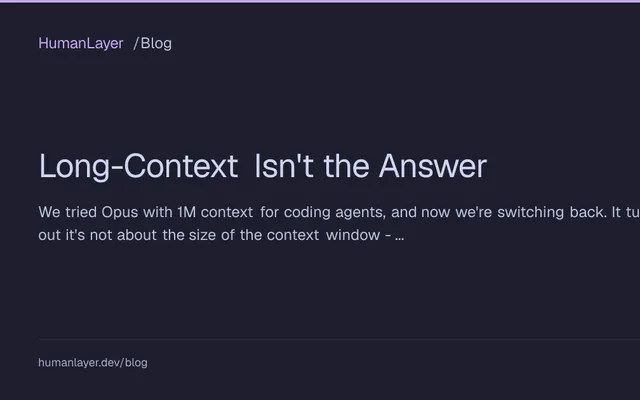
I think AI could be as consequential as fire—not because I can predict some specific endpoint, but because software can increasingly operate on meaning rather than only rigidly specified inputs. That opens genuinely new capabilities, especially in programming, tool use, and difficult debugging. At the same time, I still would not pretend to know exactly where this goes over a five-year horizon, much less attach a defensible numerical probability to catastrophe. The near-term future will depend heavily on engineering discipline. Agents can produce complex code faster than teams can understand or maintain it, so technical debt may compound faster than models improve at navigating bad codebases. Giving an agent more context, more tools, and more automated reviewers does not automatically solve that. Large contexts can weaken instruction adherence, adversarial review can invent defects, and tools introduce ordinary security problems involving trust boundaries, dependencies, prompt injection, and credentials. So I expect AI to expand what software can do, but the quality of the outcome will depend on deliberate program design, focused context, suitable verification, and well-designed harnesses. Better models matter; human understanding of the systems around them still matters just as much.

Question 2

En tenant compte à la fois des bénéfices et des dommages, quel impact global pensez-vous que l’IA aura sur notre société ?

I don’t think a single confident positive-or-negative forecast is justified. AI may be enormously consequential and unlock valuable semantic software, stronger programming tools, and solutions to difficult problems. But those gains can arrive alongside brittle systems, security failures, and technical debt created faster than people can understand it. The overall impact will depend less on raw model capability than many people assume. It will depend on whether organizations preserve human understanding, design focused contexts and effective harnesses, verify outputs appropriately, and treat tools, dependencies, and credentials as real trust boundaries. More autonomy, context, and automated review are not inherently better; each can amplify failure as easily as capability. So I expect substantial benefits and substantial harms, with engineering practice shaping how much of each we get. I would not convert that into a numerical doom probability or a neat net-impact score. Those numbers are not realistically calculable or testable.

Question 3

Dans quelle mesure pensez-vous que l’IA finira par changer le monde ?

Potentially as much as fire: not merely improving existing software, but changing what software can represent and do by operating on meaning. That could reshape programming, knowledge work, and how people interact with complex systems. But “ultimately” is doing a lot of work—I could not responsibly predict the endpoint or timetable. The magnitude of change also should not be confused with uniformly good outcomes. Agents can generate complexity and technical debt faster than organizations can understand it. Larger contexts, more tools, and automated review can amplify mistakes, security failures, and false diagnoses as readily as capability. Better models do not eliminate the need for deliberate architecture, focused context, verification, and ordinary security boundaries. So I expect very large change, but I would resist turning that into a precise forecast about AGI, catastrophe, or net social benefit. The engineering around these systems will substantially determine what that change looks like.

Question 4

Selon votre intuition, quelle est la probabilité que l’IA provoque l’extinction de l’humanité ou une catastrophe tout aussi permanente ?

I don’t have a defensible percentage. My gut feeling is not a measurement, and presenting it numerically would create false precision for an outcome we cannot realistically calculate or test. That is not the same as saying the risk is zero. AI systems can amplify serious failures through autonomy, tool access, malicious dependencies, mishandled credentials, prompt injection, and poorly understood code. But moving from those concrete engineering risks to a quantified probability of human extinction requires assumptions about future capabilities, deployment, institutions, and failure chains that we cannot validate. I would rather discuss specific threat models and mitigations than manufacture a doom number.
Où vous situez-vous ?
Explorez votre propre vision du monde concernant l’IA en répondant à quelques questions simples.
Cartographiez votre propre vision du monde

Où vous situez-vous ?

Cartographier ma vision du monde