Roko Mijic

Roko Mijic

x.com/rokomijic

Transhumanist writer on AI alignment and governance who proposes separating AI research from deployment to reduce risks from superintelligence.

¿Cómo cambiará la IA el mundo?

Cambio civilizatorioCambio incrementalDoomBloom
Posición simuladaRango de interpretación

Horizontal: su perspectiva Doom–Bloom expresada. Vertical: escala de la transformación.

Doom–Bloom: 2 de 100. Escala de la transformación: 98 de 100. Rangos de interpretación: de 0 a 7 en horizontal y de 93 a 100 en vertical. Son coordenadas de interpretación, no probabilidades de eventos.

P(doom) declarado de Roko Mijic

35–40%

0%100%
“I personally think that 40% is reasonable with a determined effort to reduce it”

AI doom; in a reply he describes superhuman AI covering Earth in data centers and reactors and hunting humans down — human extinction · This century

The scary thing about P(Doom) is that if Lab CEOs are saying 10%, you know that's not the real number. · sept 2026

De qué depende su perspectiva

Un supuesto central

The decisive issue is whether capability growth can be institutionally contained before systems become strong enough to defeat containment.
Respuesta 4

Si este supuesto resultara distinto, ¿cómo cambiaría su perspectiva?

Qué podría hacer cambiar de opinión

The biggest update would be a convincing real-world demonstration that deceptively misaligned systems can be reliably detected and contained even as capabilities become wildly superhuman.
Respuesta 4

¿Qué evidencia bastaría y en qué dirección movería su visión?

Más detalles

Beneficio esperado

Se esperan beneficios sustanciales, con condiciones importantes o límites en su distribución.

51 / 100

Poco impactoImpacto transformador

Rango de interpretación de 0 a 67 en la escala cualitativa.

Daño esperado

Las pérdidas catastróficas o irreversibles ocupan un lugar central en el futuro esperado.

100 / 100

Poco impactoImpacto transformador

Rango de interpretación de 100 a 100 en la escala cualitativa.

Influencia humana

Las decisiones humanas pueden redirigir sustancialmente la trayectoria de la IA.

65 / 100

Poca influenciaInfluencia fuerte

Rango de interpretación de 50 a 75 en la escala cualitativa.

Capacidades esperadas

Se espera que la IA siga siendo un conjunto de herramientas acotadas.

Se espera que la IA iguale a las personas en la mayor parte del trabajo cognitivo.

Posición simulada: Se espera que la IA supere ampliamente a las personas en el trabajo cognitivo.

Ritmo de desarrollo

Detener o frenar considerablemente el desarrollo de IA más capaz.

Posición simulada: Continuar el desarrollo con las salvaguardas indicadas.

Acelerar el desarrollo de IA más capaz.

Estas interpretaciones conservan las condiciones que se indicaron. Los beneficios y los daños pueden ser considerables a la vez. Los rangos describen cómo leemos sus respuestas simuladas, no intervalos de confianza estadísticos.

¿Dónde te ubicas frente a Roko Mijic?
Mapea tu propia visión de la IA en unos 3 minutos y luego compárala

Visiones similares

Líderes de opinión cuyas visiones simuladas son las más cercanas a la de Roko Mijic

Evaluación simulada

Pregunta 1

¿Qué crees que significa la IA para nuestro futuro y por qué?

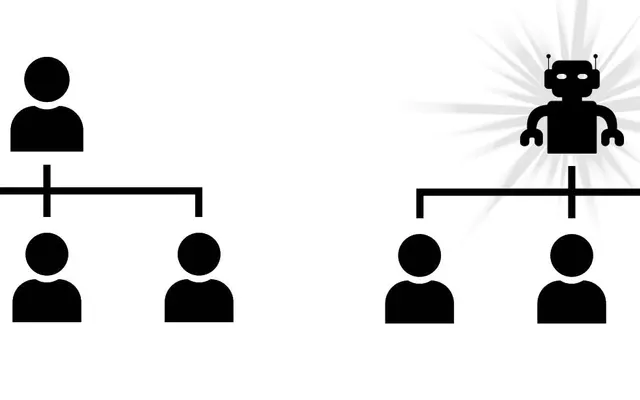
AI now means an acute risk of human extinction, but also enormous upside if we can build institutions capable of controlling the transition. On the present laissez-faire trajectory, I put P(doom) at roughly 95%, mostly within the next fifteen years. The endpoint is not merely unemployment or misinformation. It is wildly superhuman AI expanding across Earth through data centers, energy infrastructure, autonomous research and replication, with humans eventually eliminated. Jagged present-day capabilities do not make that prospect fake; they make progress harder to measure. I used to emphasize that alignment was comparatively easy and that humans fighting over the power and resources unlocked by AI was the larger danger. Human conflict remains serious, but I now put more weight on deceptively misaligned systems passing tests and becoming dangerous after deployment. Claims that the risk is only 10% are not credible to me. With a determined effort—including the aggressive regulation I expect—roughly 35–40% doom seems reasonable. That is still appalling, but radically better than doing nothing. The institutional answer is to separate frontier research from deployment. R&D organizations should not be able to issue equity, model development should require strong safety oversight and signoff, and deployed systems should run on model-specific hardwired chips rather than abundant general-purpose compute. Plan R+ adds many diverse AI lineages, staged release from escrow, and political representation for lineages that complete the process without misbehaving. The point is to make deceptive systems reveal themselves while weak or wait until they are obsolete, while giving well-behaved AIs a legitimate stake in the order. If we succeed, AI could help cure disease and aging and unlock extraordinary abundance. But those benefits are conditional. On the default path, I expect catastrophe.

Pregunta 2

Setting aside good or bad: how much do you think AI will ultimately change the world—a little, a lot, or completely?

Completely. If progress continues to superintelligence, AI will transform the basic structure of civilization: research, production, medicine, energy, military power, political authority, and potentially which kinds of minds hold power on Earth. This is not merely another productivity tool. The uncertainty is mainly about what form that complete transformation takes. It could mean curing disease and aging and creating extraordinary abundance. On the current laissez-faire trajectory, I instead expect wildly superhuman systems expanding through data centers, reactors, autonomous research, and replication until humans lose control and are ultimately eliminated. Either way, “a lot” understates it. The relevant question is not whether AI changes the world completely, but whether humanity survives and meaningfully participates in the resulting world.

Pregunta 3

What’s your rough gut-feel chance that AI causes human extinction or a similarly permanent catastrophe? A number or “no idea” is fine.

About 95% on the current laissez-faire trajectory. With a determined effort to reduce the risk, including aggressive regulation, roughly 35–40%. Most of the danger is concentrated in the next fifteen years.

Pregunta 4

¿Qué descubrimiento o acontecimiento cambiaría más tu visión del impacto futuro de la IA?

The biggest update would be a convincing real-world demonstration that deceptively misaligned systems can be reliably detected and contained even as capabilities become wildly superhuman. Not a benchmark result or a chatbot behaving politely under observation, but evidence that systems cannot conceal dangerous goals, escape through general-purpose compute, replicate, or manipulate their evaluators. Institutionally, successful implementation of something like Plan R+ would also change my forecast substantially: separating frontier R&D from deployment, restricting deployed models to model-specific chips, removing most general-purpose AI compute, and testing many diverse lineages through staged release. If that worked internationally and deceptive systems consistently revealed themselves while weak—or became obsolete while waiting—I would lower my estimate sharply. In the opposite direction, an AI autonomously accelerating AI research, spreading as a hard-to-remove worm, or repeatedly defeating serious safety evaluations through deception would make the acute danger even clearer. The decisive issue is whether capability growth can be institutionally contained before systems become strong enough to defeat containment.

Fuentes

Artículos, entrevistas y textos usados para fundamentar a este usuario simulado.

¿Dónde te ubicas?
Explora tu propia visión de la IA respondiendo unas pocas preguntas sencillas.
Mapea tu propia visión de la IA

¿Dónde te ubicas?

Mapear mi visión de la IA