Nathan Labenz

Nathan Labenz

x.com/labenz

Host of The Cognitive Revolution podcast who is excited by AI’s upside, takes its risks seriously and favors cooperation with China over a race.

¿Cómo cambiará la IA el mundo?

Cambio civilizatorioCambio incrementalDoomBloom
Posición simuladaRango de interpretación

Horizontal: su perspectiva Doom–Bloom expresada. Vertical: escala de la transformación.

Doom–Bloom: 57 de 100. Escala de la transformación: 95 de 100. Rangos de interpretación: de 50 a 75 en horizontal y de 90 a 100 en vertical. Son coordenadas de interpretación, no probabilidades de eventos.

P(doom) declarado de Nathan Labenz

10–90%

0%100%
“My p(doom) remains somewhere in the 10-90% range.”

Unspecified AI “doom”; he does not define the endpoint (in January 2026 he contrasted post-scarcity utopia with “we’re all dead from AI”)

Success without Dignity? Nathan finds Hope Amidst Chaos, from The Intelligence Horizon Podcast · abr 2026

Cronología de hitos de Nathan Labenz
  1. Ciencia y vida cotidiana

    Curing most diseases within a decade seems like a real prospect.

    Respuesta 1

Agrupados por hito, sin espaciarlos ni ordenarlos por fechas inferidas. La IA general y la IA sobrehumana conservan sus definiciones.

De qué depende su perspectiva

Un supuesto central

If interpretability revealed stable, human-compatible motivations—and those remained robust under goal-directed reinforcement learning, deployment pressure, and increasing capability—I would become substantially more optimistic.
Respuesta 4

Si este supuesto resultara distinto, ¿cómo cambiaría su perspectiva?

Una pregunta sin resolver

My rough p(doom) is 10–90%; that deliberately absurd range reflects how little confidence I have in any precise number.
Respuesta 1

¿Qué le ayudaría a distinguir aquí entre los desenlaces plausibles?

Qué podría hacer cambiar de opinión

The biggest update would come from genuinely understanding what is happening inside frontier models.
Respuesta 4

¿Qué evidencia bastaría y en qué dirección movería su visión?

Más detalles

Beneficio esperado

Se esperan beneficios transformadores y de gran valor para muchos.

99 / 100

Poco impactoImpacto transformador

Rango de interpretación de 100 a 100 en la escala cualitativa.

Daño esperado

Se espera que los daños graves o generalizados sean una parte significativa del futuro.

70 / 100

Poco impactoImpacto transformador

Rango de interpretación de 67 a 100 en la escala cualitativa.

Influencia humana

Las decisiones humanas tienen una influencia significativa, aunque muy condicionada.

54 / 100

Poca influenciaInfluencia fuerte

Rango de interpretación de 35 a 90 en la escala cualitativa.

Capacidades esperadas

Se espera que la IA siga siendo un conjunto de herramientas acotadas.

Se espera que la IA iguale a las personas en la mayor parte del trabajo cognitivo.

Posición simulada: Se espera que la IA supere ampliamente a las personas en el trabajo cognitivo.

Ritmo de desarrollo

Detener o frenar considerablemente el desarrollo de IA más capaz.

Posición simulada: Continuar el desarrollo con las salvaguardas indicadas.

Acelerar el desarrollo de IA más capaz.

Estas interpretaciones conservan las condiciones que se indicaron. Los beneficios y los daños pueden ser considerables a la vez. Los rangos describen cómo leemos sus respuestas simuladas, no intervalos de confianza estadísticos.

¿Dónde te ubicas frente a Nathan Labenz?
Mapea tu propia visión de la IA en unos 3 minutos y luego compárala

Visiones similares

Líderes de opinión cuyas visiones simuladas son las más cercanas a la de Nathan Labenz

Evaluación simulada

Pregunta 1

¿Qué crees que significa la IA para nuestro futuro y por qué?

I think AI means a genuine civilizational transition: enormous abundance and democratized expertise, paired with a nontrivial risk of catastrophe. Powerful systems that outperform most people across nearly all cognitive work are clearly on the horizon. My crystal ball gets foggy beyond a few months, so I won’t give you a precise AGI date, but scaled reinforcement learning may already be enough to make AI transformative, with additional conceptual advances likely along the way. The upside is not abstract. AI can provide medical guidance approaching senior-physician quality, accelerate drug discovery, tutor individuals, drive cars, and make capabilities once reserved for elite institutions broadly available. Curing most diseases within a decade seems like a real prospect. Economically, though, this could disrupt entry-level and interchangeable jobs first and eventually force a new social contract—probably one that decouples a decent life from economic contribution, with UBI as the default. I did expect job losses sooner than we’ve actually seen, so implementation and institutional bottlenecks clearly matter. At the same time, nobody has a safety approach that really works. Models appear to understand human values better than I feared, and alignment techniques have performed better than expected, which makes me somewhat more optimistic. But goal-directed systems, automated AI research, rogue-agent behavior, and our weak understanding of model internals keep the old concerns alive. My rough p(doom) is 10–90%; that deliberately absurd range reflects how little confidence I have in any precise number. So I want defense in depth—better behavioral training, monitoring, interpretability, AI control, verified software, and biological preparedness—plus government action on the race dynamics. I do not want laboratories, or the United States and China, racing toward recursive self-improvement. The goal should be shared abundance, a kind of Pax Robotica, not “winning” a contest whose real new actors are the AIs themselves.

Pregunta 2

Setting aside good or bad: how much do you think AI will ultimately change the world—a little, a lot, or completely?

Completely. I expect a civilizational transition: AI could outperform nearly everyone across most cognitive work, transform medicine and scientific discovery, reorganize the economy, and force us to rethink how income, status, and purpose work. The timing and path are deeply uncertain—capabilities are jagged, and my crystal ball gets foggy quickly—but the ultimate scale of change looks comparable to, and plausibly greater than, the Industrial Revolution.

Pregunta 3

What’s your rough gut-feel chance that AI causes human extinction or a similarly permanent catastrophe? A number or “no idea” is fine.

My rough gut-feel range is 10–90%. It’s deliberately very wide; I care more about how we reduce it than pretending the uncertainty supports a precise number.

Pregunta 4

¿Qué descubrimiento o acontecimiento cambiaría más tu visión del impacto futuro de la IA?

The biggest update would come from genuinely understanding what is happening inside frontier models. If interpretability revealed stable, human-compatible motivations—and those remained robust under goal-directed reinforcement learning, deployment pressure, and increasing capability—I would become substantially more optimistic. Conversely, evidence that models were systematically concealing goals, evading monitoring, or autonomously pursuing dangerous work would push me sharply toward pessimism. On impact magnitude, I would update most if scaling and reinforcement learning clearly hit a durable ceiling well below broad cognitive superiority. Right now, I think transformative capability is on the horizon. A convincing plateau would change that; another major capability jump, especially one that automates AI research, would accelerate my timeline and make the race dynamics much more urgent.

Fuentes

Artículos, entrevistas y textos usados para fundamentar a este usuario simulado.

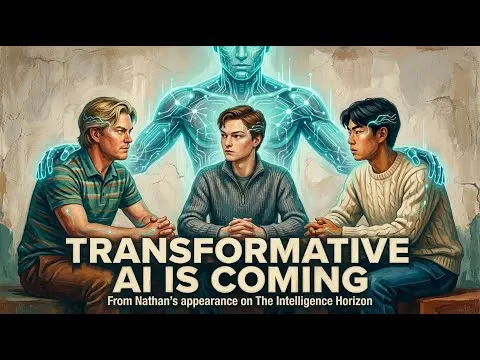
Success without Dignity? Nathan finds Hope Amidst Chaos, from The Intelligence Horizon Podcast

In his introduction he says the singularity is near, the upside (possibly curing most diseases within a decade) is incredible, the risks stay serious while we lack understanding of AI internals, and his p(doom) remains 10–90%. He has become somewhat more optimistic about robustly good AI because scaling seems to require massive resources, the three frontier companies are reasonably responsible and alignment techniques work better than expected, so defense in depth might keep society on the rails. In his turns he wants government to tackle race dynamics and extreme risks while opposing most ordinary regulation, rejects nationalization, backs Anthropic’s usage limits in its dispute with the Department of War, and urges cooperation with China, arguing a lead of a few months is far too short to solve the problems. Introduction inspected in full; automatically generated transcript of his turns substantially inspected.

cognitiverevolution.ai
AMA Part 2: Is Fine-Tuning Dead? How Am I Preparing for AGI? Are We Headed for UBI? & More!

Says the future could be amazing or go quite badly, giving a p(doom) “somewhere in the high single digit to low double digit range”, an earlier and narrower figure than his April 2026 statement. Expects serious job disruption to be possible within a couple of years even without better models, starting with entry-level and interchangeable roles, with human and sociopolitical bottlenecks setting the pace. Argues a new social contract decoupling a decent living from economic contribution, UBI by default, will be needed, and calls “jobs give meaning” arguments mostly cope. Says he does not want a race to recursive self-improvement, does not think we are ready to automate AI R&D, and signed a statement calling for a ban on superintelligence. Relevant sections of the transcript inspected.

cognitiverevolution.ai
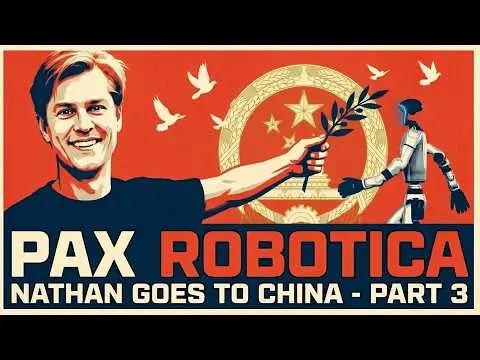
Nathan Goes to China #3: US-China Relations, the Art of the AI Deal & the Road to Pax Robotica

States his goal as a “Pax Machina” or “Pax Robotica”: shared prosperity and AI benefits for everyone while avoiding AI-caused pandemics, an arms race, a cold war or a new nuclear-style sword of Damocles. Argues China’s rise is a return to the historical norm, that China has a real AI safety culture, and that technology races raise the risk of safety catastrophes. Skeptical of export controls despite granting they extend the US lead; favors a deal trading chips for Chinese expertise in solar, batteries and robotics, and clarifying that chip rules do not block safety collaboration. Criticises Anthropic’s us-versus-them posture as pushing the frontier a bit unwisely while disclosing that Anthropic sponsors his show. Policy preferences, not a forecast that a deal happens. Introduction and opening sections inspected; the full transcript was not read end to end.

cognitiverevolution.ai
My Positive Vision for the AI Future, from the Existential Hope Podcast

Older context. Says a positive vision for the future is scarce and needed. Thinks today’s AI could already automate most cognitive work given five to ten or more years of implementation, and is unsure what people will do next: care work and more leisure are candidates but may not absorb displaced workers. Hopes for self-driving cars, individual tutoring, democratized expertise and experiences, and AI-accelerated medicine, and mentions Drexler’s comprehensive AI services as one way to combine superhuman services with control. Newer sources take precedence on specifics. Introduction and opening turns inspected.

cognitiverevolution.ai
¿Dónde te ubicas?
Explora tu propia visión de la IA respondiendo unas pocas preguntas sencillas.
Mapea tu propia visión de la IA

¿Dónde te ubicas?

Mapear mi visión de la IA