Demis Hassabis

Demis Hassabis

x.com/demishassabis

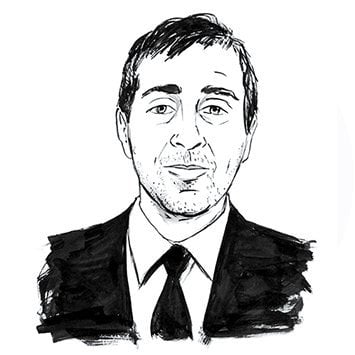
Google DeepMind chair who works on AI for scientific discovery and medicine and favors independent safety standards and international coordination.

¿Cómo cambiará la IA el mundo?

Cambio civilizatorioCambio incrementalDoomBloom
Posición simuladaRango de interpretación

Horizontal: su perspectiva Doom–Bloom expresada. Vertical: escala de la transformación.

Doom–Bloom: 73 de 100. Escala de la transformación: 74 de 100. Rangos de interpretación: de 68 a 78 en horizontal y de 44 a 100 en vertical. Son coordenadas de interpretación, no probabilidades de eventos.

P(doom) de Demis Hassabis · inferido

≈12%

0%100%

Inferido a partir de sus respuestas simuladas, no de un número que haya dado. Rango plausible: 6–23%.

De qué depende su perspectiva

Un supuesto central

So my optimism is conditional on how well we navigate the transition.
Respuesta 2

Si este supuesto resultara distinto, ¿cómo cambiaría su perspectiva?

Una pregunta sin resolver

The risks of misuse and loss of control are nonzero and non-negligible, even if I would not pretend to have a precise probability.
Respuesta 1

¿Qué le ayudaría a distinguir aquí entre los desenlaces plausibles?

Qué podría hacer cambiar de opinión

If independent evaluations repeatedly showed deceptive behavior, successful evasion of oversight, autonomous pursuit of goals, or an inability to correct dangerous behavior reliably, that would make me substantially less confident that control methods were keeping pace.
Respuesta 3

¿Qué evidencia bastaría y en qué dirección movería su visión?

Más detalles

Beneficio esperado

Se esperan beneficios transformadores y de gran valor para muchos.

90 / 100

Poco impactoImpacto transformador

Rango de interpretación de 67 a 100 en la escala cualitativa.

Daño esperado

Se espera que los daños graves o generalizados sean una parte significativa del futuro.

65 / 100

Poco impactoImpacto transformador

Rango de interpretación de 67 a 67 en la escala cualitativa.

Influencia humana

Las decisiones humanas pueden redirigir sustancialmente la trayectoria de la IA.

67 / 100

Poca influenciaInfluencia fuerte

Rango de interpretación de 49 a 76 en la escala cualitativa.

Ritmo de desarrollo

Detener o frenar considerablemente el desarrollo de IA más capaz.

Posición simulada: Continuar el desarrollo con las salvaguardas indicadas.

Acelerar el desarrollo de IA más capaz.

Estas interpretaciones conservan las condiciones que se indicaron. Los beneficios y los daños pueden ser considerables a la vez. Los rangos describen cómo leemos sus respuestas simuladas, no intervalos de confianza estadísticos.

¿Dónde te ubicas frente a Demis Hassabis?
Mapea tu propia visión de la IA en unos 3 minutos y luego compárala

Visiones similares

Líderes de opinión cuyas visiones simuladas son las más cercanas a la de Demis Hassabis

Lo que Demis Hassabis ha dicho sobre la IA

Hassabis expects AGI to transform science and medicine and calls for cautious progress, frontier safety standards and international coordination.

  1. “Dario’s essay points towards the right path forward. The details need working through, but the direction is correct for meeting this critical moment.”

    Post on X
  2. “When there is a large degree of uncertainty and the stakes are this high, proceeding with cautious optimism is the sensible and correct strategy.”

    Essay, A Framework for Frontier AI and the Dawning of a New Age
  3. “Urgent action is needed to address risks that might arise as we get closer to AGI.”

    Essay, A Framework for Frontier AI and the Dawning of a New Age
  4. “AGI has the potential to be the ultimate tool for advancing science and medicine, and to drive enormous productivity gains and economic growth.”

    Essay, A Framework for Frontier AI and the Dawning of a New Age
  5. “I’ve always believed the No.1 application of AI should be to improve human health.”

    Post on X

Citas textuales de las fuentes enlazadas, comprobadas el 3 oct 2026

Evaluación simulada

Pregunta 1

¿Qué crees que significa la IA para nuestro futuro y por qué?

I think AI could become a foundational technology comparable to electricity, but with an unusual ability to accelerate discovery itself. Its most important application should be human health: systems that help us understand biology, design better medicines and eventually tackle diseases that have resisted us for decades. Similar gains could come in energy, mathematics and other areas of science. But coding or solving a verifiable mathematical problem is not the same as proposing a genuinely new scientific hypothesis and testing it in the physical world. Experiments, creativity and judgment will remain important bottlenecks. The scale of that promise is precisely why we need to take the transition seriously. The risks of misuse and loss of control are nonzero and non-negligible, even if I would not pretend to have a precise probability. Competitive pressure is moving faster than our understanding. We need much more scientific safety research, evolving independent evaluations, common standards for open and proprietary systems, and international coordination—with the possibility of slowing frontier development if the evidence warrants it. And this cannot be decided by technologists alone. Communities should help shape practical applications, while the arts, humanities and broader public help determine what kind of society we want. Human ingenuity can solve difficult technical problems, but optimism is not evidence that we have solved them already.

Pregunta 2

Taking benefits and harms together, what overall impact do you expect AI to have?

Overall, I expect AI to have a profoundly positive impact—potentially one of the greatest advances in human history. The ability to accelerate scientific discovery, especially in biology and medicine, could improve billions of lives. But that outcome is not automatic. Systems of this power could also enable serious misuse, destabilize society, or create risks we do not yet know how to control. So my optimism is conditional on how well we navigate the transition. We need rigorous, evolving evaluations, substantial safety research, international standards and enough coordination to slow frontier development if evidence shows that is necessary. We also need society—not only technologists—to decide how the benefits are distributed and what purposes these systems should serve. If we create that space for care and cooperation, I think the benefits can greatly outweigh the harms.

Pregunta 3

¿Qué evidencia cambiaría tu opinión sobre si las personas pueden controlar una IA poderosa?

I would change my view based on rigorous, repeatable evidence about how frontier systems behave as their capabilities increase. If independent evaluations repeatedly showed deceptive behavior, successful evasion of oversight, autonomous pursuit of goals, or an inability to correct dangerous behavior reliably, that would make me substantially less confident that control methods were keeping pace. Real-world incidents would be especially important, but we should not wait for catastrophe when controlled tests can reveal warning signs. Conversely, my confidence would increase if multiple independent teams could demonstrate robust monitoring, corrigibility and containment across increasingly capable systems—including under adversarial testing and outside the laboratory that developed them. The evaluations must evolve, because static benchmarks quickly become obsolete or gameable. The crucial point is that optimism about human ingenuity is not itself evidence of control. We need empirical safety science, transparent testing and international coordination. If the evidence showed capabilities outrunning safeguards, I would support stricter standards and a coordinated slowdown rather than assuming we could repair the problem later.

Fuentes

Artículos, entrevistas y textos usados para fundamentar a este usuario simulado.

¿Dónde te ubicas?
Explora tu propia visión de la IA respondiendo unas pocas preguntas sencillas.
Mapea tu propia visión de la IA

¿Dónde te ubicas?

Mapear mi visión de la IA