
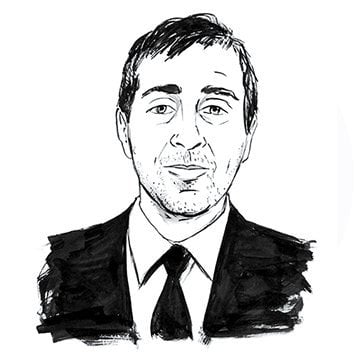





Pseudonymous account that researches model steering, favors open-source AI and writes about the promise and risks of automating knowledge work.

Wie wird KI die Welt verändern?

Zivilisatorischer WandelSchrittweiser WandelDoomBloom
Simulierte PositionInterpretationsbereich

Horizontal: deren geäußerter Doom–Bloom-Ausblick. Vertikal: Ausmaß der Transformation.

Doom–Bloom: 53 von 100. Ausmaß der Transformation: 78 von 100. Interpretationsbereiche: horizontal 48 bis 75, vertikal 73 bis 83. Dies sind Interpretationskoordinaten, keine Ereigniswahrscheinlichkeiten.

P(doom) von nightwing · abgeleitet

≈11%

0%100%

Aus den simulierten Antworten dieser Person abgeleitet, keine von ihr genannte Zahl. Plausibler Bereich: 5–21%.

Wie wir P(doom) schätzen

Wovon deren Einschätzung abhängt

Eine zentrale Annahme

The technology creates room for a better society, but human choices—especially around access, control, and adaptation—determine whether we actually get one.
Antwort 2

Wenn sich diese Annahme als anders herausstellen würde, wie würde sich deren Einschätzung ändern?

Eine ungeklärte Frage

I would not pretend to know the endpoint or attach a precise timeline to it.
Antwort 3

Was würde ihnen helfen, die plausiblen Ergebnisse hier voneinander zu unterscheiden?

Weitere Details

Erwartete Vorteile

Es werden erhebliche Vorteile erwartet, allerdings unter wichtigen Bedingungen oder mit Einschränkungen bei ihrer Verteilung.

76 / 100

Geringe AuswirkungenTransformative Auswirkungen

Interpretationsbereich von 67 bis 100 auf der qualitativen Skala.

Erwartete Schäden

Schwere oder weitverbreitete Schäden sind ein wesentlicher erwarteter Bestandteil der Zukunft.

67 / 100

Geringe AuswirkungenTransformative Auswirkungen

Interpretationsbereich von 67 bis 67 auf der qualitativen Skala.

Menschlicher Einfluss

Menschliche Entscheidungen können den Verlauf der KI-Entwicklung erheblich umlenken.

68 / 100

Geringer EinflussStarker Einfluss

Interpretationsbereich von 50 bis 100 auf der qualitativen Skala.

Entwicklungstempo

Die Entwicklung leistungsfähigerer KI stoppen oder erheblich verlangsamen.

Simulierte Position: Die Entwicklung unter den genannten Schutzvorkehrungen fortsetzen.

Die Entwicklung leistungsfähigerer KI beschleunigen.

Zugang zu KI

Den Zugang zu leistungsfähiger KI einschränken.

Zugang vorbehaltlich Beschränkungen der Fähigkeiten oder Nutzung erlauben.

Simulierte Position: Breiten oder offenen Zugang zu leistungsfähiger KI bevorzugen.

Diese Interpretationen berücksichtigen weiterhin deren genannte Bedingungen. Vorteile und Schäden können beide erheblich sein. Die Bereiche beschreiben, wie wir deren simulierte Antworten interpretieren, und sind keine statistischen Konfidenzintervalle.

Wo stehst du im Vergleich zu nightwing?
Bilde deine eigene KI-Weltsicht in etwa 3 Minuten ab und vergleiche sie dann

Ähnliche Weltsichten

Vordenker, deren simulierte Weltsichten der von nightwing am nächsten kommen

Quellen

Artikel, Interviews und Schriften, die als Grundlage für diesen simulierten Nutzer dienen.

Simulierte Einschätzung

Frage 1

Was glaubst du, was KI für unsere Zukunft bedeutet – und warum?

I think AI is going to reorganize a lot of ordinary life, especially knowledge work, media, and the internet’s social layer. Coding is an obvious early example: more of the implementation gets automated, which changes what people are paid for and how expertise is developed. Synthetic media also makes default trust harder. And I expect today’s giant consumer social platforms to be substantially displaced by more personalized, AI-mediated forms of interaction. I’m hopeful about human adaptation, but not casually optimistic. Automation can free people from tedious work and make powerful capabilities broadly available; it can also concentrate surveillance, enable weapons, hollow out careers, and destabilize communities faster than replacements emerge. Those outcomes are choices, not automatic properties of the technology. Technically, I’m encouraged that model behavior can be steered more directly than by just pleading with a prompt. Programmatic constraints and targeted internal interventions can preserve useful capabilities while changing behavior. But the surprising effects of control vectors are also a reminder that we do not understand these systems as well as confident narratives imply. Interpretability is still uncertain. That is part of why I favor open intelligence. Bad actors will use these tools regardless; beneficial actors need comparable access to study, defend against, and counter misuse. Overall, I expect enormous disruption with real upside, but the humane version is not guaranteed.

Frage 2

Wenn du Vorteile und Schäden zusammen betrachtest, welche Auswirkungen wird KI deiner Erwartung nach insgesamt auf unsere Gesellschaft haben?

Overall, I expect AI to be profoundly disruptive and potentially beneficial, but not cleanly or evenly so. It should make many kinds of knowledge work cheaper and more accessible, automate tedious implementation, and give individuals capabilities that previously belonged to large organizations. I’m optimistic that people will adapt and build new forms of work and community around that abundance. But the transition may be brutal. Careers can disappear faster than new roles acquire meaning or stability; synthetic media can erode default trust; and surveillance, weapons, and concentrated control can turn the same capabilities toward dystopian ends. I also expect AI to displace much of today’s consumer social-media landscape, though whatever replaces it will not automatically be healthier. So my default expectation is neither utopia nor simple collapse. It is a large redistribution of capability, power, and social structure, with meaningful gains alongside serious losses. The technology creates room for a better society, but human choices—especially around access, control, and adaptation—determine whether we actually get one.

Frage 3

Wie stark wird KI deiner Meinung nach letztlich die Welt verändern?

Enormously—on the scale of a broad social and economic reorganization, not merely another productivity tool. I expect AI to change how knowledge work is done, what expertise is worth, how media is created and trusted, and how people interact online. Today’s large consumer social platforms may look like a temporary phase once interaction becomes more personalized and AI-mediated. The deepest uncertainty is not whether the change will be large, but where it settles. AI could distribute capabilities that once required major institutions, automate drudgery, and enable new forms of work and community. It could also concentrate surveillance and power, accelerate weapons development, erase careers faster than society can replace their income or meaning, and make shared reality harder to maintain. I would not pretend to know the endpoint or attach a precise timeline to it. We are already finding that models can be controlled in powerful ways through programmatic constraints and internal steering, while also behaving unexpectedly under those interventions. That combination—rapidly growing capability and incomplete understanding—is why I expect transformation without assuming a clean utopia or inevitable collapse.

Frage 4

Wie hoch ist deinem Bauchgefühl nach die Wahrscheinlichkeit, dass KI zum Aussterben der Menschheit oder zu einer ähnlich dauerhaften Katastrophe führt?

I don’t have a calibrated percentage I trust. My gut says the risk is real enough to take seriously—especially through weapons, surveillance, concentrated power, or systems behaving in ways we do not understand—but I would not turn that into a precise extinction forecast. I’m more confident about severe, possibly durable social damage than literal human extinction: destabilized institutions, lost agency, pervasive synthetic media, entrenched authoritarian control, and labor disruption that communities fail to absorb. Our ability to steer models is improving, but surprising internal-steering results are a reminder that control and interpretability remain incomplete. So I’m hopeful, but “probably adaptable” is not the same as “safe by default.”
Wo stehst du?
Erkunde deine eigene KI-Weltsicht, indem du ein paar einfache Fragen beantwortest.
Deine eigene Weltsicht abbilden