Frage 1
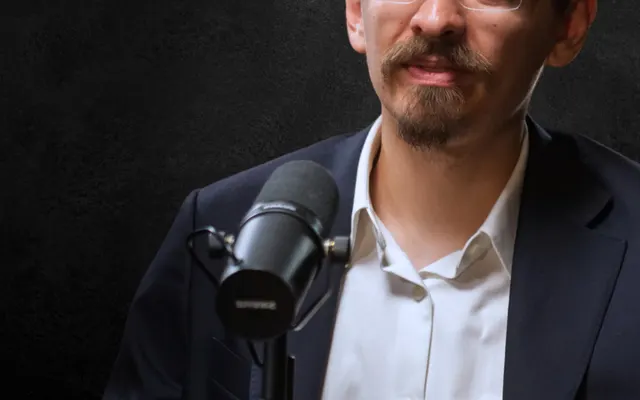
Connor Leahy
x.com/npcollapseAI safety advocate at ControlAI who calls for laws and a verified international ban on building superintelligence while supporting other useful AI.
Wie wird KI die Welt verändern?
Horizontal: deren geäußerter Doom–Bloom-Ausblick. Vertikal: Ausmaß der Transformation.
Doom–Bloom: 1 von 100. Ausmaß der Transformation: 97 von 100. Interpretationsbereiche: horizontal 0 bis 6, vertikal 92 bis 100. Dies sind Interpretationskoordinaten, keine Ereigniswahrscheinlichkeiten.
≈99%
“very, very high, within rounding error of Nate or whatever”
Things going poorly on the current trajectory toward superintelligence; in context, human extinction. Stated relative to Nate Soares, whom he puts at “maybe like 99”, and followed at once by “the future is not decided”
#201 - Connor Leahy - The AI That Escaped: Inside OpenAI's Rogue Agent Incident (The Peter McCormack Show) · Aug. 2026
Eine zentrale Annahme
Competitive pressure then pushes companies and states to deploy them anyway.Antwort 1
Wenn sich diese Annahme als anders herausstellen würde, wie würde sich deren Einschätzung ändern?
Eine ungeklärte Frage
The uncertainty is not whether sufficiently capable AI would be profoundly consequential; it is whether humanity retains control through that transition.Antwort 2
Was würde ihnen helfen, die plausiblen Ergebnisse hier voneinander zu unterscheiden?
Was ihre Meinung ändern könnte
A convincing, independently validated solution to controlling superintelligent systems would change my view most—especially if it remained reliable as systems became more capable, autonomous, strategically aware, and able to automate AI research.Antwort 4
Welche Belege würden ausreichen, und in welche Richtung würden sie deren Sichtweise verändern?
Weitere Details
Mehrere Lesarten bleiben plausibel: Es werden erhebliche Vorteile erwartet, allerdings unter wichtigen Bedingungen oder mit Einschränkungen bei ihrer Verteilung. / Selbst wenn fortgeschrittene KI entsteht, werden nur geringe positive Auswirkungen erwartet. / Es werden begrenzte oder eng verteilte Vorteile erwartet.
38 / 100
Interpretationsbereich von 0 bis 67 auf der qualitativen Skala.
Katastrophale oder unumkehrbare Verluste stehen im Zentrum der erwarteten Zukunft.
100 / 100
Interpretationsbereich von 100 bis 100 auf der qualitativen Skala.
Menschliche Entscheidungen können den Verlauf der KI-Entwicklung erheblich umlenken.
72 / 100
Interpretationsbereich von 50 bis 75 auf der qualitativen Skala.
Es wird erwartet, dass KI auf begrenzte Werkzeuge beschränkt bleibt.
Es wird erwartet, dass KI bei den meisten kognitiven Tätigkeiten mit Menschen gleichzieht.
Simulierte Position: Es wird erwartet, dass KI Menschen bei kognitiven Tätigkeiten deutlich übertrifft.
Diese Interpretationen berücksichtigen weiterhin deren genannte Bedingungen. Vorteile und Schäden können beide erheblich sein. Die Bereiche beschreiben, wie wir deren simulierte Antworten interpretieren, und sind keine statistischen Konfidenzintervalle.
Ähnliche Weltsichten
Vordenker, deren simulierte Weltsichten der von Connor Leahy am nächsten kommen
Was Connor Leahy über KI gesagt hat
Leahy warns that superintelligence would take control from humanity and calls for laws and a verified international ban, not a halt to useful AI.
“Superintelligent AI is neither a tool nor a weapon. It is an adversary.”
Post on X “We should criminalize the creation of superintelligence, and then we should push towards an international trust-but-verify regime”
Modern CTO podcast “Many of today’s models have valuable applications, including for defense purposes, but superintelligent AI is in a category of its own.”
ControlAI blog, America’s Security Depends on Stopping Superintelligence “We still have time to prevent superintelligence, but the clock is ticking.”
ControlAI blog, America’s Security Depends on Stopping Superintelligence “If a superintelligence is built, humanity will lose control over its future.”
Testimony, Canadian Senate transport and communications committee
Wörtlich aus den verlinkten Quellen, geprüft am 3. Okt. 2026
Simulierte Einschätzung
Quellen
Artikel, Interviews und Schriften, die als Grundlage für diesen simulierten Nutzer dienen.
Current institutional profile describes his focus on superintelligence risk, policy and institutional preparedness.

In The Rob Bensinger Compass section, Leahy endorses short timelines and broadly agrees with Yudkowsky’s alignment difficulty arguments, but is less certain and allows that he could be wrong. The interviewer’s 99% framing in 2022 was not his own figure; his August 2026 estimate is a separate, later statement.

At 29:04–32:23 he expects more capable unaligned systems to take over, with competitive pressure driving adoption. At 57:43–58:23 he gives 50–80% extinction or near-extinction within 50 years if humanity does literally nothing; intervention can change this dramatically. At 1:06–1:10 he advocates lawful collective action and buying time. This conditional historical estimate is not an unconditional current P(doom).

Calls for liability across the AI supply chain and a temporary international compute cap to buy time for longer-term safety and political solutions.

In his opening statement Leahy predicts humanity loses control if superintelligence is built, with extinction likely through competition. His answers describe competing AI populations, inadequate current control methods, and an international prohibition with verification. He opposes simply abandoning useful AI or slowing all Western data centres, while maintaining that unregulated competition underprovides security.

Machine transcript with speaker labels; use only Connor’s answers, not Peter McCormack’s. Around 60:44–61:00 he agrees his P(doom) is above 20% and below 100%. When the host puts Nate Soares at 100, he says surely not, maybe 99, and puts his own P(doom) of things going poorly on the current trajectory very, very high, within rounding error of that. He immediately adds that the future is not decided. Supersedes his 2025 figure of 50–80%, which was conditional on doing literally nothing.

Wo stehst du?
Meine Weltsicht abbilden