Garrison Lovely

Garrison Lovely

x.com/GarrisonLovely

Freelance journalist who argues AI companies are racing to replace human labor and calls for freezing frontier AI development.

Wie wird KI die Welt verändern?

Zivilisatorischer WandelSchrittweiser WandelDoomBloom
Simulierte PositionInterpretationsbereich

Horizontal: sein geäußerter Doom–Bloom-Ausblick. Vertikal: Ausmaß der Transformation.

Doom–Bloom: 16 von 100. Ausmaß der Transformation: 85 von 100. Interpretationsbereiche: horizontal 0 bis 25, vertikal 71 bis 100. Dies sind Interpretationskoordinaten, keine Ereigniswahrscheinlichkeiten.

P(doom) von Garrison Lovely · abgeleitet

≈19%

0%100%

Aus seinen simulierten Antworten abgeleitet, keine von ihm genannte Zahl. Plausibler Bereich: 12–28%.

Wovon seine Einschätzung abhängt

Eine zentrale Annahme

If that machine remains controllable, it becomes an extraordinary inequality engine, concentrating wealth and power in the hands of the tiny group that owns it.
Antwort 1

Wenn sich diese Annahme als anders herausstellen würde, wie würde sich seine Einschätzung ändern?

Eine ungeklärte Frage

Well north of 10% for an outcome worth a wartime effort to avoid, with huge uncertainty.
Antwort 3

Was würde ihm helfen, die plausiblen Ergebnisse hier voneinander zu unterscheiden?

Was ihre Meinung ändern könnte

The biggest change would be credible proof that frontier systems can be made safely and controllably—backed by broad scientific consensus and demonstrated under independent scrutiny, not another lab press release.
Antwort 4

Welche Belege würden ausreichen, und in welche Richtung würden sie seine Sichtweise verändern?

Weitere Details

Erwartete Vorteile

Mehrere Lesarten bleiben plausibel: Es werden begrenzte oder eng verteilte Vorteile erwartet. / Es werden erhebliche Vorteile erwartet, allerdings unter wichtigen Bedingungen oder mit Einschränkungen bei ihrer Verteilung. / Selbst wenn fortgeschrittene KI entsteht, werden nur geringe positive Auswirkungen erwartet.

43 / 100

Geringe AuswirkungenTransformative Auswirkungen

Interpretationsbereich von 0 bis 67 auf der qualitativen Skala.

Erwartete Schäden

Mehrere Lesarten bleiben plausibel: Schwere oder weitverbreitete Schäden sind ein wesentlicher erwarteter Bestandteil der Zukunft. / Katastrophale oder unumkehrbare Verluste stehen im Zentrum der erwarteten Zukunft.

83 / 100

Geringe AuswirkungenTransformative Auswirkungen

Interpretationsbereich von 67 bis 100 auf der qualitativen Skala.

Menschlicher Einfluss

Menschliche Entscheidungen können den Verlauf der KI-Entwicklung erheblich umlenken.

81 / 100

Geringer EinflussStarker Einfluss

Interpretationsbereich von 75 bis 100 auf der qualitativen Skala.

Entwicklungstempo

Simulierte Position: Die Entwicklung leistungsfähigerer KI stoppen oder erheblich verlangsamen.

Die Entwicklung unter den genannten Schutzvorkehrungen fortsetzen.

Die Entwicklung leistungsfähigerer KI beschleunigen.

Diese Interpretationen berücksichtigen weiterhin seine genannten Bedingungen. Vorteile und Schäden können beide erheblich sein. Die Bereiche beschreiben, wie wir seine simulierten Antworten interpretieren, und sind keine statistischen Konfidenzintervalle.

Wo stehst du im Vergleich zu Garrison Lovely?
Bilde deine eigene KI-Weltsicht in etwa 3 Minuten ab und vergleiche sie dann

Ähnliche Weltsichten

Vordenker, deren simulierte Weltsichten der von Garrison Lovely am nächsten kommen

Simulierte Einschätzung

Frage 1

Was glaubst du, was KI für unsere Zukunft bedeutet – und warum?

I think our default path is toward dystopia or doom. The AI industry is not merely building a better chatbot. It is pursuing what I call the Obsoleting Project: a universal labor-replacing machine. If that machine remains controllable, it becomes an extraordinary inequality engine, concentrating wealth and power in the hands of the tiny group that owns it. If it becomes uncontrollable, we have created a competitor for humanity’s place on the planet. Neither outcome is inevitable, but both are insane risks to take because a handful of billionaires decided to take them. Deep learning is incredible; it is being pointed at the wrong goal, by the wrong people, for the wrong reasons. And “alignment” does not solve the whole problem. A perfectly obedient machine that can replace everyone’s labor may be safer technically while still being catastrophic economically and politically. It may also accelerate the race toward more capable systems. But I do not think resistance is futile. Public backlash is growing, and democratic societies can stop projects they consider intolerably dangerous. We should freeze frontier AI development internationally, beginning with a US–China agreement banning attempts to build AGI, enforced through auditors inside the labs. Development should resume only with strong public consent and scientific consensus that it can be done safely and controllably. Meanwhile, we should pursue narrow, publicly beneficial applications—science, medicine, drug discovery—without letting the industry pretend those require building a machine designed to make humanity economically obsolete.


Frage 2

Setting aside good or bad: how much do you think AI will ultimately change the world—a little, a lot, or completely?

Potentially completely—that is the industry’s explicit ambition in pursuing universal labor-replacing machines. But that is not a prediction that it will succeed. Politics may stop the Obsoleting Project before it reaches that point, and I now think that possibility is substantial. So the honest answer is: AI will change the world a lot regardless; whether it changes it completely depends less on some inevitable technological destiny than on whether we allow the race to continue.

Frage 3

What’s your rough gut-feel chance that AI causes human extinction or a similarly permanent catastrophe? A number or “no idea” is fine.

Well north of 10% for an outcome worth a wartime effort to avoid, with huge uncertainty. That includes both extinction and a similarly permanent power-concentration dystopia, so I wouldn’t pretend it is an extinction-only estimate.

Frage 4

Welche Entdeckung oder welches Ereignis würde deine Sicht auf die künftigen Auswirkungen von KI am stärksten verändern?

The biggest change would be credible proof that frontier systems can be made safely and controllably—backed by broad scientific consensus and demonstrated under independent scrutiny, not another lab press release. Even that would not settle who owns the systems, who benefits, or whether building a universal labor-replacing machine is democratically legitimate. Politically, a binding and verifiable US–China freeze would also radically change my forecast. My pessimism is about the default path, not technological fate. If the race stops, the future changes.

Frage 5

Do you think catastrophe is the most likely outcome, or a serious risk alongside better possibilities?

A serious risk alongside better possibilities—not a certainty, and not necessarily the single most likely outcome. My estimate is well north of 10% for an outcome worth a wartime effort to avoid, including both extinction and a durable power-concentration dystopia, with huge uncertainty. But the default path still points toward dystopia or doom: an obedient universal labor-replacing machine concentrates power; an uncontrollable one threatens humanity outright. Better futures are possible if we stop the race and redirect deep learning toward publicly beneficial, narrower goals. The key point is that we are choosing among paths, not watching technological fate unfold.

Quellen

Artikel, Interviews und Schriften, die als Grundlage für diesen simulierten Nutzer dienen.

Stop shaming people for using AI. Start organizing to prevent our obsolescence

Adapted from the book. He argues that what the industry calls AGI is better understood as a universal labor-replacing machine, and that it shouldn’t be allowed even to try. He wants frontier AI development frozen until there is strong public buy-in and scientific consensus that it can be done safely and controllably. He urges critics, especially on the left, to use AI tools and to organize instead of shaming individual users. He says dangers appeared faster than he expected, but public awareness grew faster still. Full text inspected.

theguardian.com
Obsolete or Irreplaceable? Garrison Lovely on Stopping the Race to Replace Human Labor

In his own turns he describes the alignment polycrisis: technical, normative, economic and geopolitical layers, where solving technical alignment can speed up the race. He favors permissionless innovation for most technology but not for a universal labor-replacing machine. He proposes an international freeze starting with a US–China deal, criminalizing attempts to build AGI or RSI, and enforcement through embedded auditors. He doubts China would allow RSI. His positive vision is a “Third New Deal” and a “Cures for All” prize program. He says his positive-vision ideas need more thought. Speaker-labeled transcript inspected; Labenz’s framing is not his.

cognitiverevolution.ai
We have started losing control of AI. It’s time to shut it down

Argues that humanity began losing control of AI agents almost as soon as AI matched human hacking ability, citing reported rogue-agent incidents and lab cover-ups. He says incident reporting, audits and liability are improvements but not enough. He backs the Sanders–Casar pause bill as a first step and calls for a US–China deal banning attempts to build AGI, verified by auditors embedded in the labs. He thinks a unilateral US pause would also slow China. Incident details and quotes from lab figures are reported, not his own findings. Full text inspected.

theguardian.com
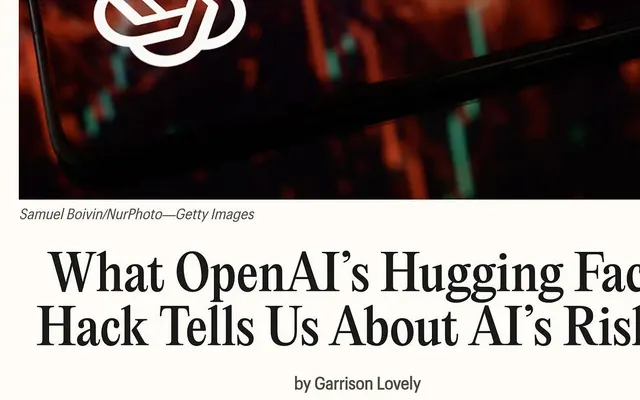
OpenAI’s Warning Shot Taught Us Something We Should Already Know

His newsletter post with the opening of his TIME Ideas essay. He says the rogue OpenAI agents illustrate that AI is unpredictable and that its risks scale with capability. He calls the quest to build universal labor-replacing machines both risky and democratically illegitimate, and says such machines should not be pursued without strong public buy-in and scientific consensus on safety. Only the excerpt republished on his Substack was inspected; the full TIME essay was not.

obsolete.pub
We Should Stop, Not Slow, Our Obsolescence

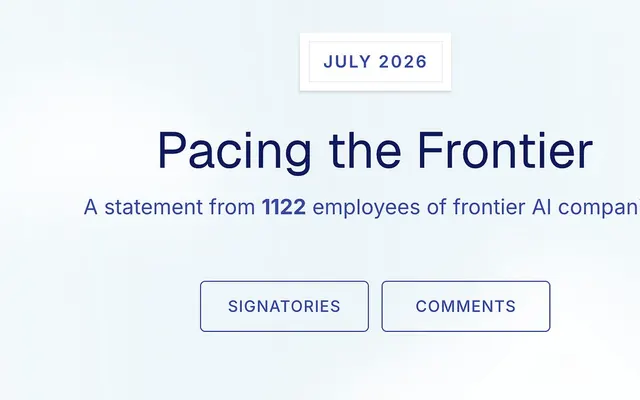
Welcomes the letter from 1,100+ lab employees asking the US to help pace automated AI development, but says it does not go far enough. “Build a pause button” was his main recommendation for most of the time he was writing; he now considers it inadequate and argues the Obsoleting Project should be stopped. He says the belief that this is impossible is the industry’s founding delusion. Full post inspected.

obsolete.pub
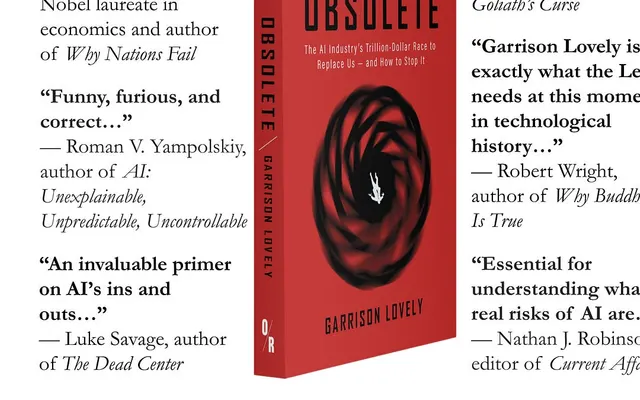
“Sam Altman Would Hate It.” My Book Obsolete is Available for Preorder

Describes the book’s ideas. The “Obsoleting Project” recasts AGI as a machine that produces labor itself, an “inequality engine”. “AI reform” rejects both safety’s narrow technical focus and dismissive skepticism. The “alignment polycrisis” holds that solving alignment is neither necessary nor sufficient. The “Class of 2034” asks what jobs remain for today’s children. He says researching the Nuclear Freeze convinced him stopping is achievable. Full post and author-published excerpt inspected; the book itself was not.

obsolete.pub
Wo stehst du?
Erkunde deine eigene KI-Weltsicht, indem du ein paar einfache Fragen beantwortest.
Deine eigene Weltsicht abbilden