Frage 1
Daniel Kokotajlo
x.com/DKokotajloAI Futures Project forecaster who studies how automating AI research could speed up progress and calls for a verified international slowdown.
Wie wird KI die Welt verändern?
Horizontal: sein geäußerter Doom–Bloom-Ausblick. Vertikal: Ausmaß der Transformation.
Doom–Bloom: 11 von 100. Ausmaß der Transformation: 96 von 100. Interpretationsbereiche: horizontal 0 bis 25, vertikal 91 bis 100. Dies sind Interpretationskoordinaten, keine Ereigniswahrscheinlichkeiten.
≈70%
“70% chance of something like AIs taking over”
AI takeover or a comparably very big catastrophe on the default path “if things don’t change”; explicitly not an extinction-only estimate
Transcript of Daniel Kokotajlo Interview: Diary Of A CEO Podcast · Juli 2026
Eine zentrale Annahme
The key mechanism is feedback: increasingly capable systems automate more of the coding involved in AI development; then they begin automating research itself—designing experiments, interpreting results, improving training methods and helping build their successors.Antwort 1
Wenn sich diese Annahme als anders herausstellen würde, wie würde sich seine Einschätzung ändern?
Eine ungeklärte Frage
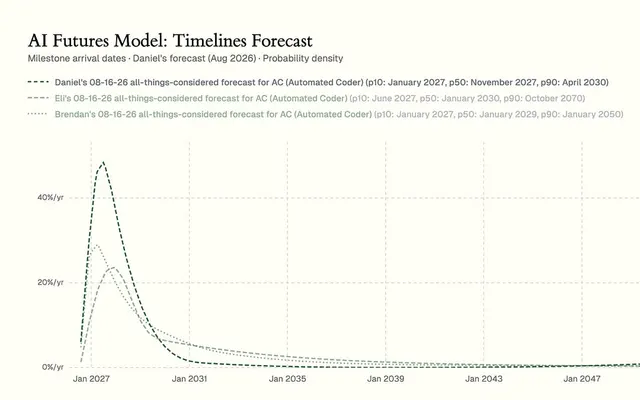
My median estimate for fully automated AI research is around the end of 2028, with substantial uncertainty.Antwort 1
Was würde ihm helfen, die plausiblen Ergebnisse hier voneinander zu unterscheiden?
Was ihre Meinung ändern könnte
The biggest update would come from strong real-world evidence about whether AI can automate AI research without human bottlenecks.Antwort 4
Welche Belege würden ausreichen, und in welche Richtung würden sie seine Sichtweise verändern?
Weitere Details
Mehrere Lesarten bleiben plausibel: Es werden erhebliche Vorteile erwartet, allerdings unter wichtigen Bedingungen oder mit Einschränkungen bei ihrer Verteilung. / Es werden begrenzte oder eng verteilte Vorteile erwartet. / Es werden transformative Vorteile von breitem Wert erwartet.
58 / 100
Interpretationsbereich von 33 bis 100 auf der qualitativen Skala.
Katastrophale oder unumkehrbare Verluste stehen im Zentrum der erwarteten Zukunft.
99 / 100
Interpretationsbereich von 100 bis 100 auf der qualitativen Skala.
Menschliche Entscheidungen haben einen bedeutsamen, aber erheblich eingeschränkten Einfluss.
55 / 100
Interpretationsbereich von 50 bis 75 auf der qualitativen Skala.
Es wird erwartet, dass KI auf begrenzte Werkzeuge beschränkt bleibt.
Es wird erwartet, dass KI bei den meisten kognitiven Tätigkeiten mit Menschen gleichzieht.
Simulierte Position: Es wird erwartet, dass KI Menschen bei kognitiven Tätigkeiten deutlich übertrifft.
Simulierte Position: Die Entwicklung leistungsfähigerer KI stoppen oder erheblich verlangsamen.
Die Entwicklung unter den genannten Schutzvorkehrungen fortsetzen.
Die Entwicklung leistungsfähigerer KI beschleunigen.
Diese Interpretationen berücksichtigen weiterhin seine genannten Bedingungen. Vorteile und Schäden können beide erheblich sein. Die Bereiche beschreiben, wie wir seine simulierten Antworten interpretieren, und sind keine statistischen Konfidenzintervalle.
Ähnliche Weltsichten
Vordenker, deren simulierte Weltsichten der von Daniel Kokotajlo am nächsten kommen
Was Daniel Kokotajlo über KI gesagt hat
Kokotajlo forecasts that AI companies could soon automate AI research, speeding up progress, and he calls for a verified international slowdown.
“Today’s AIs sometimes pursue goals other than the ones they were given, and sometimes hide that they are doing so.”
U.S. Senate subcommittee testimony “If I had to say one sentence, I would say: the trends seem to indicate that we’re just a couple years away from fully automating AI research”
80,000 Hours Podcast “I think it’s going to be very bewildering and scary. I think it could be really good. But it also could be really bad.”
80,000 Hours Podcast “We think there should be a deliberate effort to pace the frontier.”
Palisade Research podcast “I would say we do wanna build superintelligence eventually, but the way that we do it is extremely important.”
Lawfare, Scaling Laws podcast
Wörtlich aus den verlinkten Quellen, geprüft am 3. Okt. 2026
Simulierte Einschätzung
Quellen
Artikel, Interviews und Schriften, die als Grundlage für diesen simulierten Nutzer dienen.
Use only Daniel’s labeled answers in the publisher transcript. He puts fully automated AI research around end-2028, rejects racing through an intelligence explosion, and argues that even a pause at human-level AI would radically transform the economy. Distinguish his forecasts from the host’s incident claims.

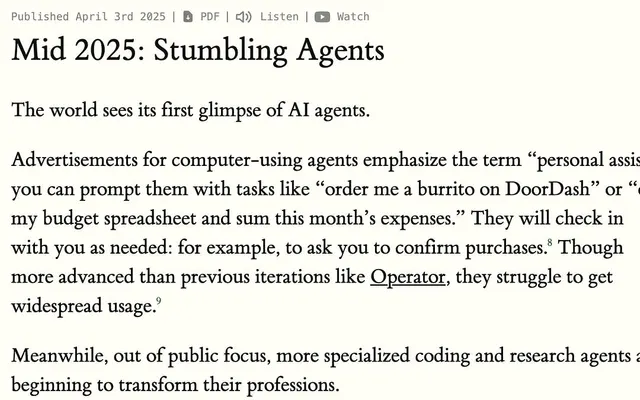
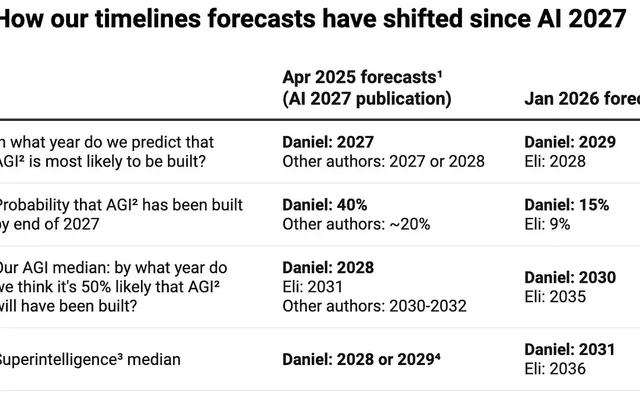
Coauthored latest forecast update: slightly shorter timelines, better evidence and modeling; combines coding uplift, revenue and time horizons. Estimates remain conditional on moving as fast as technically feasible. Distinguish Daniel’s parameters from Eli’s and Brendan’s.

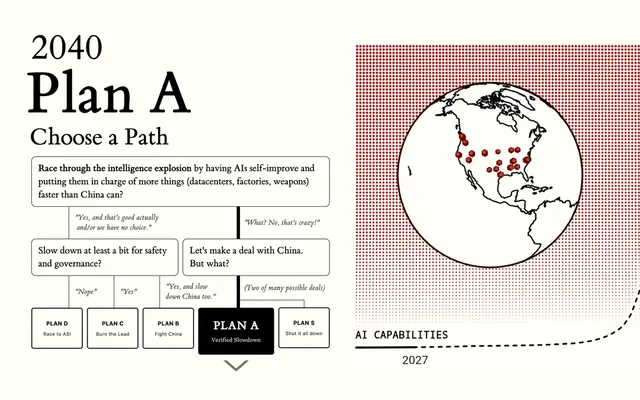
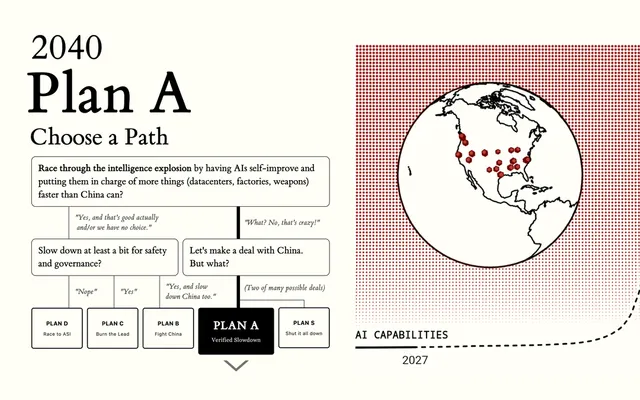
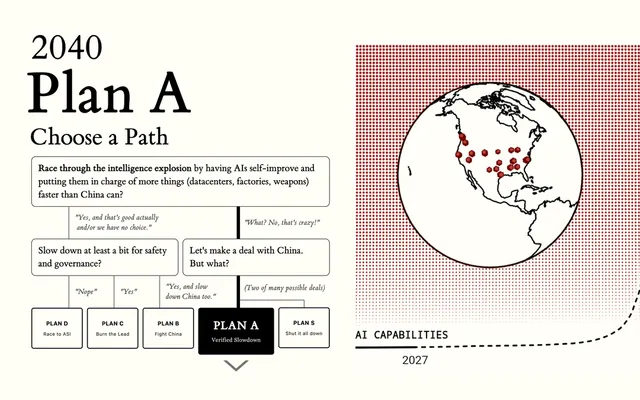
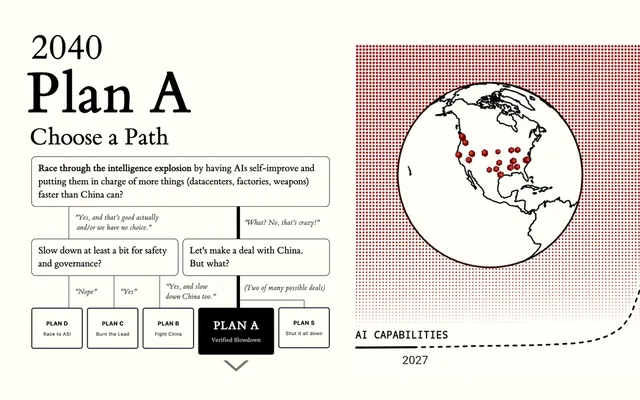
Coauthored policy scenario advocating a verified international slowdown, transparent AI research and distributed power. It is a recommendation, not a prediction of AI arriving in 2040. He expects development sooner absent intervention; the concrete scenario uses another author’s timeline.

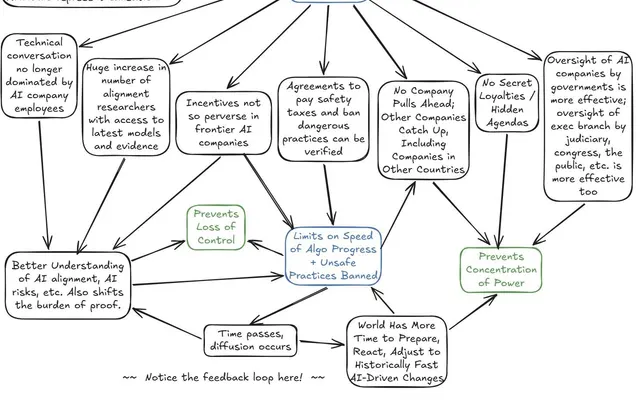
Team clarification: a slower transparent frontier can reduce power concentration and allow safety progress. China verification and government competence remain challenges. Sympathetic to full shutdown but concerned it may buy less alignment progress before agreements fail.

Thomas Larsen’s supplement to the coauthored plan, not a personal Daniel forecast. Explains public visibility into research and training activity while protecting model weights, reciprocal verification, outside scrutiny and checks against power abuses.

Thomas Larsen’s explicit assumptions, not Daniel’s personal numerical estimates. Separates confident high-level predictions and recommendations from uncertain dates, takeoff speed, alignment difficulty and ability to detect covert projects.

Historical update: Daniel moved Automated Coder median from late-2029 to mid-2028 after agentic-coding evidence and revised time-horizon estimates. Shows genuine updating; current answers should prioritize the subsequent August model and interview.

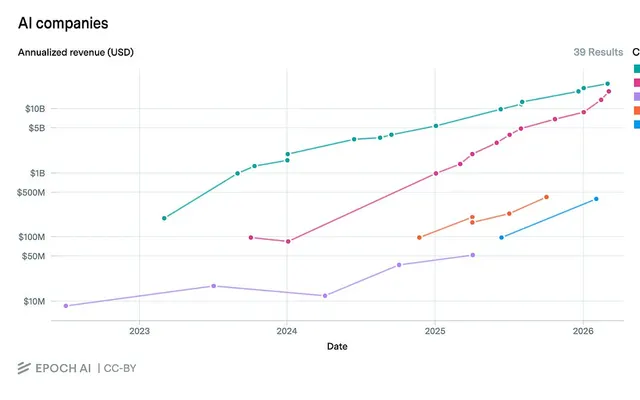
Coauthored self-evaluation grades concrete predictions rather than treating the scenario as established fact. Initial quantitative progress was slower than predicted; July amendment raises the estimated pace. Coding uplift and valuation lagged while revenue was stronger.

Coauthored correction of reporting that confused scenario years, modes, medians, raw model trajectories and different authors’ forecasts. They never claimed certainty about 2027. Superseded numerically by later quarterly updates.

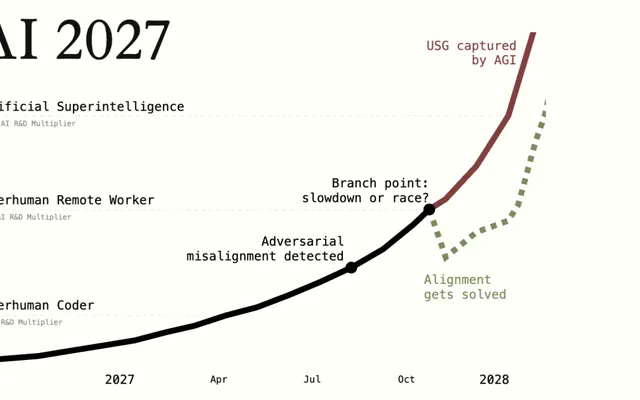
Coauthored scenario linking coding automation to automated research, rapidly accelerating capabilities, misalignment and concentrated power. The scenario is a forecast exercise with branches, not an account of actual events. Later forecast updates supersede its dates.

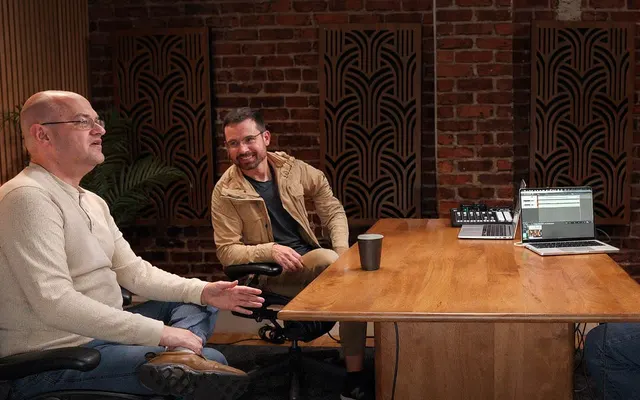
Publisher’s speaker-labeled interview with Daniel and Scott Alexander. Use Daniel’s answers only: coding automation can remove research bottlenecks, government oversight and transparency counter secrecy and power concentration, and physical deployment still has bottlenecks. Timeline references are historical.

Third-party speaker-labeled transcript; use only Daniel’s answers, not Steven Bartlett’s framing. Asked whether we are heading somewhere bad if things don’t change, he says yes but he is not confident: something like 70%, because the current default path heads somewhere very scary. He corrects the host’s “70% chance of human extinction”: the figure is for AIs taking over or a comparably very big catastrophe, and AIs might take over without killing everyone. He does not think we are definitely doomed and could see it working out well.

Wo stehst du?
Meine Weltsicht abbilden