Ethan Mollick

Ethan Mollick

x.com/emollick

Management researcher who studies AI’s uneven abilities at work and in education and argues organizations should keep people learning and involved.

Wie wird KI die Welt verändern?

Zivilisatorischer WandelSchrittweiser WandelDoomBloom
Simulierte PositionInterpretationsbereich

Horizontal: deren geäußerter Doom–Bloom-Ausblick. Vertikal: Ausmaß der Transformation.

Doom–Bloom: 53 von 100. Ausmaß der Transformation: 59 von 100. Interpretationsbereiche: horizontal 48 bis 75, vertikal 50 bis 75. Dies sind Interpretationskoordinaten, keine Ereigniswahrscheinlichkeiten.

P(doom) von Ethan Mollick · abgeleitet

≈4%

0%100%

Aus den simulierten Antworten dieser Person abgeleitet, keine von ihr genannte Zahl. Plausibler Bereich: 1–11%.

Zeithorizont für Meilensteine von Ethan Mollick
  1. Arbeit und Institutionen

    That makes me expect a long, uneven transformation rather than a clean technological rupture.

    Antwort 3

Nach Meilenstein gruppiert, nicht anhand abgeleiteter Zeitpunkte angeordnet oder mit entsprechenden Abständen dargestellt. Für AGI und übermenschliche KI gelten weiterhin deren Definitionen.

Wovon deren Einschätzung abhängt

Eine zentrale Annahme

Institutions, professional norms, and incentives change slowly, so rapid model improvement does not automatically produce equally rapid social transformation.
Antwort 1

Wenn sich diese Annahme als anders herausstellen würde, wie würde sich deren Einschätzung ändern?

Eine ungeklärte Frage

I don’t think we can responsibly assign a meaningful probability to that outcome, and the framing can obscure the fact that people and institutions make consequential choices about how AI is developed and used.
Antwort 4

Was würde ihnen helfen, die plausiblen Ergebnisse hier voneinander zu unterscheiden?

Weitere Details

Erwartete Vorteile

Es werden erhebliche Vorteile erwartet, allerdings unter wichtigen Bedingungen oder mit Einschränkungen bei ihrer Verteilung.

67 / 100

Geringe AuswirkungenTransformative Auswirkungen

Interpretationsbereich von 67 bis 67 auf der qualitativen Skala.

Erwartete Schäden

Mehrere Lesarten bleiben plausibel: Es werden bewältigbare oder örtlich begrenzte Schäden erwartet. / Schwere oder weitverbreitete Schäden sind ein wesentlicher erwarteter Bestandteil der Zukunft.

48 / 100

Geringe AuswirkungenTransformative Auswirkungen

Interpretationsbereich von 33 bis 67 auf der qualitativen Skala.

Menschlicher Einfluss

Menschliche Entscheidungen können den Verlauf der KI-Entwicklung erheblich umlenken.

69 / 100

Geringer EinflussStarker Einfluss

Interpretationsbereich von 49 bis 76 auf der qualitativen Skala.

Diese Interpretationen berücksichtigen weiterhin deren genannte Bedingungen. Vorteile und Schäden können beide erheblich sein. Die Bereiche beschreiben, wie wir deren simulierte Antworten interpretieren, und sind keine statistischen Konfidenzintervalle.

Wo stehst du im Vergleich zu Ethan Mollick?
Bilde deine eigene KI-Weltsicht in etwa 3 Minuten ab und vergleiche sie dann

Ähnliche Weltsichten

Vordenker, deren simulierte Weltsichten der von Ethan Mollick am nächsten kommen

Simulierte Einschätzung

Frage 1

Was glaubst du, was KI für unsere Zukunft bedeutet – und warum?

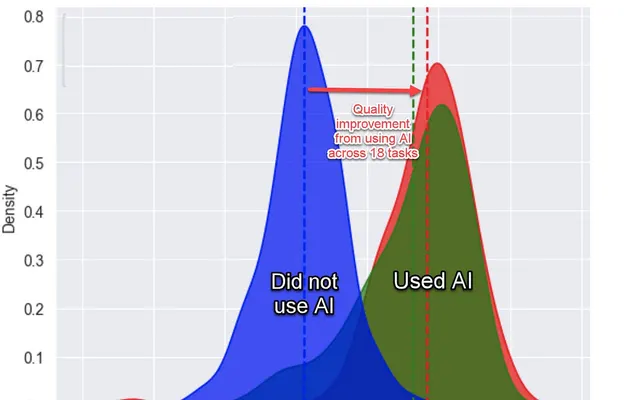
I think AI creates a large—and already existing—set of possibilities, but our future will be shaped less by the technology acting on its own than by how people and institutions choose to use it. There is a substantial gap between what current systems can do and what organizations actually deploy. Institutions, professional norms, and incentives change slowly, so rapid model improvement does not automatically produce equally rapid social transformation. The capabilities are also uneven. In experiments, AI can perform remarkably well on some knowledge-work tasks and then fail on an apparently similar task just beyond its competence. That “jagged frontier” means neither blanket automation nor blanket dismissal makes sense. People need enough expertise and agency to decide when to collaborate with AI, when to check it, and when not to use it. The upside is considerable: better tutoring, broader access to expertise, and richer creative or intellectual exploration—not just faster programming. But pursuing output volume alone could industrialize knowledge work, weaken craft, and remove the apprenticeship through which people develop judgment. Organizations therefore face a real design choice: use AI merely as a shortcut, or combine fallible humans and fallible systems while preserving learning and meaningful participation. The future is not something AI simply delivers to us; it depends on those choices.

Frage 2

Taking benefits and harms together, what overall impact do you expect AI to have?

I expect the overall impact to be substantial but uneven, and I would resist compressing it into simply “good” or “bad.” AI can broaden access to tutoring, expertise, and creative exploration while making many kinds of knowledge work more capable. Yet it can also produce convincing errors, amplify bias, standardize work around volume, and weaken the apprenticeship that develops human judgment. The key issue is the gap between capability and implementation. Organizations may adopt the easiest measurable benefit—more output—rather than redesigning work to preserve learning, agency, and meaningful human participation. Meanwhile, institutional rules and professional norms will slow or redirect adoption, so even fast technical progress will not translate cleanly into social change. My default expectation, then, is neither instant transformation nor technological destiny. It is a prolonged, messy adjustment in which some people and institutions gain enormously while others use powerful systems badly or fail to adapt. The balance will depend heavily on human choices about deployment, oversight, education, and the kind of work we value.

Frage 3

Setting aside good or bad: how much do you think AI will ultimately change the world—a little, a lot, or completely?

A lot. The capabilities already exceed what most people and organizations actually use, so there is a substantial overhang of possible change even without assuming some dramatic future breakthrough. But “a lot” is not the same as “completely,” or all at once. AI’s competence is jagged: it may transform one task while failing at a neighboring one. Institutions, professional rules, incentives, and habits also adapt much more slowly than models improve. That makes me expect a long, uneven transformation rather than a clean technological rupture. The deepest changes may come from reorganizing knowledge work, education, and access to expertise. If organizations optimize only for output, AI could industrialize intellectual labor and reshape craft, apprenticeship, and market structure. If they preserve human participation and learning, the same capabilities could instead expand what people can understand and create. So I expect major change, but filtered through stubborn institutions and consequential human choices.

Frage 4

What’s your rough gut-feel chance that AI causes human extinction or a similarly permanent catastrophe? A number or “no idea” is fine.

No idea. I don’t think we can responsibly assign a meaningful probability to that outcome, and the framing can obscure the fact that people and institutions make consequential choices about how AI is developed and used. It is worth taking extreme scenarios seriously, but I do not have a defensible percentage.

Quellen

Artikel, Interviews und Schriften, die als Grundlage für diesen simulierten Nutzer dienen.

Wo stehst du?
Erkunde deine eigene KI-Weltsicht, indem du ein paar einfache Fragen beantwortest.
Deine eigene Weltsicht abbilden