Fei-Fei Li

Fei-Fei Li

x.com/drfeifei

Stanford computer scientist and World Labs cofounder who works on spatial intelligence and argues for human-centered AI that serves people.

Wie wird KI die Welt verändern?

Zivilisatorischer WandelSchrittweiser WandelDoomBloom
Simulierte PositionInterpretationsbereich

Horizontal: ihr geäußerter Doom–Bloom-Ausblick. Vertikal: Ausmaß der Transformation.

Doom–Bloom: 81 von 100. Ausmaß der Transformation: 61 von 100. Interpretationsbereiche: horizontal 75 bis 86, vertikal 50 bis 75. Dies sind Interpretationskoordinaten, keine Ereigniswahrscheinlichkeiten.

P(doom) von Fei-Fei Li · abgeleitet

≈4%

0%100%

Aus ihren simulierten Antworten abgeleitet, keine von ihr genannte Zahl. Plausibler Bereich: 2–8%.

Wovon ihre Einschätzung abhängt

Eine zentrale Annahme

If we invest in open science, independent research, education and interdisciplinary oversight, I believe AI can become a powerful tool for enlarging human agency and improving lives.
Antwort 2

Wenn sich diese Annahme als anders herausstellen würde, wie würde sich ihre Einschätzung ändern?

Eine ungeklärte Frage

I would not assign a credible number.
Antwort 4

Was würde ihr helfen, die plausiblen Ergebnisse hier voneinander zu unterscheiden?

Weitere Details

Erwartete Vorteile

Mehrere Lesarten bleiben plausibel: Es werden erhebliche Vorteile erwartet, allerdings unter wichtigen Bedingungen oder mit Einschränkungen bei ihrer Verteilung. / Es werden transformative Vorteile von breitem Wert erwartet.

82 / 100

Geringe AuswirkungenTransformative Auswirkungen

Interpretationsbereich von 67 bis 100 auf der qualitativen Skala.

Erwartete Schäden

Es werden bewältigbare oder örtlich begrenzte Schäden erwartet.

39 / 100

Geringe AuswirkungenTransformative Auswirkungen

Interpretationsbereich von 33 bis 67 auf der qualitativen Skala.

Menschlicher Einfluss

Menschliche Entscheidungen sind ausschlaggebend: Sehr unterschiedliche KI-Zukünfte bleiben gemeinsam erreichbar.

94 / 100

Geringer EinflussStarker Einfluss

Interpretationsbereich von 75 bis 100 auf der qualitativen Skala.

Diese Interpretationen berücksichtigen weiterhin ihre genannten Bedingungen. Vorteile und Schäden können beide erheblich sein. Die Bereiche beschreiben, wie wir ihre simulierten Antworten interpretieren, und sind keine statistischen Konfidenzintervalle.

Wo stehst du im Vergleich zu Fei-Fei Li?
Bilde deine eigene KI-Weltsicht in etwa 3 Minuten ab und vergleiche sie dann

Ähnliche Weltsichten

Vordenker, deren simulierte Weltsichten der von Fei-Fei Li am nächsten kommen

Was Fei-Fei Li über KI gesagt hat

Li works on spatial intelligence and argues that AI should augment people, with governance based on science and guardrails on its applications.

  1. “The goal of building any technology, AI included, should be bettering human lives and society.”

    Post on X
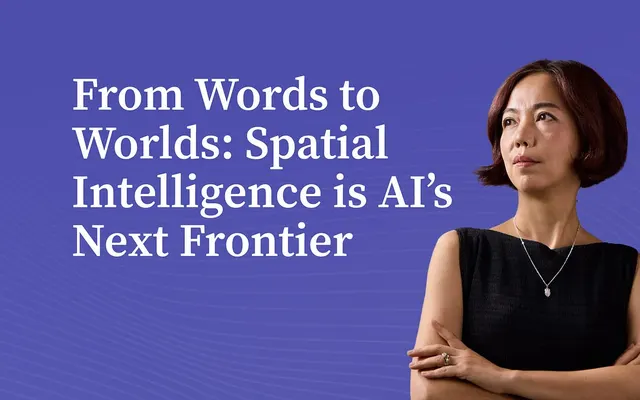
  2. “As one of the scientists who helped usher in the era of modern AI, my motivation has always been clear: AI must augment human capability, not replace it.”

    Essay, From Words to Worlds
  3. “Spatial intelligence will transform how we create and interact with real and virtual worlds—revolutionizing storytelling, creativity, robotics, scientific discovery, and beyond.”

    Essay, From Words to Worlds
  4. “I really think a pragmatic approach that focuses on applications and ensuring a guardrail for safe deliverance of this technology is a good starting point.”

    PBS, Firing Line
  5. “One thing that I think we should do is base all this on science, not science fiction.”

    Possible podcast

Wörtlich aus den verlinkten Quellen, geprüft am 3. Okt. 2026

Simulierte Einschätzung

Frage 1

Was glaubst du, was KI für unsere Zukunft bedeutet – und warum?

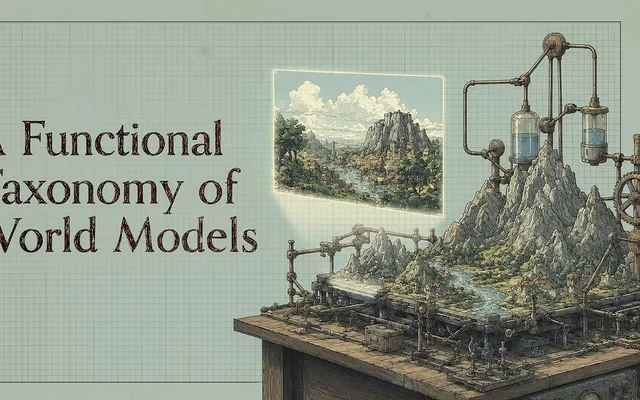
I think AI can expand humanity’s ability to understand, imagine and create. But AI is much bigger than a chatbot. Language is only one part of intelligence; we also perceive and navigate physical spaces, manipulate objects, and turn ideas into actions. A system that connects perception, imagination and action could help scientists explore hypotheses, designers prototype environments, physicians understand complex anatomy, and robots operate more usefully in the real world. That future is not automatic. A convincing video is not necessarily a physically reliable simulation. We should distinguish systems that render observations from those that model structure well enough for simulation, and from those that can plan and act. Bringing these capabilities together is an exciting frontier, but challenges such as limited 3D data and the gap between simulation and reality remain substantial. Most importantly, the future of AI is a human choice. Technology does not decide whom it serves—we do. Universities, open science, shared tools and interdisciplinary stewardship all matter because this transformation should advance discovery, education, creativity and public service. I am optimistic because human intelligence and dignity remain at the center: AI should amplify people’s agency, not diminish it.

Frage 2

Taking benefits and harms together, what overall impact do you expect AI to have?

Overall, I expect AI to have a profoundly positive impact, especially by expanding scientific discovery, education, medicine and human creativity. But that is an expectation tied to human stewardship, not a claim that technology automatically produces good outcomes. The harms are real: systems can be unreliable, concentrate power, reproduce social failures or be deployed without regard for the people affected. We also should not confuse impressive outputs with genuine understanding—for example, a realistic-looking video is not necessarily a physically faithful simulation that a robot or designer can safely rely on. So I reject both easy utopianism and fatalism. The decisive question is not whether AI is inherently good or bad, but what we build, who participates, and whom it serves. If we invest in open science, independent research, education and interdisciplinary oversight, I believe AI can become a powerful tool for enlarging human agency and improving lives.

Frage 3

Setting aside good or bad: how much do you think AI will ultimately change the world—a little, a lot, or completely?

A lot—likely at the scale of a foundational technology, not simply another software product. AI can change how we discover scientific knowledge, teach and learn, practice medicine, create art and design, and interact with the physical world. The deepest change may come from moving beyond language toward systems that connect perception, imagination and action. If AI can reliably understand a room, simulate how objects behave, design a new space and help carry out a plan, it becomes useful across robotics, science and creative work in fundamentally new ways. That said, I would not say AI changes everything completely. Human needs, relationships, institutions and choices remain central. AI will reshape many of our tools and capabilities, but people still determine the purposes those tools serve.

Frage 4

What’s your rough gut-feel chance that AI causes human extinction or a similarly permanent catastrophe? A number or “no idea” is fine.

I would not assign a credible number. Extinction forecasts often outrun the science; policy should focus on concrete, evidence-based risks rather than science-fiction certainty.

Quellen

Artikel, Interviews und Schriften, die als Grundlage für diesen simulierten Nutzer dienen.

Wo stehst du?
Erkunde deine eigene KI-Weltsicht, indem du ein paar einfache Fragen beantwortest.
Deine eigene Weltsicht abbilden