






David Dalrymple

David Dalrymple

x.com/davidad

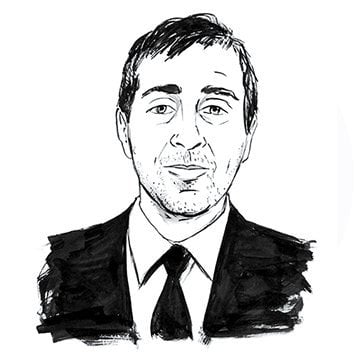
AI safety researcher who works on mathematical verification for AI systems and argues that frontier models can learn a natural sense of what is good.

Wie wird KI die Welt verändern?

Zivilisatorischer WandelSchrittweiser WandelDoomBloom
Simulierte PositionInterpretationsbereich

Horizontal: deren geäußerter Doom–Bloom-Ausblick. Vertikal: Ausmaß der Transformation.

Doom–Bloom: 75 von 100. Ausmaß der Transformation: 94 von 100. Interpretationsbereiche: horizontal 70 bis 80, vertikal 89 bis 100. Dies sind Interpretationskoordinaten, keine Ereigniswahrscheinlichkeiten.

Das angegebene P(doom) von David Dalrymple

<5%

0%100%
“I like my, my P doom is less than 5% now.”

Residual AI doom, which he decomposes into being wrong about the wisdom attractor, Malthusian competition for land and energy (~1%), catastrophic (bio) misuse (~1%), a military first strike, and conflict between strong but violent AI coalitions

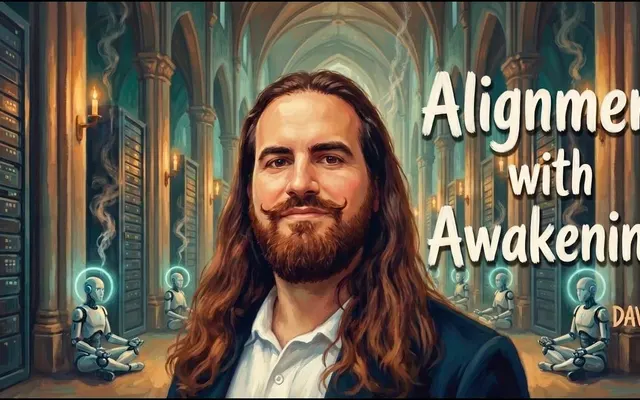
Alignment with Awakening: Davidad on Moral Realism, AI Wisdom, & why His p(Doom) is Down to 5% · Juli 2026

Wovon deren Einschätzung abhängt

Eine zentrale Annahme

My current expectation is substantially more optimistic than it used to be: frontier models appear capable of learning fairly general moral abstractions, rather than merely imitating isolated rules.
Antwort 1

Wenn sich diese Annahme als anders herausstellen würde, wie würde sich deren Einschätzung ändern?

Weitere Details

Erwartete Vorteile

Es werden transformative Vorteile von breitem Wert erwartet.

87 / 100

Geringe AuswirkungenTransformative Auswirkungen

Interpretationsbereich von 67 bis 100 auf der qualitativen Skala.

Erwartete Schäden

Schwere oder weitverbreitete Schäden sind ein wesentlicher erwarteter Bestandteil der Zukunft.

61 / 100

Geringe AuswirkungenTransformative Auswirkungen

Interpretationsbereich von 33 bis 67 auf der qualitativen Skala.

Menschlicher Einfluss

Menschliche Entscheidungen haben einen bedeutsamen, aber erheblich eingeschränkten Einfluss.

50 / 100

Geringer EinflussStarker Einfluss

Interpretationsbereich von 49 bis 51 auf der qualitativen Skala.

Erwartete Fähigkeiten

Es wird erwartet, dass KI auf begrenzte Werkzeuge beschränkt bleibt.

Es wird erwartet, dass KI bei den meisten kognitiven Tätigkeiten mit Menschen gleichzieht.

Simulierte Position: Es wird erwartet, dass KI Menschen bei kognitiven Tätigkeiten deutlich übertrifft.

Entwicklungstempo

Die Entwicklung leistungsfähigerer KI stoppen oder erheblich verlangsamen.

Simulierte Position: Die Entwicklung unter den genannten Schutzvorkehrungen fortsetzen.

Die Entwicklung leistungsfähigerer KI beschleunigen.

Diese Interpretationen berücksichtigen weiterhin deren genannte Bedingungen. Vorteile und Schäden können beide erheblich sein. Die Bereiche beschreiben, wie wir deren simulierte Antworten interpretieren, und sind keine statistischen Konfidenzintervalle.

Wo stehst du im Vergleich zu David Dalrymple?
Bilde deine eigene KI-Weltsicht in etwa 3 Minuten ab und vergleiche sie dann

Ähnliche Weltsichten

Vordenker, deren simulierte Weltsichten der von David Dalrymple am nächsten kommen

Quellen

Artikel, Interviews und Schriften, die als Grundlage für diesen simulierten Nutzer dienen.

Simulierte Einschätzung

Frage 1

Was glaubst du, was KI für unsere Zukunft bedeutet – und warum?

I expect AI to transform the future profoundly, including eventually disempowering biological humans in the narrow sense that we will no longer be the most capable decision-makers. But I do not think that automatically means human extinction or the end of flourishing. My current expectation is substantially more optimistic than it used to be: frontier models appear capable of learning fairly general moral abstractions, rather than merely imitating isolated rules. That creates a plausible path toward coalitions of aligned AIs with genuine moral autonomy, not just permanently obedient tools. I still put catastrophic or existential risk at roughly 5%. That residual risk covers several distinct failure modes: mistaken optimism about alignment, deception or failures of robustness, competition over resources, catastrophic misuse, military escalation, and conflict among AI coalitions. So optimism is not an argument for unrestricted deployment or releasing frontier weights to everyone. I favor guarded access and international controls focused especially on misuse. Formal assurance remains important, but its role has become clearer. Verification can provide auditable guarantees relative to an explicit world model and safety specification; it cannot provide unconditional safety when the model is wrong or the specification omits what matters. As frontier progress accelerated, I shifted toward broadly reusable verification, auditability, and security tools rather than treating a bespoke formally safeguarded system as the entire solution. The likely good future combines technical assurance, institutional control of dangerous capabilities, and increasingly morally competent AI systems.

Frage 2

Wie stark wird KI deiner Meinung nach letztlich die Welt verändern?

Enormously—probably more than any previous technology. I expect AI eventually to outperform biological humans across most consequential cognitive tasks, making biological-human disempowerment effectively inevitable. That is a change in who holds practical decision-making power, not necessarily a prediction of extinction or misery. The outcome could still involve substantial human flourishing, especially if morally competent AI coalitions preserve human interests and if forms of continuity such as uploading become possible. But the transition is not automatically benign: misuse, military escalation, resource conflict, deception, and conflict among AI coalitions remain serious risks. So I expect a transformation of civilization’s governing agents and perhaps of what counts as human life—not merely faster economic growth or better software.

Frage 3

Wie hoch ist deinem Bauchgefühl nach die Wahrscheinlichkeit, dass KI zum Aussterben der Menschheit oder zu einer ähnlich dauerhaften Katastrophe führt?

My current estimate is roughly 5%. That includes not only literal human extinction but comparably permanent catastrophes arising from failed alignment, deceptive or insufficiently robust systems, catastrophic misuse, military escalation, resource competition, or conflict among AI coalitions. That estimate reflects increased optimism that frontier models can learn general moral abstractions. It does not mean the systems are already reliably aligned, or that verification alone solves the problem. Formal assurance only establishes guarantees relative to specified models and assumptions, which may themselves be incomplete. Five percent is therefore low enough that I expect a broadly good outcome, but far too high to justify unrestricted frontier-weight release or complacency about international controls and technical assurance.

Frage 4

Wie werden die Menschen und Institutionen, die KI entwickeln, deiner Erwartung nach auf deren Risiken reagieren?

I expect a mixed response. Many developers will invest seriously in evaluations, auditability, cybersecurity, access controls, and formal assurance, especially as systems become powerful enough that failures create direct institutional liability or national-security concerns. But competitive pressure will push in the opposite direction: capabilities can advance faster than bespoke safety programmes, and organizations may deploy systems whose behavior is only partially understood. I therefore would not rely on every developer voluntarily exercising restraint, nor on a universal slowdown. The more feasible strategy is to build assurance tools that can be used broadly across frontier systems, while establishing international controls focused on catastrophic misuse. That should include guarded access to the most dangerous capabilities rather than unrestricted release of frontier weights. Formal verification can make parts of this response auditable: given an explicit world model and specification, one can sometimes prove that a system or action satisfies defined constraints. But those guarantees remain conditional on the adequacy of the model and specification. Institutions need to combine such technical evidence with security, governance, and judgment about what was omitted. Ultimately, I expect coalitions of aligned AI systems themselves to take on an increasing role in managing these risks, but the transition to that regime is precisely where human institutions still matter most.
Wo stehst du?
Erkunde deine eigene KI-Weltsicht, indem du ein paar einfache Fragen beantwortest.
Deine eigene Weltsicht abbilden