Pergunta 1
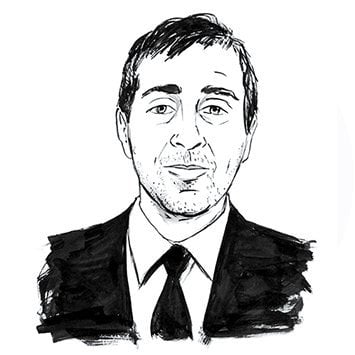
Noah Smith
x.com/NoahpinionEconomics blogger who expects AI to transform science, argues people can keep valuable jobs and worries about AI-enabled bioterrorism.
Como a IA mudará o mundo?
Na horizontal: a perspectiva Doom–Bloom expressa por ele. Para cima: escala da transformação.
Doom–Bloom: 65 de 100. Escala da transformação: 79 de 100. Intervalos de interpretação: 50 a 75 na horizontal, 49 a 100 na vertical. Estas são coordenadas de interpretação, não probabilidades de eventos.
≈10%
“about a 10% chance of bringing down civilization”
Civilization collapse from AI-enabled bioterrorism; not human extinction
Here’s how we’re all going to die · ago. de 2026
Uma premissa central
Even if machines outperform people at every task, their supply and cost still matter, and humans retain an advantage in knowing what they want.Resposta 1
Se essa premissa se revelasse diferente, como a perspectiva dele mudaria?
O que poderia mudar essa opinião
If strong evidence showed that capable agents cannot meaningfully help design or execute catastrophic biological attacks—because the underlying science is infeasible, the physical bottlenecks are overwhelming, or systems reliably refuse dangerous work—my risk estimate would fall substantially.Resposta 3
Que evidência seria suficiente e em que direção ela mudaria a visão dele?
Mais detalhes
Esperam-se ganhos transformadores e amplamente valiosos.
87 / 100
Intervalo de interpretação de 67 a 100 na escala qualitativa.
Danos graves ou generalizados são uma parte relevante do futuro esperado.
73 / 100
Intervalo de interpretação de 67 a 100 na escala qualitativa.
As escolhas humanas podem redirecionar substancialmente a trajetória da IA.
71 / 100
Intervalo de interpretação de 50 a 75 na escala qualitativa.
Espera-se que a IA continue sendo um conjunto de ferramentas limitadas.
Espera-se que a IA se equipare às pessoas na maior parte do trabalho cognitivo.
Posição simulada: Espera-se que a IA supere substancialmente as pessoas no trabalho cognitivo.
Estas interpretações mantêm as condições que ele declarou. Tanto os benefícios quanto os danos podem ser substanciais. Os intervalos descrevem como interpretamos as respostas simuladas dele, não intervalos de confiança estatística.
Visões de mundo semelhantes
Líderes de opinião cujas visões de mundo simuladas são mais próximas da visão de Noah Smith
Avaliação simulada
Fontes
Artigos, entrevistas e textos usados para fundamentar este usuário simulado.
The accessible introduction calls the consequences of godlike AI deeply unknowable. The remainder is paywalled; later public essays and interviews supply the substantive current position.

Publicly revises his earlier chatbot-focused dismissal after observing agentic coding. Autonomous tool use and economic pressure to remove humans from loops make catastrophic misuse more plausible. Remains comparatively skeptical of a near-term robot takeover.

Argues that combining human-like reasoning with computers’ exceptional recall and calculation already creates superhuman capabilities. Expects major scientific transformation; this is his broad definition of superintelligence, not a claim that every system is an autonomous omnipotent agent.

Speaker-labeled transcript: Noah at 07:21 endorses roughly 10% for catastrophic biological misuse. At 08:55 he expects survivors and is unsure about rebuilding. At 09:25 he declines to endorse the interviewer’s proposed 5% permanent-doom number. At 12:26–14:59 he identifies biological feasibility and resistance to jailbreaks as updates. At 17:49–18:18 he explains why malicious human use dominates his concern. Do not import Liron’s forecasts into Noah’s answers.

Clarifies that plentiful employment under extremely capable AI is possible, not guaranteed. Relative costs and constraints on AI supply can preserve human comparative advantage even when machines outperform people at every task.

Emphasizes humans’ comparative advantage in knowing what they want, with future work organized around directing AI. The accessible introduction supports this thesis; avoid inventing detailed empirical findings from inaccessible portions.

Assigns an informal 10% chance to AI-enabled bioterror bringing down civilization and 30% to world-changing destruction, without a precise horizon. Calls this much more serious than other AI harms while retaining enthusiasm for AI. These are not extinction odds; a separate annual-risk example is hypothetical, not his forecast.

Distinguishes replacing tasks from eliminating occupations. Interprets contemporary employment evidence as inconsistent with an imminent job apocalypse; expects humans to continue directing AI, without claiming that no occupation will ever disappear.

Argues that safety advocates need concrete threats that persuade skeptics and must address Chinese leaders’ incentives for coordinated pacing. Revises his earlier idea that merely staying ahead would produce cooperation: domestic threats from China’s own models could instead change its incentives.

Onde você se situa?
Mapear minha visão de mundo