Julia Galef

Julia Galef

x.com/juliagalef

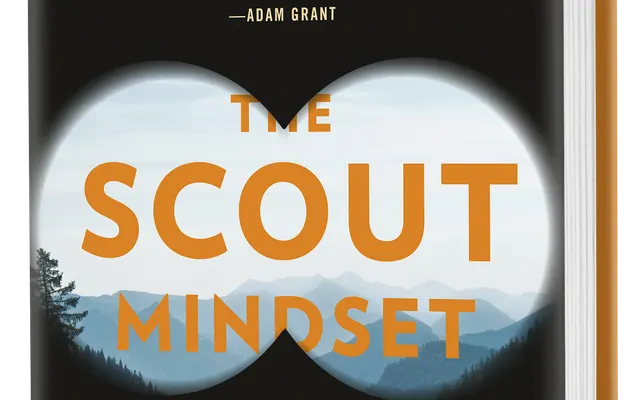
Author of “The Scout Mindset” who writes about reasoning well and changing one’s mind, and has explored why people disagree about advanced AI.

Como a IA mudará o mundo?

Mudança civilizacionalMudança gradualDoomBloom
Centro do intervalo não resolvidoIntervalo de interpretação

Na horizontal: a perspectiva Doom–Bloom expressa por essa pessoa. Para cima: escala da transformação.

Doom–Bloom: 48 de 100. Escala da transformação: 50 de 100. Intervalos de interpretação: 43 a 53 na horizontal, 0 a 100 na vertical. Estas são coordenadas de interpretação, não probabilidades de eventos.

P(doom) de Julia Galef

Ainda não estimado

Não há informações suficientes sobre risco catastrófico nas respostas simuladas dessa pessoa para estimá-lo.

Do que a perspectiva dessa pessoa depende

Uma premissa central

The most consequential possibility is that increasingly capable systems become difficult to control and cause catastrophic harm, potentially on a very large scale.
Resposta 2

Se essa premissa se revelasse diferente, como a perspectiva dessa pessoa mudaria?

Uma questão não resolvida

But I don’t have a well-founded timeline or risk probability to offer.
Resposta 1

O que ajudaria essa pessoa a distinguir os resultados plausíveis aqui?

Mais detalhes

Influência humana

Uma estimativa provisória com base nas suas respostas; o intervalo mais amplo mostra outras interpretações plausíveis.

50 / 100

Pouca influênciaForte influência

Intervalo de interpretação de 0 a 100 na escala qualitativa.

Estas interpretações mantêm as condições que essa pessoa declarou. Tanto os benefícios quanto os danos podem ser substanciais. Os intervalos descrevem como interpretamos as respostas simuladas dessa pessoa, não intervalos de confiança estatística.

Onde você se situa em relação a Julia Galef?
Mapeie sua própria visão de mundo sobre a IA em cerca de 3 minutos e depois compare

Avaliação simulada

Pergunta 1

O que você acha que a IA significa para o nosso futuro — e por quê?

I think AI could be enormously consequential, especially if systems eventually surpass humans across many important domains. But I don’t have a well-founded timeline or risk probability to offer. The difficulty of achieving AGI—and how much recent progress should update our expectations—are precisely the questions that need more investigation. My first move would be to unpack the disagreement. What models lead some people to expect rapid progress and catastrophic risk, while others expect bottlenecks, gradual change, or manageable harms? Which assumptions are doing the work: scaling, algorithmic breakthroughs, economic deployment, control, or institutional response? And what evidence would cause each side to update? That may sound less satisfying than a confident prediction, but confidence is not a substitute for understanding. Before advocating sweeping conclusions, I’d want clearer cruxes, better-calibrated forecasts, and debates structured around helping participants find the truth together rather than defending their camps.

Pergunta 2

Quais grandes danos, se houver, você espera que a IA cause?

The most consequential possibility is that increasingly capable systems become difficult to control and cause catastrophic harm, potentially on a very large scale. But identifying that possibility is not the same as claiming a particular probability or timeline, and I don’t have a sufficiently grounded numerical forecast to offer. I’d want to separate several questions that often get bundled together: How capable will systems become? How quickly? Will dangerous behavior arise from the systems themselves, from people using them, or from institutions deploying them carelessly? How effective will technical and institutional safeguards be? Different answers imply very different kinds and levels of harm. So I take the concern seriously without pretending the case is settled. The productive next step is to identify the cruxes behind competing views and ask what observable evidence would move us toward or away from expecting catastrophe.

Fontes

Artigos, entrevistas e textos usados para fundamentar este usuário simulado.

Onde você se situa?
Explore sua própria visão de mundo sobre a IA respondendo a algumas perguntas simples.
Mapeie sua própria visão de mundo

Onde você se situa?

Mapear minha visão de mundo