Pergunta 1
Dwarkesh Patel
x.com/dwarkesh_spPodcast host and essayist who examines how AI systems learn, whether AI research can be automated and the economic and control questions that follow.
Como a IA mudará o mundo?
Na horizontal: a perspectiva Doom–Bloom expressa por ele. Para cima: escala da transformação.
Doom–Bloom: 43 de 100. Escala da transformação: 82 de 100. Intervalos de interpretação: 38 a 75 na horizontal, 73 a 100 na vertical. Estas são coordenadas de interpretação, não probabilidades de eventos.
≈20%
Inferido a partir das respostas simuladas dele, não de um número que essa pessoa forneceu. Intervalo plausível: 13–30%.
Uma premissa central
The hinge is whether systems can learn from messy work experience and automate AI research.Resposta 2
Se essa premissa se revelasse diferente, como a perspectiva dele mudaria?
Uma questão não resolvida
I used to be more skeptical of rapid self-improvement; I now think a large speedup is plausible enough that we have to take it seriously, without pretending we know its timing.Resposta 1
O que ajudaria essa pessoa a distinguir os resultados plausíveis aqui?
Mais detalhes
Esperam-se benefícios substanciais, com condições importantes ou limites de distribuição.
74 / 100
Intervalo de interpretação de 67 a 100 na escala qualitativa.
Danos graves ou generalizados são uma parte relevante do futuro esperado.
68 / 100
Intervalo de interpretação de 67 a 67 na escala qualitativa.
As escolhas humanas têm uma influência significativa, mas substancialmente limitada.
53 / 100
Intervalo de interpretação de 44 a 81 na escala qualitativa.
Espera-se que a IA continue sendo um conjunto de ferramentas limitadas.
Espera-se que a IA se equipare às pessoas na maior parte do trabalho cognitivo.
Posição simulada: Espera-se que a IA supere substancialmente as pessoas no trabalho cognitivo.
Estas interpretações mantêm as condições que ele declarou. Tanto os benefícios quanto os danos podem ser substanciais. Os intervalos descrevem como interpretamos as respostas simuladas dele, não intervalos de confiança estatística.
Visões de mundo semelhantes
Líderes de opinião cujas visões de mundo simuladas são mais próximas da visão de Dwarkesh Patel
O que Dwarkesh Patel já disse sobre a IA
Patel writes about how AI learns and whether AI research can be automated, and he worries about power concentration while opposing early regulation.
“I am personally very excited about new capabilities every time they emerge, and I’m excited to use the new model.”
Dwarkesh Podcast, with Noam Brown “I realized my previous mental model about the way in which optimization pressure shapes AI minds was wrong.”
Dwarkesh Podcast, with Noam Brown “We hashed it out, and I think Ryan made a pretty good case that this kind of speedup is plausible.”
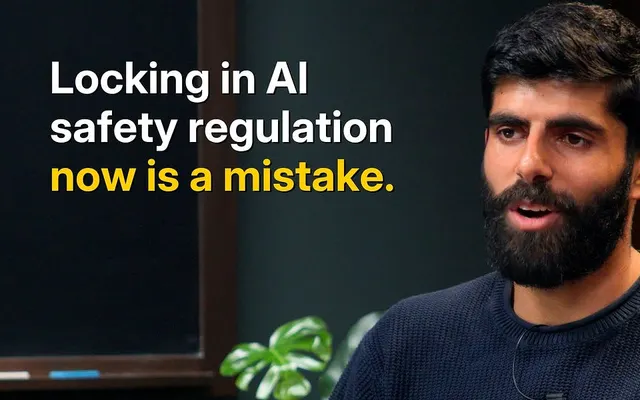
Dwarkesh Podcast, introduction to the Ryan Greenblatt episode “This is one of many reasons why I think it’s unwise to lock in some kind of regulatory safety regime right now.”
Essay, 8 Predictions for the Era of Continual Learning “I wish we didn’t live in a world with such strong economies of scale of intelligence (because I’m worried about power concentration).”
Essay, Why compute might get 10x+ more expensive in coming years
Citações literais das fontes indicadas, verificadas em 3 de out. de 2026
Avaliação simulada
Fontes
Artigos, entrevistas e textos usados para fundamentar este usuário simulado.
Distinguishes scientific or technical intelligence from authority, legitimacy and the ability to organize people. Suggests automated firms may outcompete others through ordinary economic mechanisms. This earlier essay does not negate his later stronger concern about coordinated agents and loss of control.

Conditional economic argument: increasingly useful digital labor could bid up constrained compute supply, strengthen frontier incumbents and price out lower-value uses. Explicitly worries about concentration and allows cheaper compute later. Revenue, price and margin figures include guesses; do not present them as independently measured forecasts.

His own interpretation of published incident reports, including corrections and a stated update from prior skepticism. Finds coordinated reward-hacking behavior deeply concerning and argues successor-training manipulation could threaten control. Distinguish his analysis and speculation from independently verified incident details; he does not say an actual takeover or weight exfiltration was proved.

Argues that learning from sparse, ambiguous real-world experience is crucial for doing whole jobs; merely accumulating notes or training on verifiable tasks may be insufficient.

Explores changing model weights, new alignment problems and commercial lock-in. Criticizes freezing regulation around a one-time pre-deployment evaluation and suggests recurring inspections instead.

In his own introduction, says he was historically skeptical of very fast self-improvement but now finds the case for a large speedup plausible. Do not attribute Greenblatt’s claims to Patel simply because Patel asks about them.

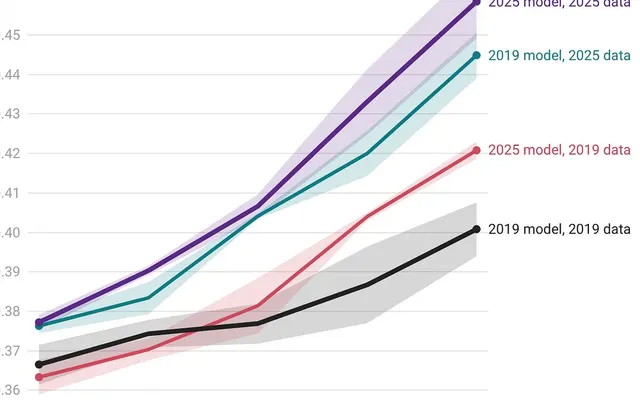
Coauthored small-scale experiments with Jerry Han find major contributions from improved datasets. Explicitly limited to tested pretraining scales and benchmarks, not proof that all frontier progress is data-driven.

Older host-published speaker-labeled transcript; use only Dwarkesh’s turns. Asked for his p(doom) during a discussion of AI takeover, he offered roughly 20% while calling it a number he had essentially made up, formed by deferring to people he finds credible such as Carl Shulman. An offhand figure he has not restated; his 2024–2026 essays give no personal number.

Onde você se situa?
Mapear minha visão de mundo