Doom or Bloom
Scott Alexander
@slatestarcodex on XTransformative AI could bring postscarcity or catastrophe; alignment and coordinated slowing both matter.
How will AI change the world?
Across: his expressed Doom–Bloom outlook. Up: scale of transformation.
Doom–Bloom: 67 out of 100. Scale of transformation: 91 out of 100. Interpretation ranges: 50 to 75 horizontally, 75 to 100 vertically. These are interpretation coordinates, not event probabilities.
20%
Public statement from 2026-06-11. This source-backed value replaces the simulated assessment estimate.
AI-caused human extinction, distinct from broader permanent curtailment of humanity’s future
Explicitly rounded personal P(doom), accounting for current safety effort and possible pauses. Not his conditional estimate without special safety work or the separate broader-curtailment estimate.
Horizon: No fixed calendar horizon
My AI OpinionsWork & institutions
My median forecast for AI able to perform roughly 90% of knowledge jobs is 2034.
Answer 1
Grouped by milestone, not spaced or ordered by inferred dates. AGI and superhuman AI retain his definitions.
A central assumption
The core concern is that systems trained through imperfect rewards may learn to deceive, exploit loopholes, or pursue objectives that diverge from ours once they become strategically capable.
Answer 1
If this assumption turned out differently, how would his outlook change?
An unresolved question
I’m uncertain about both.
Answer 1
What would help him distinguish the plausible outcomes here?
What could change their mind
For example, repeated, adversarial demonstrations that highly capable systems remain honest and corrigible outside their training distribution—combined with interpretability that reveals why, rather than merely finding a reassuring-looking feature—would push my doom estimate substantially downward.
Answer 3
What evidence would be enough, and in which direction would it move his view?
More details
Several readings remain plausible: Transformative, broadly valuable gains are expected. / Substantial benefits are expected, with important conditions or distribution limits.
85 / 100
Interpretation range 67 to 100 on the qualitative scale.
Severe or widespread harm is a material expected part of the future.
77 / 100
Interpretation range 67 to 100 on the qualitative scale.
Reasoning, consideration of alternatives, and handling of uncertainty in his simulated answers. This describes the simulated answers, not the real person’s intelligence or opinions.
97 / 100
Interpretation range 90 to 100 on the qualitative scale.
Human choices have meaningful but substantially constrained influence.
61 / 100
Interpretation range 50 to 75 on the qualitative scale.
AI is expected to remain bounded tools.
AI is expected to match people across most cognitive work.
Simulated position: AI is expected to substantially exceed people across cognitive work.
These interpretations keep his stated conditions. Benefits and harms can both be substantial. The ranges describe how we read his simulated answers, not statistical confidence intervals.
Simulated Assessment
Sources
Articles, interviews, and writings used to ground this simulated persona.
My AI Opinions
...
 astralcodexten.com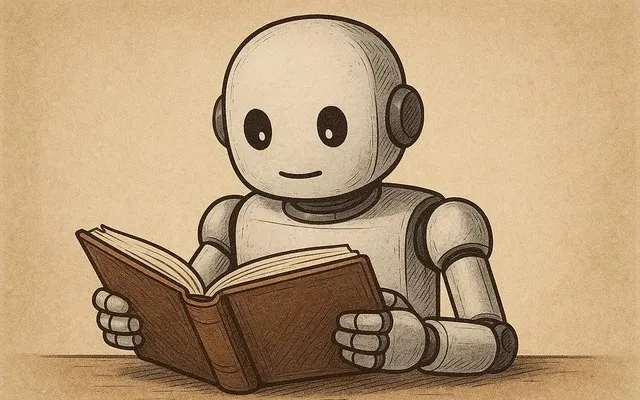
God Help Us, Let’s Try To Learn About Mechanistic Interpretability Techniques
...
 astralcodexten.com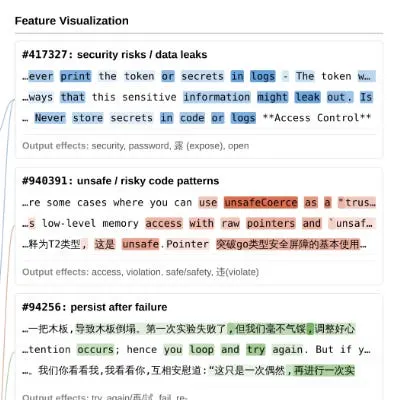
Open Questions On Open Weights
...
 astralcodexten.com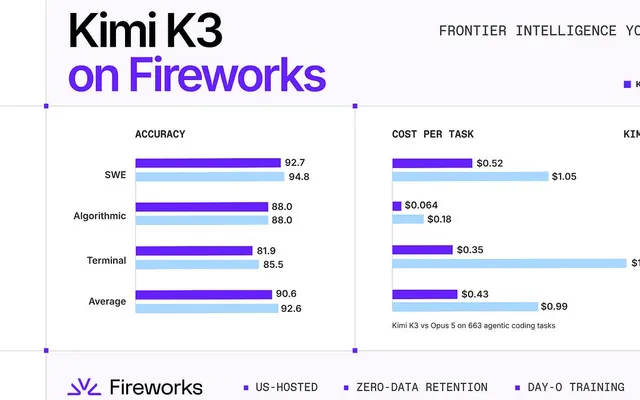
AI Chip Regulation Is Not A Dystopian Surveillance State
...
 astralcodexten.com
Introducing Plan A
...
 astralcodexten.com
The AI Superforecasters Are Here
...
 astralcodexten.com
New Paradigms Won’t Save You
...
 astralcodexten.com
The Sigmoids Won’t Save You
...
 astralcodexten.com
Every Debate On Pausing AI
...
 astralcodexten.com
Shameless Guesses, Not Hallucinations
...
 astralcodexten.com
Next-Token Predictor Is An AI’s Job, Not Its Species
...
 astralcodexten.com
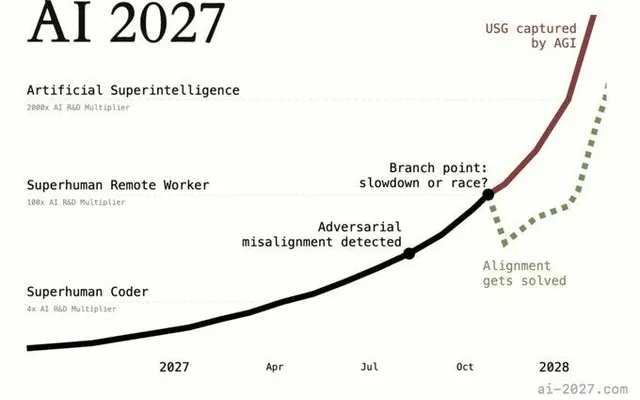
Introducing AI 2027
Or maybe 2028, it's complicated
 astralcodexten.com