Doom or Bloom
Nathan Lambert
@natolambert on XBroad adoption can transform the economy without runaway self-improvement.
How will AI change the world?
Across: his expressed Doom–Bloom outlook. Up: scale of transformation.
Doom–Bloom: 75 out of 100. Scale of transformation: 44 out of 100. Interpretation ranges: 75 to 75 horizontally, 24 to 51 vertically. These are interpretation coordinates, not event probabilities.
≈5%
Inferred from the likelihood described in his simulated answers. Approximate interpretation range: 1–10%. Applies to the outcome and conditions in his simulated answers; this is an inferred percentage.
But those concrete disasters should not be collapsed into complete human extinction, which I consider extremely unlikely.
No milestone timing was established. Dates, “not sure,” “possibly never,” and dependencies can all appear here when expressed.
Grouped by milestone, not spaced or ordered by inferred dates. AGI and superhuman AI retain his definitions.
A central assumption
I am skeptical of runaway self-improvement because automating measurable tasks is not the same as automating the hardest parts of research.
Answer 1
If this assumption turned out differently, how would his outlook change?
What could change their mind
Fundamental discoveries produced autonomously would change that assessment.
Answer 1
What evidence would be enough, and in which direction would it move his view?
More details
Substantial benefits are expected, with important conditions or distribution limits.
68 / 100
Interpretation range 67 to 67 on the qualitative scale.
Severe or widespread harm is a material expected part of the future.
56 / 100
Interpretation range 33 to 67 on the qualitative scale.
Reasoning, consideration of alternatives, and handling of uncertainty in his simulated answers. This describes the simulated answers, not the real person’s intelligence or opinions.
96 / 100
Interpretation range 81 to 100 on the qualitative scale.
Human choices have meaningful but substantially constrained influence.
61 / 100
Interpretation range 46 to 79 on the qualitative scale.
Stop or substantially slow development of more capable AI.
Simulated position: Continue development under stated safeguards.
Speed up development of more capable AI.
Restrict the AI uses discussed until prior protections or permission are in place.
Simulated position: Allow the AI uses discussed with targeted accountability and protections.
Minimize restrictions on the AI uses discussed.
Restrict access to powerful AI.
Allow access subject to capability or use restrictions.
Simulated position: Favor broad or open access to powerful AI.
These interpretations keep his stated conditions. Benefits and harms can both be substantial. The ranges describe how we read his simulated answers, not statistical confidence intervals.
Simulated Assessment
Sources
Articles, interviews, and writings used to ground this simulated persona.
One resignation turned the embers of AI fear into a wildfire
Some quick notes on a truly weird week.
 interconnects.ai
Teaching Everyone to Fish for Tokens
Nvidia wants you building your own model, not buying from Anthropic/OpenAI.
 interconnects.ai
I wrote an AI textbook — how long until AI can do it better?
Reflections on AI's writing ability and how AI models get more capable.
 interconnects.ai
GLM-5.3: How Chinese labs keep stride with the frontier
Hint: It’s really not a distillation story.
 interconnects.ai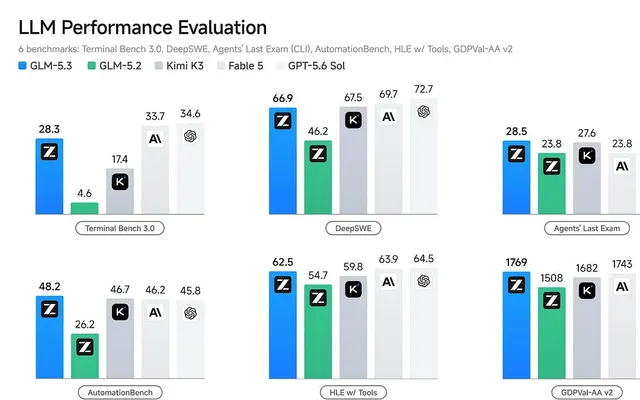
Farewell Ai2
This was my last week at the Allen Institute for AI (Ai2), where I got the great privilege to work on the Olmo models, to grow, to learn, and to have broad lasting impacts.
 interconnects.ai
Open and closed models are on different exponentials
Where marginally higher intelligence drives value, and where it doesn't.
 interconnects.ai
Why I still haven’t bought into true RSI
An “AI moderate’s” view on recent events and the trajectory of frontier models.
 interconnects.ai
When will average people feel AI’s impact?
We’re <5 years into a compounding revolution which could take a century, and how the AI industry should manage this.
 interconnects.ai
Lessons from the hacks
Musings on model alignment, what determines safety, and where we go from here.
 interconnects.ai
The current balance of power in open models
The expanded form of a testimony I prepared for Congress.
 interconnects.ai