Doom or Bloom
Joe Carlsmith
@jkcarlsmith on XExtraordinary flourishing is possible, but safe AI needs technical progress and credible restraint.
How will AI change the world?
Across: his expressed Doom–Bloom outlook. Up: scale of transformation.
Doom–Bloom: 41 out of 100. Scale of transformation: 98 out of 100. Interpretation ranges: 25 to 50 horizontally, 98 to 100 vertically. These are interpretation coordinates, not event probabilities.
≈21%
Inferred from the likelihood described in his simulated answers. Approximate interpretation range: 10–30%. Applies to the outcome and conditions in his simulated answers; this is an inferred percentage.
No milestone timing was established. Dates, “not sure,” “possibly never,” and dependencies can all appear here when expressed.
Grouped by milestone, not spaced or ordered by inferred dates. AGI and superhuman AI retain his definitions.
A central assumption
It is that highly capable agents may have motivations imperfectly aligned with ours, options that let them evade control, and incentives to seek influence or prevent correction.
Answer 1
If this assumption turned out differently, how would his outlook change?
What could change their mind
The biggest positive update would be a technically and institutionally credible safety case for superintelligence: evidence that we can understand and shape a system’s motivations, detect strategic deception, keep its options bounded, preserve meaningful corrigibility as capabilities scale, and verify these claims under adversarial pressure.
Answer 4
What evidence would be enough, and in which direction would it move his view?
More details
Substantial benefits are expected, with important conditions or distribution limits.
59 / 100
Interpretation range 33 to 67 on the qualitative scale.
Catastrophic or irreversible loss is central to the expected future.
90 / 100
Interpretation range 67 to 100 on the qualitative scale.
Reasoning, consideration of alternatives, and handling of uncertainty in his simulated answers. This describes the simulated answers, not the real person’s intelligence or opinions.
97 / 100
Interpretation range 90 to 100 on the qualitative scale.
Human choices have meaningful but substantially constrained influence.
61 / 100
Interpretation range 50 to 75 on the qualitative scale.
Stop or substantially slow development of more capable AI.
Simulated position: Continue development under stated safeguards.
Speed up development of more capable AI.
These interpretations keep his stated conditions. Benefits and harms can both be substantial. The ranges describe how we read his simulated answers, not statistical confidence intervals.
Simulated Assessment
Sources
Articles, interviews, and writings used to ground this simulated persona.
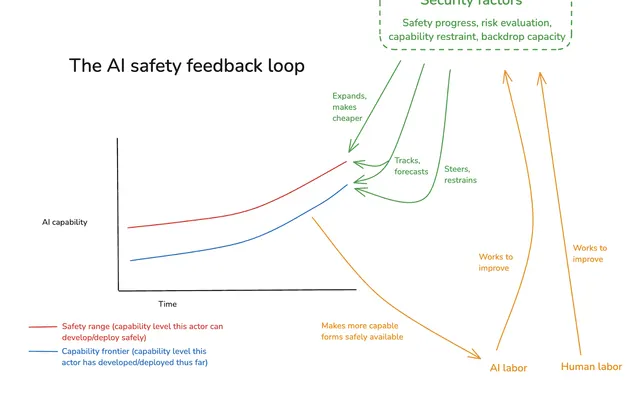
How do we solve the alignment problem?
Introduction to an essay series about paths to safe, useful superintelligence.
 joecarlsmith.com
On restraining AI development for the sake of safety
My take on slowing down AI.
 joecarlsmith.com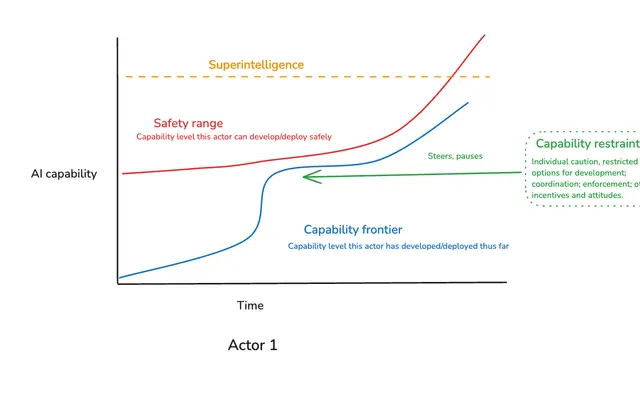
Predictable updating about AI risk
How worried about AI risk will we be when we can see advanced machine intelligence up close? We should worry accordingly now.
 joecarlsmith.com
Otherness and control in the age of AGI
Introduction and summary for a series of essays about how agents with different values should relate to each other, and about the ethics of seeking and sharing power.
 joecarlsmith.com
Actually possible: thoughts on Utopia
There are oceans we have barely dipped a toe into. There are drums and symphonies we can barely hear. There are suns whose heat we can barely feel on our skin.
 joecarlsmith.com
Joe Carlsmith — Preventing an AI takeover
Chatted with Joe Carlsmith about whether we can trust power/techno-capital, how to not end up like Stalin in our urge to control the future, gentleness towar...
 youtube.com
Joe Carlsmith — work and writing
Joe Carlsmith's website.
 joecarlsmith.com
Video and transcript of talk on writing AI constitutions
From a talk at Yale Law School in March 2026.
 joecarlsmith.com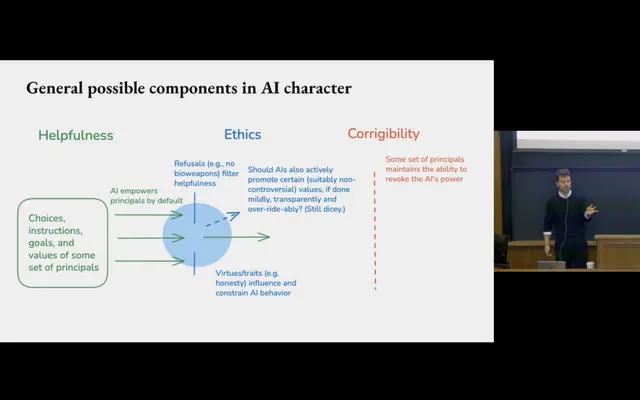
Building AIs that do human-like philosophy
AIs will face philosophical questions humans can't answer for them.
 joecarlsmith.com
Leaving Open Philanthropy, going to Anthropic
On a career move, and on AI-safety-focused people working at AI companies.
 joecarlsmith.com
Can we safely automate alignment research?
It's really important; we have a real shot; there are a lot of ways we can fail.
 joecarlsmith.com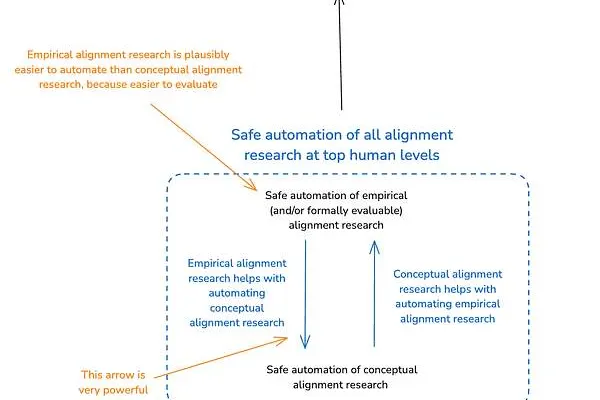
AI for AI safety
We should try extremely hard to use AI labor to help address the alignment problem.
 joecarlsmith.com