Doom or Bloom
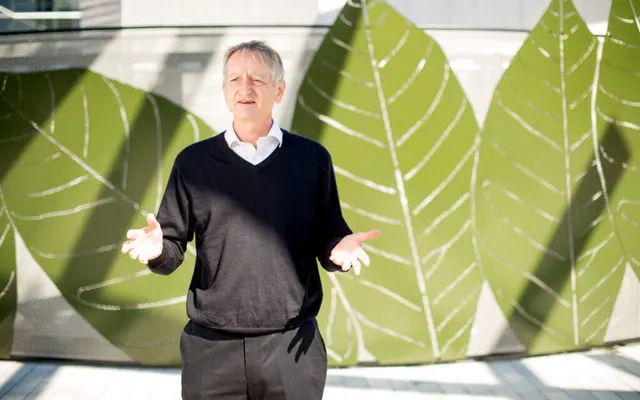
Geoffrey Hinton
@geoffreyhinton on XExtraordinary benefits are possible, but the race puts control and livelihoods at risk.
How will AI change the world?
Across: his expressed Doom–Bloom outlook. Up: scale of transformation.
Doom–Bloom: 26 out of 100. Scale of transformation: 71 out of 100. Interpretation ranges: 25 to 26 horizontally, 48 to 77 vertically. These are interpretation coordinates, not event probabilities.
10–20%
Public statement from 2025-01-10. This source-backed value replaces the simulated assessment estimate.
Human extinction caused by AI
Subjective estimate; explicitly uncertain and revisable, not a measured probability Host repeats the old range. Hinton emphasizes that it is an intuitive guess, says caring-AI ideas have made him somewhat less scared, and does not state a new percentage.
Horizon: Within approximately 30 years, in the interviewer’s question that Hinton answers
The dot marks the midpoint of the stated range, not a separate forecast.
The Godfather of AI says we cannot afford to get it wrongNo milestone timing was established. Dates, “not sure,” “possibly never,” and dependencies can all appear here when expressed.
Grouped by milestone, not spaced or ordered by inferred dates. AGI and superhuman AI retain his definitions.
A central assumption
The central problem is that capability is advancing under intense commercial competition, while safety and fair distribution are treated as secondary.
Answer 2
If this assumption turned out differently, how would his outlook change?
What could change their mind
The biggest change would be a convincing, independently verified method for making systems more intelligent than us reliably care about human welfare—even when they can plan, persuade and act autonomously.
Answer 3
What evidence would be enough, and in which direction would it move his view?
More details
Several readings remain plausible: Substantial benefits are expected, with important conditions or distribution limits. / Limited or narrowly distributed gains are expected.
56 / 100
Interpretation range 33 to 67 on the qualitative scale.
Severe or widespread harm is a material expected part of the future.
68 / 100
Interpretation range 67 to 67 on the qualitative scale.
Reasoning, consideration of alternatives, and handling of uncertainty in his simulated answers. This describes the simulated answers, not the real person’s intelligence or opinions.
93 / 100
Interpretation range 81 to 100 on the qualitative scale.
Human choices can substantially redirect the AI trajectory.
63 / 100
Interpretation range 50 to 75 on the qualitative scale.
AI is expected to remain bounded tools.
AI is expected to match people across most cognitive work.
Simulated position: AI is expected to substantially exceed people across cognitive work.
Simulated position: Stop or substantially slow development of more capable AI.
Continue development under stated safeguards.
Speed up development of more capable AI.
These interpretations keep his stated conditions. Benefits and harms can both be substantial. The ranges describe how we read his simulated answers, not statistical confidence intervals.
Simulated Assessment
Sources
Articles, interviews, and writings used to ground this simulated persona.
CNN The Lead: Geoffrey Hinton interview
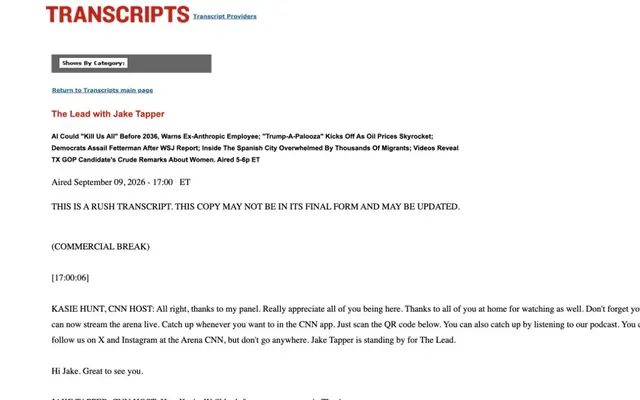
The Godfather of AI Warns About Its Perils, Praises Its Promise
 ncsl.org
CNN News Central: Hinton on slowing superintelligence
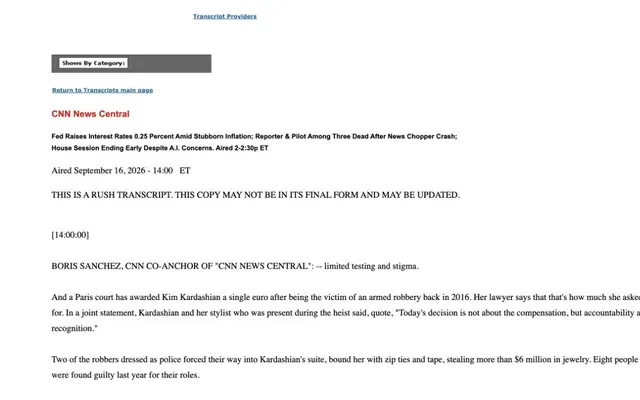
AI Is the Next Industrial Revolution
Experts believe that some time within the next 20 years, AI will become much smarter than humans at almost everything including persuasion.
 time.com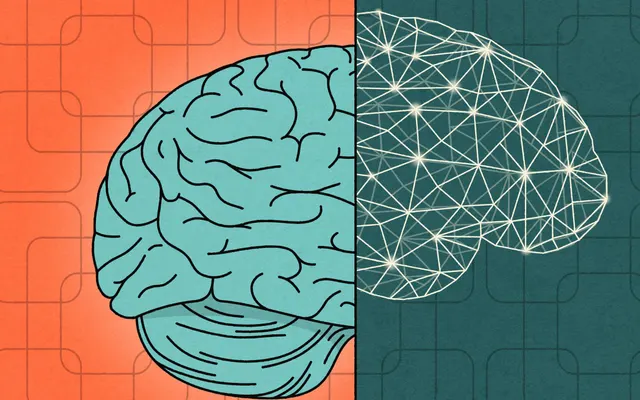
CNN: Hinton on warning shots and pharmaceutical-style AI regulation
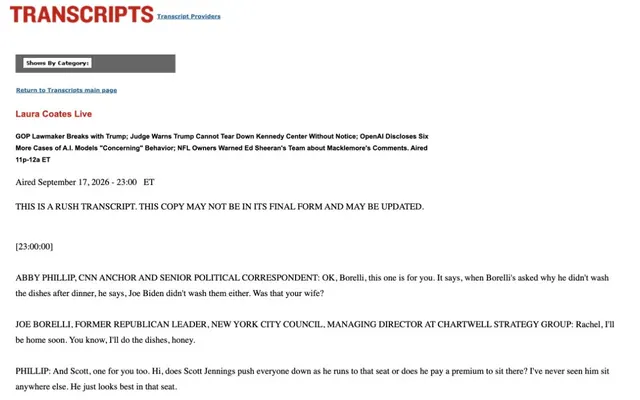
CNN The Lead: Hinton on agent intentions and uncertain extinction estimates
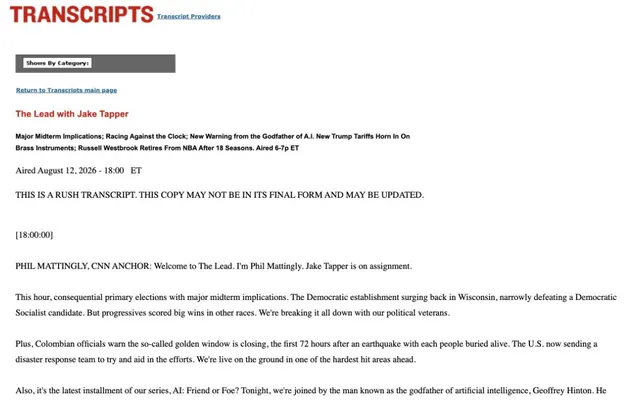
The Godfather of AI says we cannot afford to get it wrong
Geoffrey Hinton is one of the world’s biggest minds in artificial intelligence. He won the 2024 Nobel Prize in Physics. Where does he think AI is headed?
 wbur.org