Doom or Bloom
Fei-Fei Li
@drfeifei on XIntelligence that understands the physical world should improve human lives.
How will AI change the world?
Across: her expressed Doom–Bloom outlook. Up: scale of transformation.
Doom–Bloom: 71 out of 100. Scale of transformation: 51 out of 100. Interpretation ranges: 49 to 76 horizontally, 50 to 51 vertically. These are interpretation coordinates, not event probabilities.
Not specified
There is not enough relevant evidence yet to estimate her view of catastrophic risk.
No milestone timing was established. Dates, “not sure,” “possibly never,” and dependencies can all appear here when expressed.
Grouped by milestone, not spaced or ordered by inferred dates. AGI and superhuman AI retain her definitions.
A central assumption
The deepest changes will come when systems can connect language with spatial understanding, reliable simulation and action.
Answer 2
If this assumption turned out differently, how would her outlook change?
What could change their mind
The most consequential discovery would be a reliable way to connect perception, physically faithful simulation and planning.
Answer 3
What evidence would be enough, and in which direction would it move her view?
More details
Substantial benefits are expected, with important conditions or distribution limits.
69 / 100
Interpretation range 67 to 67 on the qualitative scale.
Reasoning, consideration of alternatives, and handling of uncertainty in her simulated answers. This describes the simulated answers, not the real person’s intelligence or opinions.
97 / 100
Interpretation range 90 to 100 on the qualitative scale.
Human choices can substantially redirect the AI trajectory.
80 / 100
Interpretation range 75 to 100 on the qualitative scale.
These interpretations keep her stated conditions. Benefits and harms can both be substantial. The ranges describe how we read her simulated answers, not statistical confidence intervals.
Simulated Assessment
Sources
Articles, interviews, and writings used to ground this simulated persona.
A Functional Taxonomy of World Models
Renderers, Simulators, Planners, and the Loop That Connects Them
 drfeifei.substack.com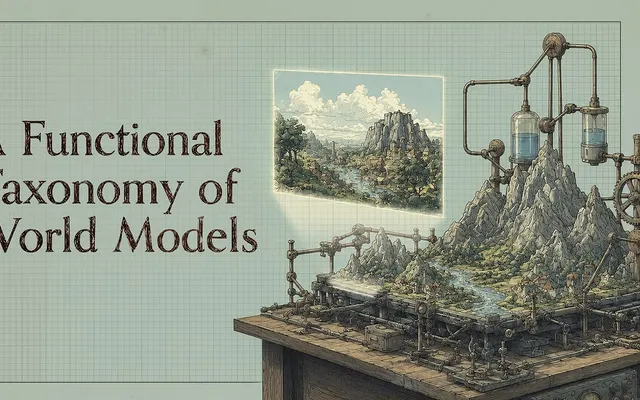
Why Stanford is restructuring for AI’s next era
As artificial intelligence transforms society, Stanford HAI’s James Landay, Fei-Fei Li, and John Hennessy explain why they’re merging HAI with the Stanford Data Science initiative, mobilizing “team science at scale,” and betting that academic openness will shape AI’s future.
 news.stanford.edu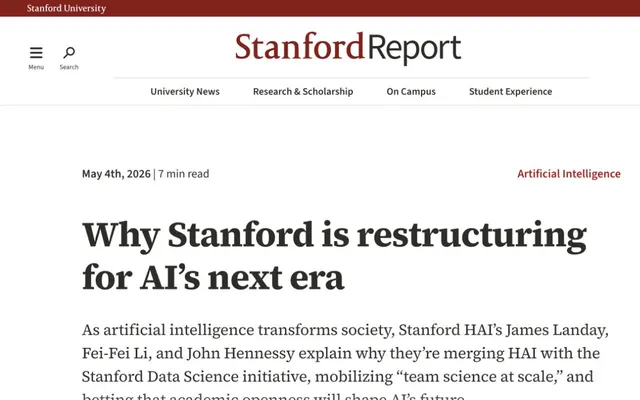
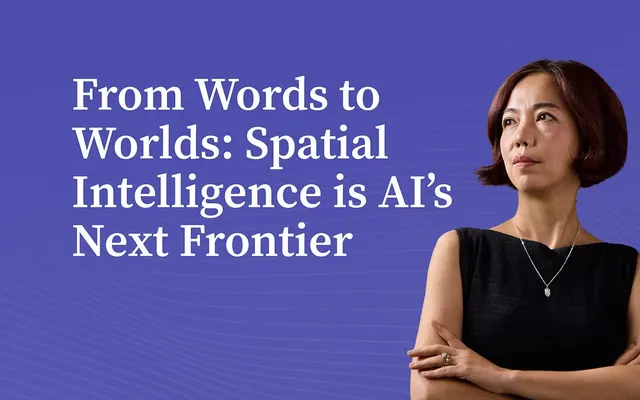
From Words to Worlds: Spatial Intelligence is AI’s Next Frontier
In 1950, when computing was little more than automated arithmetic and simple logic, Alan Turing asked a question that still reverberates today: can machines think?
 drfeifei.substack.com