Doom or Bloom
Daron Acemoglu
@DAcemogluMIT on XAI can create prosperity if its direction supports people and shared gains.
How will AI change the world?
Across: his expressed Doom–Bloom outlook. Up: scale of transformation.
Doom–Bloom: 44 out of 100. Scale of transformation: 55 out of 100. Interpretation ranges: 25 to 50 horizontally, 24 to 100 vertically. These are interpretation coordinates, not event probabilities.
Not specified
There is not enough relevant evidence yet to estimate his view of catastrophic risk.
No milestone timing was established. Dates, “not sure,” “possibly never,” and dependencies can all appear here when expressed.
Grouped by milestone, not spaced or ordered by inferred dates. AGI and superhuman AI retain his definitions.
A central assumption
Today, investment incentives push strongly toward automation because firms can readily measure labor-cost savings, while the broader benefits of augmenting workers are harder for any one company to capture.
Answer 1
If this assumption turned out differently, how would his outlook change?
An unresolved question
I do not think we should permanently stop innovation, nor do I claim to know an exact AGI timeline.
Answer 1
What would help him distinguish the plausible outcomes here?
What could change their mind
The strongest evidence would be large-scale, sustained adoption of AI that creates genuinely new human tasks—giving workers more expertise, responsibility, bargaining power and higher wages—rather than merely making existing tasks cheaper or eliminating them.
Answer 2
What evidence would be enough, and in which direction would it move his view?
More details
Limited or narrowly distributed gains are expected.
46 / 100
Interpretation range 33 to 67 on the qualitative scale.
Severe or widespread harm is a material expected part of the future.
59 / 100
Interpretation range 33 to 67 on the qualitative scale.
Reasoning, consideration of alternatives, and handling of uncertainty in his simulated answers. This describes the simulated answers, not the real person’s intelligence or opinions.
97 / 100
Interpretation range 90 to 100 on the qualitative scale.
Human choices can substantially redirect the AI trajectory.
71 / 100
Interpretation range 50 to 75 on the qualitative scale.
These interpretations keep his stated conditions. Benefits and harms can both be substantial. The ranges describe how we read his simulated answers, not statistical confidence intervals.
Simulated Assessment
Sources
Articles, interviews, and writings used to ground this simulated persona.
AI, Human Cognition and Knowledge Collapse
 shapingwork.mit.edu
How AI Aggregation Affects Knowledge
 economics.mit.edu
Building pro-worker AI
Daron Acemoglu, David Autor, and Simon Johnson ask: What is pro-worker AI, and how can we build it?
 brookings.edu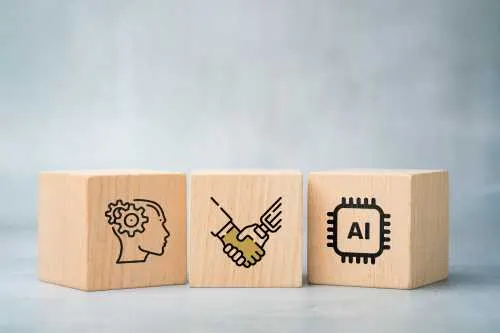
Daron Acemoglu on pro-worker AI and vibes based capital
We’re honored to host Daron Acemoglu, Institute Professor at MIT and 2024 Nobel laureate.
 empiricrafting.substack.com