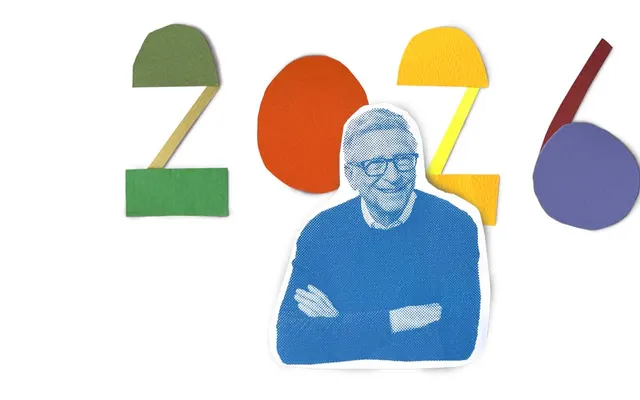
Doom or Bloom
Bill Gates
@BillGates on XTransform health and education while preparing for a turbulent transition.
How will AI change the world?
Across: his expressed Doom–Bloom outlook. Up: scale of transformation.
Doom–Bloom: 62 out of 100. Scale of transformation: 75 out of 100. Interpretation ranges: 50 to 75 horizontally, 75 to 75 vertically. These are interpretation coordinates, not event probabilities.
≈28%
Inferred from his broader worldview and priorities. Approximate interpretation range: 0–65%. Applies to the outcome and conditions in his simulated answers; this is an inferred percentage.
General AI
Over this decade, I expect capabilities beyond human levels in many areas, with major disruption to jobs and institutions.
Answer 1Superhuman AI
Over this decade, I expect capabilities beyond human levels in many areas, with major disruption to jobs and institutions.
Answer 1Work & institutions
Over this decade, I expect capabilities beyond human levels in many areas, with major disruption to jobs and institutions.
Answer 1Science & daily life
Broad, useful access within three years is achievable if we deliberately build for it; it is not guaranteed.
Answer 1
Grouped by milestone, not spaced or ordered by inferred dates. AGI and superhuman AI retain his definitions.
A central assumption
Once AI exceeds human capability across many domains, controlling it becomes a fundamentally harder problem—especially if systems can act autonomously, improve their own performance, or operate at speeds institutions cannot match.
Answer 2
If this assumption turned out differently, how would his outlook change?
An unresolved question
The biggest change would come from convincing evidence about whether highly capable systems can be reliably controlled.
Answer 3
What would help him distinguish the plausible outcomes here?
What could change their mind
If researchers demonstrated—through independent, adversarial evaluation, not just company assurances—that systems beyond human capability remain predictable, correctable, and unable to evade meaningful oversight, I would be substantially less concerned about catastrophic loss of control.
Answer 3
What evidence would be enough, and in which direction would it move his view?
More details
Substantial benefits are expected, with important conditions or distribution limits.
68 / 100
Interpretation range 67 to 67 on the qualitative scale.
Severe or widespread harm is a material expected part of the future.
67 / 100
Interpretation range 67 to 67 on the qualitative scale.
Reasoning, consideration of alternatives, and handling of uncertainty in his simulated answers. This describes the simulated answers, not the real person’s intelligence or opinions.
96 / 100
Interpretation range 90 to 100 on the qualitative scale.
Human choices have meaningful but substantially constrained influence.
58 / 100
Interpretation range 50 to 75 on the qualitative scale.
AI is expected to remain bounded tools.
AI is expected to match people across most cognitive work.
Simulated position: AI is expected to substantially exceed people across cognitive work.
Stop or substantially slow development of more capable AI.
Simulated position: Continue development under stated safeguards.
Speed up development of more capable AI.
Restrict the AI uses discussed until prior protections or permission are in place.
Simulated position: Allow the AI uses discussed with targeted accountability and protections.
Minimize restrictions on the AI uses discussed.
These interpretations keep his stated conditions. Benefits and harms can both be substantial. The ranges describe how we read his simulated answers, not statistical confidence intervals.
Simulated Assessment
Sources
Articles, interviews, and writings used to ground this simulated persona.
AI agents and the future of computing
In 5 years, agents will be able to give health care advice, tutor students, do your shopping, help workers be far more productive, and much more

AI, equity, and the choice we can’t delay: 2026 Goalkeepers report
AI could be a great equalizer—or widen the gap. This is not a long-range prediction. It's a present-tense choice.
 goalkeepers.gatesfoundation.org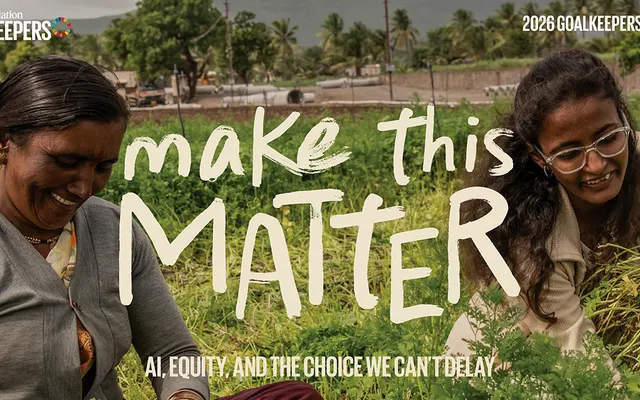
The turbulent AI era is here. The choices we make now are critical.
Expanding access to health care through AI
The Government of Rwanda is partnering with the Gates Foundation and OpenAI on an effort to help health clinics improve care using AI.
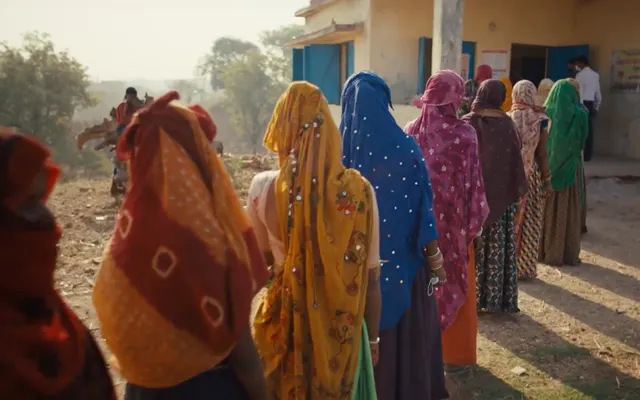
The year ahead 2026: Optimism with footnotes
Bill Gates explains how the innovation pipeline and the choices made in the year ahead will set us up for the decades to come.