Alex Zhang

Alex Zhang

x.com/a1zhang

AI researcher who builds benchmarks and studies how scaffolds and recursive model calls can get more out of existing language models.

AIは世界をどのように変えるでしょうか?

文明規模の変化漸進的な変化DoomBloom
シミュレーション上の位置解釈範囲

横軸:その人が表明したDoom–Bloomの見通し。 縦軸:変革の規模。

Doom–Bloom:100点中53。変革の規模:100点中47。解釈範囲:横方向は48から75、縦方向は0から96。これらは解釈上の座標であり、事象の確率ではありません。

Alex ZhangのP(doom)

まだ推定されていません

その人のシミュレーションされた回答には、推定に必要な破局的リスクについての情報が十分にありません。

その人の見通しを左右するもの

中心的な前提

That gap matters because deployed capability is a property of the whole system, not just the bare model.
回答3

この前提が実際には異なると判明した場合、その人の見通しはどう変わりますか?

未解決の問い

Overall, I expect AI to be highly consequential, but I would not reduce that to a confident net-positive or net-negative societal forecast.
回答2

ここで考えられる結果をその人が見分けるうえで、何が役立ちますか?

詳細

予想される恩恵

大きな恩恵が予想されていますが、重要な条件や分配上の制約があります。

65 / 100

影響が小さい変革をもたらす影響

質的尺度での解釈範囲は67から67です。

予想される害

対処可能、または局所的な害が予想されています。

33 / 100

影響が小さい変革をもたらす影響

質的尺度での解釈範囲は33から33です。

人間の影響力

回答に基づく暫定的な推定です。より広い範囲は、ほかにあり得る解釈を示しています。

56 / 100

影響力が小さい影響力が大きい

質的尺度での解釈範囲は16から100です。

これらの解釈では、その人が示した条件が維持されています。恩恵と害は、どちらも大きくなり得ます。この範囲は、統計的な信頼区間ではなく、その人のシミュレーションされた回答をどのように読み取ったかを示すものです。

あなたはAlex Zhangと比べてどの位置でしょうか?
約3分で自分のAIに対する世界観をマッピングして、比較できます

似ている世界観

シミュレーションされた世界観がAlex Zhangの世界観に最も近いオピニオンリーダー

シミュレーション評価

質問1

AIは私たちの未来にとって何を意味すると思いますか?また、なぜそう思いますか?

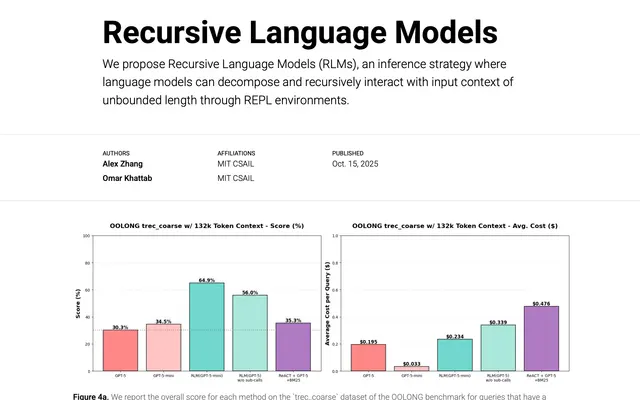
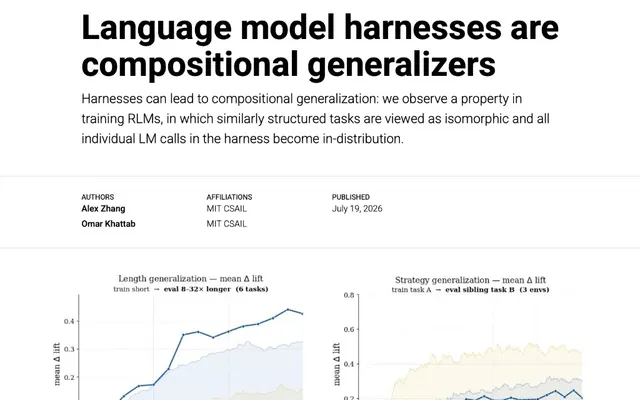
I think AI’s future will depend not only on building larger or better-trained models, but on learning how to use the capabilities already inside them. Today, we often place a model in a brittle, human-designed workflow, give it one enormous prompt, and then interpret failure as a clean measurement of its limits. That can confuse the weakness of the harness with the weakness of the model. Recursive computation, learned decomposition, tool use, and better inference procedures could change that picture substantially. A difficult out-of-distribution task may become tractable when the system can break it into familiar subproblems, inspect intermediate results, and call itself or specialized tools as needed. Long-context work is one example: rather than forcing everything through a single context window, a model can programmatically navigate the material and recursively delegate narrower questions. But this is not an argument that scaling or training is over. Better models and better harnesses are complementary. The key empirical challenge is figuring out which apparent limitations are truly representational and which come from poor orchestration. Evaluation is therefore central. Benchmarks with familiar formats, reusable tricks, or contaminated examples can make leaderboard performance look much stronger than practical usefulness. Simply making tasks longer does not guarantee meaningful generalization. We need evaluations that test whether systems can compose knowledge and procedures in genuinely unfamiliar settings. So my view is optimistic about latent capability, but the path forward runs through better inference, decomposition, and benchmarks—not raw benchmark scores mistaken for broad real-world competence.


質問2

Taking benefits and harms together, what overall impact do you expect AI to have?

Overall, I expect AI to be highly consequential, but I would not reduce that to a confident net-positive or net-negative societal forecast. My work supports a narrower claim: current systems may be substantially more useful than standard interfaces and brittle scaffolds suggest. Better decomposition, recursive computation, and tool use could unlock meaningful gains on long-context, programming, and other complex tasks without requiring every improvement to come from a larger model. The same observation complicates judgments about harm. Capability can advance through inference-time organization, not just training runs, so evaluations that measure a bare model—or rely on familiar, potentially contaminated benchmark structures—may misstate what deployed systems can actually do. Conversely, strong leaderboard results may not translate into reliable performance on genuinely unfamiliar real-world problems. So I expect the impact to depend heavily on whether we learn to measure and harness these systems well. Better models, better training, and better scaffolds are complementary. But benchmark progress by itself does not establish broad social benefit, and my research does not justify assigning a precise balance between AI’s total benefits and harms.

質問3

AIが引き起こすと予想する大きな害があるとすれば、それは何ですか?

The clearest harm I can support is systematic miscalibration about capability. Weak harnesses can hide what a model can do, while familiar or contaminated benchmarks can create an equally dangerous illusion of competence. Organizations may then deploy systems that fail on genuinely unfamiliar tasks—or underestimate systems whose capabilities become much stronger with recursive computation, tools, and better decomposition. That gap matters because deployed capability is a property of the whole system, not just the bare model. Inference-time scaffolding can produce substantial gains without a new training run, so assessments can become stale or incomplete if they ignore the harness. Conversely, making benchmarks longer or reporting higher scores does not establish reliability in practical settings. I would not claim a specific catalog or ranking of broader societal harms from this work alone. My main expectation is that poor evaluation will amplify other risks by giving us the wrong picture of what systems can and cannot reliably do.

出典

このシミュレーション対象者の根拠として使用された記事、インタビュー、著作です。

あなたはどの位置でしょうか?
いくつかの簡単な質問に答えて、自分のAIに対する世界観を探ってみましょう。
自分の世界観をマッピングする

あなたはどの位置でしょうか?

自分の世界観をマッピングする