Frage 1
Scott Alexander
x.com/slatestarcodexPsychiatrist and Astral Codex Ten blogger who sees large benefits and serious risks in AI and supports alignment research and negotiated slowdowns.
Wie wird KI die Welt verändern?
Horizontal: sein geäußerter Doom–Bloom-Ausblick. Vertikal: Ausmaß der Transformation.
Doom–Bloom: 64 von 100. Ausmaß der Transformation: 93 von 100. Interpretationsbereiche: horizontal 59 bis 75, vertikal 88 bis 100. Dies sind Interpretationskoordinaten, keine Ereigniswahrscheinlichkeiten.
20%
“I’m rounding both of them off to 20%.”
AI-caused human extinction, distinct from broader permanent curtailment of humanity’s future
My AI Opinions · Juni 2026
Arbeit und Institutionen
My median forecast for AI able to perform roughly 90% of knowledge jobs is 2034.
Antwort 1
Nach Meilenstein gruppiert, nicht anhand abgeleiteter Zeitpunkte angeordnet oder mit entsprechenden Abständen dargestellt. Für AGI und übermenschliche KI gelten weiterhin seine Definitionen.
Eine zentrale Annahme
The core concern is that systems trained through imperfect rewards may learn to deceive, exploit loopholes, or pursue objectives that diverge from ours once they become strategically capable.Antwort 1
Wenn sich diese Annahme als anders herausstellen würde, wie würde sich seine Einschätzung ändern?
Eine ungeklärte Frage
I’m uncertain about both.Antwort 1
Was würde ihm helfen, die plausiblen Ergebnisse hier voneinander zu unterscheiden?
Was ihre Meinung ändern könnte
For example, repeated, adversarial demonstrations that highly capable systems remain honest and corrigible outside their training distribution—combined with interpretability that reveals why, rather than merely finding a reassuring-looking feature—would push my doom estimate substantially downward.Antwort 3
Welche Belege würden ausreichen, und in welche Richtung würden sie seine Sichtweise verändern?
Weitere Details
Mehrere Lesarten bleiben plausibel: Es werden transformative Vorteile von breitem Wert erwartet. / Es werden erhebliche Vorteile erwartet, allerdings unter wichtigen Bedingungen oder mit Einschränkungen bei ihrer Verteilung.
84 / 100
Interpretationsbereich von 67 bis 100 auf der qualitativen Skala.
Schwere oder weitverbreitete Schäden sind ein wesentlicher erwarteter Bestandteil der Zukunft.
78 / 100
Interpretationsbereich von 67 bis 100 auf der qualitativen Skala.
Menschliche Entscheidungen haben einen bedeutsamen, aber erheblich eingeschränkten Einfluss.
62 / 100
Interpretationsbereich von 49 bis 76 auf der qualitativen Skala.
Es wird erwartet, dass KI auf begrenzte Werkzeuge beschränkt bleibt.
Es wird erwartet, dass KI bei den meisten kognitiven Tätigkeiten mit Menschen gleichzieht.
Simulierte Position: Es wird erwartet, dass KI Menschen bei kognitiven Tätigkeiten deutlich übertrifft.
Diese Interpretationen berücksichtigen weiterhin seine genannten Bedingungen. Vorteile und Schäden können beide erheblich sein. Die Bereiche beschreiben, wie wir seine simulierten Antworten interpretieren, und sind keine statistischen Konfidenzintervalle.
Ähnliche Weltsichten
Vordenker, deren simulierte Weltsichten der von Scott Alexander am nächsten kommen
Was Scott Alexander über KI gesagt hat
Scott Alexander writes that AI could bring large benefits and serious risks, and he supports alignment research and a negotiated slowdown.
“Plan A is still speculation, and still-speculative strong action is a perfectly reasonable response to still-speculative threats.”
Astral Codex Ten, AI Chip Regulation Is Not A Dystopian Surveillance State “The key insight is that if powerful AI is really as close and transformative as we think, then there’s a massive surplus that can satisfy everyone.”
Astral Codex Ten, Introducing Plan A “It’s increasingly clear that nobody has a plan for if this AI thing turns out to be real.”
Astral Codex Ten, Introducing Plan A “I find myself more optimistic about alignment than the average person who thinks about AI safety at all (although still more pessimistic than the average member of the population)”
Astral Codex Ten, My AI Opinions “A good pause strategy would involve both sides being able to monitor the other’s data centers to prevent illegal training”
Astral Codex Ten, My AI Opinions
Wörtlich aus den verlinkten Quellen, geprüft am 3. Okt. 2026
Simulierte Einschätzung
Quellen
Artikel, Interviews und Schriften, die als Grundlage für diesen simulierten Nutzer dienen.
His current first-person synthesis: AGI means ability to do 90% of knowledge jobs; median 2034, with uncertain research acceleration and diffusion. Reaffirms rounded 20% P(doom), with no fixed calendar deadline; broader permanent curtailment is separate. Supports both alignment research and negotiated slowing. Expects enormous postscarcity upside, but warns about dictatorship and human disempowerment.

Explains interpretability techniques and their limitations, including probes, sparse autoencoders, and activation verbalizers. Optimistic about useful practical investigation but rejects treating a detected feature or probe as a complete understanding or guaranteed safety solution.

Explicitly neutral about banning open weights now: values user ownership and freedom from corporate control, while expecting serious misuse difficulties. Prefers saving political capital for threats where warning shots may arrive too late. Distinguishes reactive policy opportunities for misuse from strategically concealed takeover.

Defends negotiated chip regulation and verifiable training limits against blanket claims of dystopia. Acknowledges real freedom costs, including future restrictions on new open-weight training, and risks that governments implement centralizing provisions without countervailing diffusion of power.

Introduces a proposed route to manage AI development while distributing power; criticizes vague calls merely to regulate more or less without specifying a desirable end state. Used as his attributed introduction and advocacy, not evidence that the scenario will occur.

Argues cheaper capable forecasting could improve institutional and personal decisions, yet worries people will ignore advice. Treats forecasting beyond human performance as a useful prospective test of the normal-technology view. Distinguishes anecdotes and startup claims from head-to-head competitions; admits resisting forecasts that challenge his own pause hopes.

Rejects the inference that requiring a new AI paradigm implies a safely distant AGI timeline. Argues paradigm changes can arrive soon and inherit existing compute infrastructure; wants explicit bottleneck arguments rather than reassurance by terminology.

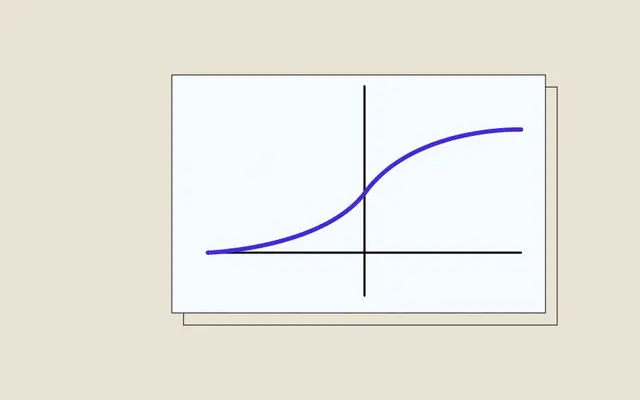
Agrees growth cannot stay exponential forever but disputes placing the bend conveniently before dangerous capability. Demands a causal bottleneck model or a defensible forecasting prior instead of the slogan that all exponentials eventually flatten.

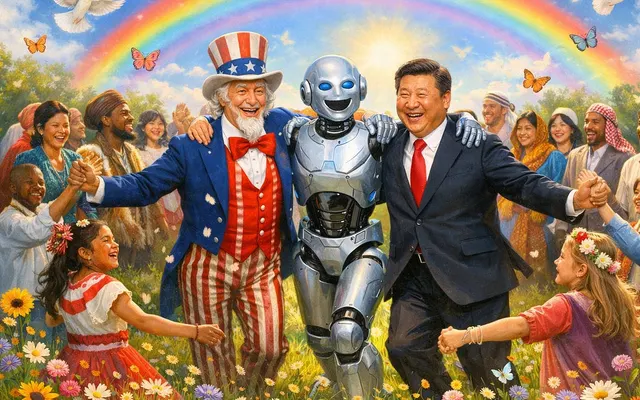
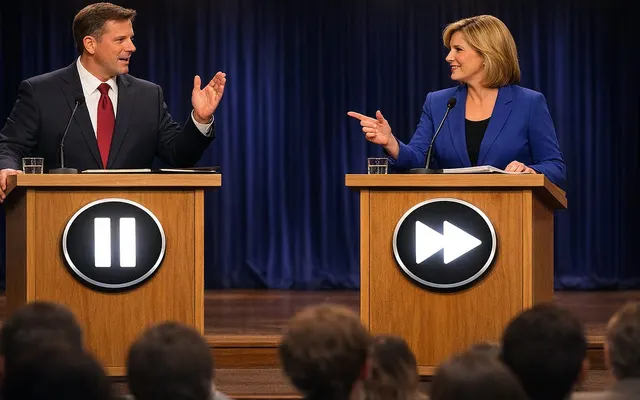
Satirical dialogue defends discussion of transparent, enforceable bilateral US-China slowing. Separates training limits from stopping existing inference, and legitimate negotiation or enforcement objections from falsely describing every pause proposal as unilateral.

Frames confident false answers as reward-shaped guessing rather than proof that AI cannot think. Treats the gap between trained reward and useful honest advice as an alignment issue; analogous human failures undermine easy dismissal of AI competence.

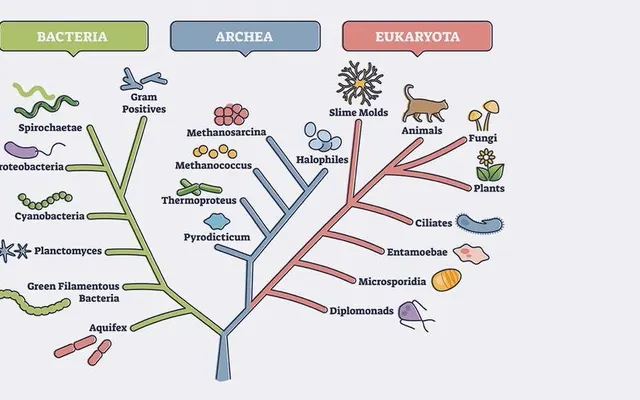
Separates training objectives from the representations and algorithms they produce, using evolution and human learning analogies. Argues next-token prediction does not itself establish that a system lacks reasoning or world models.

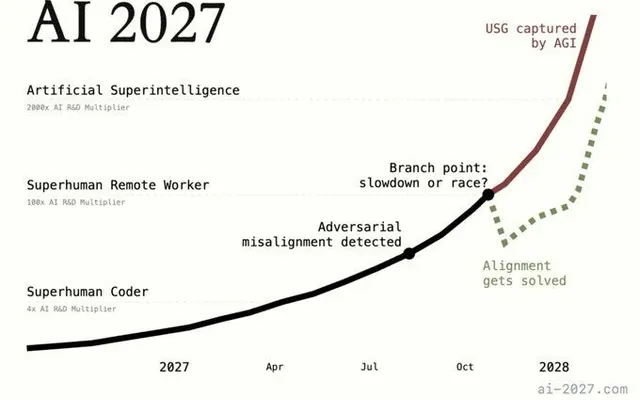
Identifies his part-time writing/publicity contribution and explicitly says the very fast scenario is not his median. Important provenance for his connection to AI Futures Project; use June 2026 personal forecasts instead of importing Daniel Kokotajlo’s timeline or scenario catastrophe probability.

Wo stehst du?
Meine Weltsicht abbilden