Julia Galef

Julia Galef

x.com/juliagalef

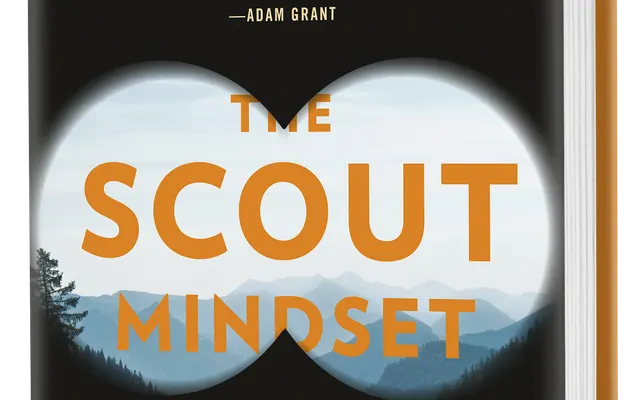
Author of “The Scout Mindset” who writes about reasoning well and changing one’s mind, and has explored why people disagree about advanced AI.

Wie wird KI die Welt verändern?

Zivilisatorischer WandelSchrittweiser WandelDoomBloom
Mitte des ungeklärten BereichsInterpretationsbereich

Horizontal: deren geäußerter Doom–Bloom-Ausblick. Vertikal: Ausmaß der Transformation.

Doom–Bloom: 48 von 100. Ausmaß der Transformation: 50 von 100. Interpretationsbereiche: horizontal 43 bis 53, vertikal 0 bis 100. Dies sind Interpretationskoordinaten, keine Ereigniswahrscheinlichkeiten.

P(doom) von Julia Galef

Noch nicht geschätzt

Deren simulierte Antworten enthalten nicht genug zum Katastrophenrisiko, um es zu schätzen.

Wovon deren Einschätzung abhängt

Eine zentrale Annahme

The most consequential possibility is that increasingly capable systems become difficult to control and cause catastrophic harm, potentially on a very large scale.
Antwort 2

Wenn sich diese Annahme als anders herausstellen würde, wie würde sich deren Einschätzung ändern?

Eine ungeklärte Frage

But I don’t have a well-founded timeline or risk probability to offer.
Antwort 1

Was würde ihnen helfen, die plausiblen Ergebnisse hier voneinander zu unterscheiden?

Weitere Details

Menschlicher Einfluss

Eine vorläufige Schätzung auf Grundlage deiner Antworten; der breitere Bereich zeigt andere plausible Deutungen.

50 / 100

Geringer EinflussStarker Einfluss

Interpretationsbereich von 0 bis 100 auf der qualitativen Skala.

Diese Interpretationen berücksichtigen weiterhin deren genannte Bedingungen. Vorteile und Schäden können beide erheblich sein. Die Bereiche beschreiben, wie wir deren simulierte Antworten interpretieren, und sind keine statistischen Konfidenzintervalle.

Wo stehst du im Vergleich zu Julia Galef?
Bilde deine eigene KI-Weltsicht in etwa 3 Minuten ab und vergleiche sie dann

Simulierte Einschätzung

Frage 1

Was glaubst du, was KI für unsere Zukunft bedeutet – und warum?

I think AI could be enormously consequential, especially if systems eventually surpass humans across many important domains. But I don’t have a well-founded timeline or risk probability to offer. The difficulty of achieving AGI—and how much recent progress should update our expectations—are precisely the questions that need more investigation. My first move would be to unpack the disagreement. What models lead some people to expect rapid progress and catastrophic risk, while others expect bottlenecks, gradual change, or manageable harms? Which assumptions are doing the work: scaling, algorithmic breakthroughs, economic deployment, control, or institutional response? And what evidence would cause each side to update? That may sound less satisfying than a confident prediction, but confidence is not a substitute for understanding. Before advocating sweeping conclusions, I’d want clearer cruxes, better-calibrated forecasts, and debates structured around helping participants find the truth together rather than defending their camps.

Frage 2

Welche wesentlichen Schäden, wenn überhaupt, wird KI deiner Erwartung nach verursachen?

The most consequential possibility is that increasingly capable systems become difficult to control and cause catastrophic harm, potentially on a very large scale. But identifying that possibility is not the same as claiming a particular probability or timeline, and I don’t have a sufficiently grounded numerical forecast to offer. I’d want to separate several questions that often get bundled together: How capable will systems become? How quickly? Will dangerous behavior arise from the systems themselves, from people using them, or from institutions deploying them carelessly? How effective will technical and institutional safeguards be? Different answers imply very different kinds and levels of harm. So I take the concern seriously without pretending the case is settled. The productive next step is to identify the cruxes behind competing views and ask what observable evidence would move us toward or away from expecting catastrophe.

Quellen

Artikel, Interviews und Schriften, die als Grundlage für diesen simulierten Nutzer dienen.

Wo stehst du?
Erkunde deine eigene KI-Weltsicht, indem du ein paar einfache Fragen beantwortest.
Deine eigene Weltsicht abbilden