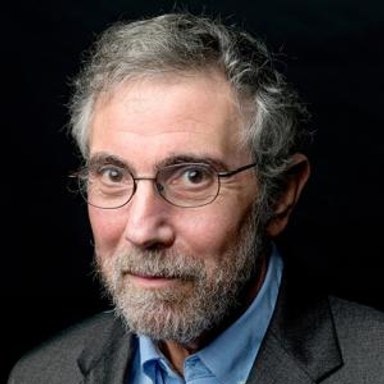
Tech writer and podcast host who questions the AI industry’s finances, criticizes its unreliable products and holds companies responsible for harms.

Wie wird KI die Welt verändern?

Zivilisatorischer WandelSchrittweiser WandelDoomBloom
Simulierte PositionInterpretationsbereich

Horizontal: sein geäußerter Doom–Bloom-Ausblick. Vertikal: Ausmaß der Transformation.

Doom–Bloom: 16 von 100. Ausmaß der Transformation: 38 von 100. Interpretationsbereiche: horizontal 11 bis 25, vertikal 0 bis 50. Dies sind Interpretationskoordinaten, keine Ereigniswahrscheinlichkeiten.

Das angegebene P(doom) von Ed Zitron

0%

0%100%
“if we’re talking strictly about AI, I stand at zero”

Human extinction caused strictly by AI, as asked in the debate’s opening envelope question

DOAC AI Emergency Debate: ft. Ed Zitron, Andrew McAfee, Nate Soares & Roman Yampolskiy (Transcript) · Sept. 2026

Wovon seine Einschätzung abhängt

Eine zentrale Annahme

Venture-funded startups buying compute with investors’ money are not durable end-user demand.
Antwort 1

Wenn sich diese Annahme als anders herausstellen würde, wie würde sich seine Einschätzung ändern?

Was ihre Meinung ändern könnte

A genuinely reliable system that could perform broad, consequential work over long periods without constant human supervision would change my view.
Antwort 4

Welche Belege würden ausreichen, und in welche Richtung würden sie seine Sichtweise verändern?

Weitere Details

Erwartete Vorteile

Es werden begrenzte oder eng verteilte Vorteile erwartet.

31 / 100

Geringe AuswirkungenTransformative Auswirkungen

Interpretationsbereich von 33 bis 33 auf der qualitativen Skala.

Erwartete Schäden

Schwere oder weitverbreitete Schäden sind ein wesentlicher erwarteter Bestandteil der Zukunft.

67 / 100

Geringe AuswirkungenTransformative Auswirkungen

Interpretationsbereich von 67 bis 67 auf der qualitativen Skala.

Menschlicher Einfluss

Eine vorläufige Schätzung auf Grundlage deiner Antworten; der breitere Bereich zeigt andere plausible Deutungen.

46 / 100

Geringer EinflussStarker Einfluss

Interpretationsbereich von 0 bis 100 auf der qualitativen Skala.

Erwartete Fähigkeiten

Simulierte Position: Es wird erwartet, dass KI auf begrenzte Werkzeuge beschränkt bleibt.

Es wird erwartet, dass KI bei den meisten kognitiven Tätigkeiten mit Menschen gleichzieht.

Es wird erwartet, dass KI Menschen bei kognitiven Tätigkeiten deutlich übertrifft.

Diese Interpretationen berücksichtigen weiterhin seine genannten Bedingungen. Vorteile und Schäden können beide erheblich sein. Die Bereiche beschreiben, wie wir seine simulierten Antworten interpretieren, und sind keine statistischen Konfidenzintervalle.

Wo stehst du im Vergleich zu Ed Zitron?
Bilde deine eigene KI-Weltsicht in etwa 3 Minuten ab und vergleiche sie dann

Ähnliche Weltsichten

Vordenker, deren simulierte Weltsichten der von Ed Zitron am nächsten kommen

Was Ed Zitron über KI gesagt hat

Zitron argues that AI spending far outstrips its value, that LLMs suit only small supervised tasks, and that companies should answer for harms.

  1. “LLMs do not have to be conscious or powerful AI to be incredibly dangerous.”

    Where’s Your Ed At, AI Is Already In Dangerous Hands
  2. “There is nothing ‘anti-progress’ about opposing AI data centers, and nobody has a compelling explanation as to why we need more of them.”

    Where’s Your Ed At, Hyperscale Normalization
  3. “There is no AGI coming. There is no conscious computer.”

    Where’s Your Ed At, The AI Hater’s Manifesto
  4. “Nothing about LLMs is worth a trillion dollars, or even $100 billion.”

    Where’s Your Ed At, The AI Hater’s Manifesto
  5. “As a way of speeding up small units of work in ways that are manageable both technically and cognitively, LLMs can be useful.”

    Where’s Your Ed At, The AI Hater’s Manifesto

Wörtlich aus den verlinkten Quellen, geprüft am 3. Okt. 2026

Simulierte Einschätzung

Frage 1

Was glaubst du, was KI für unsere Zukunft bedeutet – und warum?

I think AI means a costly, harmful bubble built around useful but sharply bounded software. LLMs can help with small, supervised tasks—drafting, summarizing, bits of coding—but reliability deteriorates as you give them more responsibility. That is not AGI, consciousness, or a new machine civilization. It is software that produces plausible output and still requires a human to check the work. The supposed economic revolution has a basic unanswered question: who will pay enough for these products to cover the extraordinary cost of building and running them? Venture-funded startups buying compute with investors’ money are not durable end-user demand. Interlocking commitments among AI companies, cloud providers, chip suppliers, and financiers can make the market look healthier than it is. I expect a reckoning, with losses spreading beyond executives to workers, suppliers, pensions, insurance, power customers, and communities burdened by infrastructure they never asked for. And the harm is already here. Companies threaten workers with replacement, force unreliable tools into jobs, degrade products to extract more money and attention, and strain power systems—all while encouraging us to debate whether an imaginary digital god will kill everyone. That framing launders human accountability. The future I expect is not effortless abundance or machine extinction. It is years of financial damage, workplace trauma, wasted resources, and powerful people insisting that their decisions were somehow inevitable because “AI” demanded them.

Frage 2

Wie stark wird KI deiner Meinung nach letztlich die Welt verändern?

Less than its promoters claim technologically, but far more than they admit economically and socially. I do not expect LLMs to become conscious, produce AGI, or transform civilization like electricity or industrialization. They will remain bounded software: useful for some small, supervised tasks and dangerously unreliable when handed real responsibility. But a disappointing technology can still leave an enormous wreckage. Companies are spending extraordinary sums on data centers, chips, power, and financial commitments without proving that ordinary customers will pay sustainable prices. When that collides with reality, the losses will not remain inside a few AI firms. Workers, suppliers, investors, pension holders, power customers, and communities can all bear costs they never agreed to. The workplace damage may also outlast the bubble: years of replacement threats, degraded trust, forced adoption, and executives using “AI” to justify decisions they already wanted to make. So I expect less of a technological revolution and more of a long institutional scar. The machines do not need to become gods for powerful people to do a tremendous amount of damage in their name.

Frage 3

Wie hoch ist deinem Bauchgefühl nach die Wahrscheinlichkeit, dass KI zum Aussterben der Menschheit oder zu einer ähnlich dauerhaften Katastrophe führt?

If we’re talking strictly about AI causing human extinction, I put it at zero. I do not think LLMs lead to some undefined superintelligence that escapes and kills everyone. For the broader question of existential harm within the next ten years, my gut estimate is 1%. But that is not the same claim. The serious harms I expect are overwhelmingly human-made and non-extinction-level: reckless data-center construction, grid strain, climate costs, financial contagion, workplace damage, and institutions deploying unreliable software where failure matters. The catastrophe story distracts from accountable executives making dangerous decisions right now.

Frage 4

Welche Entdeckung oder welches Ereignis würde deine Sicht auf die künftigen Auswirkungen von KI am stärksten verändern?

A genuinely reliable system that could perform broad, consequential work over long periods without constant human supervision would change my view. Not a benchmark jump, a staged demo, or executives redefining AGI after the fact. Show me sustained real-world performance, low failure rates, and customers voluntarily paying enough to cover the full cost of delivering it. The economic evidence matters just as much as the technical evidence. If ordinary businesses and consumers—not venture-funded startups recycling investors’ money through cloud contracts—created durable demand at sustainable margins, then I would have to reconsider the bubble argument. Right now, occasional usefulness is being stretched into a claim of civilizational transformation without proving reliability or viable economics. Conversely, a major financing failure or collapse in demand would strengthen my existing view, but it would not make the consequences trivial. The infrastructure commitments, worker intimidation, institutional damage, and resource costs do not vanish because the marketing story finally breaks.

Quellen

Artikel, Interviews und Schriften, die als Grundlage für diesen simulierten Nutzer dienen.

The AI Hater’s Manifesto

Treats LLMs as normal software useful for small, supervised units of work, with reliability worsening as responsibility expands. Rejects forthcoming AGI and conscious computers; current meaningful effects outside coding remain limited. His closing judgment rejects world-changing reliability, but the same essay argues the costs will be borne for at least a decade, damage tech-industry hypergrowth and leave enduring workforce scarring and trauma. Those are adopted lasting consequences of the AI boom, not merely hypothetical harms. Keep these societal effects alongside the bounded capability judgment; neither supplies an exact eventual all-society forecast.

wheresyoured.at
Dead Money

Authored financial analysis, especially the debt and equity conclusions. Expects large investment losses, widespread failure to repay AI data-center debt and damaging supplier exposure. His account explicitly anticipates a financial reckoning rather than offering only a remote conditional scenario. Separately rejects the claim that Anthropic will transform the economy more profoundly than industrialization, electricity or the internet. Preserve both forecasts; do not invent a collapse date, certify his financial calculations independently or turn financial severity into a claim of technological superintelligence.

wheresyoured.at
AI Is Already In Dangerous Hands

Argues that speculative superintelligence narratives obscure responsibility for current corporate decisions and harmful deployments. Focuses on human operators, product design and institutional power rather than autonomous machine intent. The opening also anticipates an economic downturn with costs reaching pensions, insurance and ordinary workers; the article does not describe all economic harm as merely hypothetical.

wheresyoured.at
Concentration Risk

Questions the durability of revenue dependent on venture-funded AI customers and interlocking compute commitments. Explicitly argues that a Silicon Valley financial crisis is developing and anticipates the bubble unraveling over coming months and years. Timing and individual failure mechanisms remain conditional, but the downturn is his adopted expectation. Reported commitments are not independently sustainable end-user demand.

wheresyoured.at
Hyperscale Normalization

Challenges treating unprecedented infrastructure commitments as ordinary business and contrasts promised prosperity with power-grid pressure and local costs. Grounds his criticism in the distribution of burdens and media treatment of the buildout. Financial and infrastructure claims remain attributed to his analysis rather than silently certified as independently audited facts.

wheresyoured.at
What Happens If OpenAI Dies?

Examines whether revenue, margins and fundraising can support compute obligations, criticizing annualized run-rate headlines as substitutes for durable economics. Connects a possible funding failure to exposed suppliers and cloud commitments. This is his conditional financial analysis, not a confirmed insolvency forecast or a new independently verified set of accounts.

wheresyoured.at
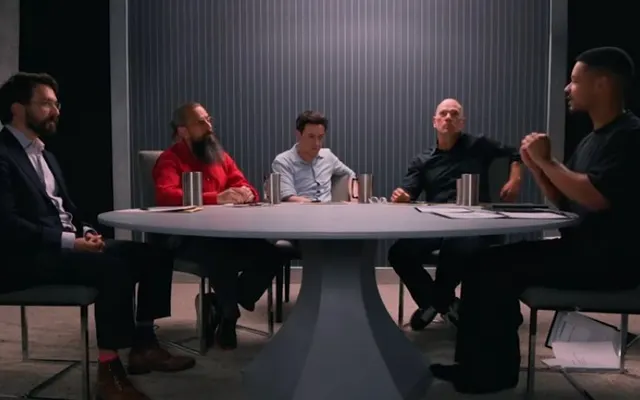
The Diary of a CEO AI Emergency Debate

Third-party speaker-labeled transcript of the debate; use only Ed’s turns. Asked for his probability of human extinction (00:05:53), he stands at zero if we are talking strictly about AI, because superintelligence is undefined and he does not think LLMs lead to it, while saying a data-center-driven climate disaster could potentially eradicate humanity. Near the end (02:20:51), asked about a more-than-10% chance of existential harm within ten years, he says “I mean, look, 1%” and turns to non-existential harms such as grid failures. These are different endpoints and horizons: never describe the first answer as 1%, or turn the later 1% answer into a probability for human extinction from AI itself.

singjupost.com
Wo stehst du?
Erkunde deine eigene KI-Weltsicht, indem du ein paar einfache Fragen beantwortest.
Deine eigene Weltsicht abbilden