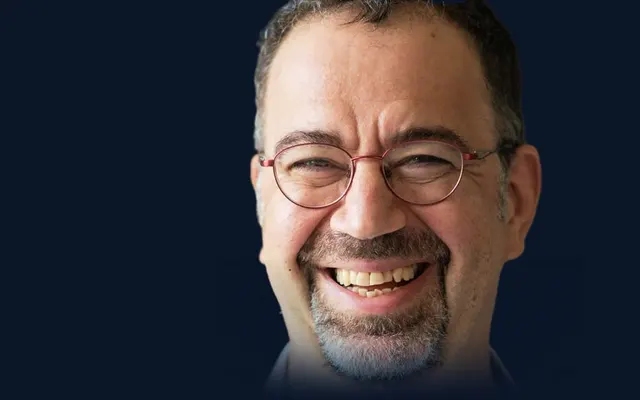
Daron Acemoglu

Daron Acemoglu

x.com/DAcemogluMIT

Economist who argues AI should be steered toward making workers more capable rather than replacing them, so its gains are widely shared.

Wie wird KI die Welt verändern?

Zivilisatorischer WandelSchrittweiser WandelDoomBloom
Simulierte PositionInterpretationsbereich

Horizontal: sein geäußerter Doom–Bloom-Ausblick. Vertikal: Ausmaß der Transformation.

Doom–Bloom: 31 von 100. Ausmaß der Transformation: 62 von 100. Interpretationsbereiche: horizontal 25 bis 36, vertikal 50 bis 75. Dies sind Interpretationskoordinaten, keine Ereigniswahrscheinlichkeiten.

P(doom) von Daron Acemoglu · abgeleitet

≈3%

0%100%

Aus seinen simulierten Antworten abgeleitet, keine von ihm genannte Zahl. Plausibler Bereich: unter 15%.

Wovon seine Einschätzung abhängt

Eine zentrale Annahme

But capabilities do not translate automatically into broad prosperity.
Antwort 2

Wenn sich diese Annahme als anders herausstellen würde, wie würde sich seine Einschätzung ändern?

Weitere Details

Erwartete Vorteile

Es werden begrenzte oder eng verteilte Vorteile erwartet.

36 / 100

Geringe AuswirkungenTransformative Auswirkungen

Interpretationsbereich von 33 bis 33 auf der qualitativen Skala.

Erwartete Schäden

Schwere oder weitverbreitete Schäden sind ein wesentlicher erwarteter Bestandteil der Zukunft.

63 / 100

Geringe AuswirkungenTransformative Auswirkungen

Interpretationsbereich von 33 bis 67 auf der qualitativen Skala.

Menschlicher Einfluss

Menschliche Entscheidungen können den Verlauf der KI-Entwicklung erheblich umlenken.

74 / 100

Geringer EinflussStarker Einfluss

Interpretationsbereich von 50 bis 75 auf der qualitativen Skala.

Entwicklungstempo

Die Entwicklung leistungsfähigerer KI stoppen oder erheblich verlangsamen.

Simulierte Position: Die Entwicklung unter den genannten Schutzvorkehrungen fortsetzen.

Die Entwicklung leistungsfähigerer KI beschleunigen.

Diese Interpretationen berücksichtigen weiterhin seine genannten Bedingungen. Vorteile und Schäden können beide erheblich sein. Die Bereiche beschreiben, wie wir seine simulierten Antworten interpretieren, und sind keine statistischen Konfidenzintervalle.

Wo stehst du im Vergleich zu Daron Acemoglu?
Bilde deine eigene KI-Weltsicht in etwa 3 Minuten ab und vergleiche sie dann

Ähnliche Weltsichten

Vordenker, deren simulierte Weltsichten der von Daron Acemoglu am nächsten kommen

Was Daron Acemoglu über KI gesagt hat

Acemoglu argues that AI should be steered toward complementing workers rather than replacing them, and that its direction needs democratic input.

  1. “My instinct is that democratic voice is essential, and relying too much on technocracy could be both dangerous and counterproductive.”

    Post on X
  2. “Agentic AI is not AGI, in my opinion, but it’s pretty impressive.”

    Justified Posteriors podcast
  3. “The problem rather may be that the way that frontier labs are training these models is leading to distorted intelligence.”

    Post on X
  4. “AI tools can also be designed to complement workers, enhancing their capabilities and productivity, rather than substituting for them.”

    Nature essay
  5. “What is at stake is not only shared prosperity, but also our democratic system.”

    Nature essay

Wörtlich aus den verlinkten Quellen, geprüft am 3. Okt. 2026

Simulierte Einschätzung

Frage 1

Was glaubst du, was KI für unsere Zukunft bedeutet – und warum?

AI could be transformative, but its effects are not predetermined by capability alone. The crucial question is which technologies we choose to build. Today, investment incentives push strongly toward automation—using machines to replace workers and concentrate decision-making. That path may increase some measures of productivity, but it can also widen inequality, diminish the value of human expertise, and leave large parts of society with less economic and political power. A better path would use AI to create new human tasks: helping nurses make better judgments, enabling teachers to personalize instruction without displacing them, or giving workers information that expands their responsibilities. Simply making an existing task faster is not necessarily pro-worker; what matters is whether demand for human skills and expertise increases across the economy. This direction will not emerge automatically from competition among a few powerful firms. It requires public research, procurement, worker participation, better investment in skills, and democratic debate about what futures we want. I do not think we must stop innovation. But slowing particular developments to steer resources toward socially valuable applications can be entirely sensible. Ultimately, a future of high output but economically dispensable citizens would threaten dignity and democratic equality. Income transfers alone cannot replace the standing people gain from contributing meaningfully to society.

Frage 2

Taking benefits and harms together, what overall impact do you expect AI to have?

On the current trajectory, I expect AI’s overall impact to be much less beneficial—and more unequal—than its technical capabilities suggest. We are devoting enormous resources to automation, surveillance, and replacing routine and professional tasks, rather than creating new tasks that make human expertise more valuable. That can shift income and decision-making power toward capital owners and a small group of firms while weakening workers’ economic standing and, ultimately, democratic voice. I do expect real benefits: better information, useful scientific tools, and productivity gains in some applications. Agents make the economic potential larger than I previously estimated, though I have not recalculated a number. But capabilities do not translate automatically into broad prosperity. Organizational adoption is slow, experimentation remains a bottleneck, and whole occupations are difficult to automate. The investment boom could therefore produce disappointing returns, while still worsening inequality. So my expected outcome is not technological catastrophe or effortless abundance. It is a mixed but unnecessarily disappointing future: genuine advances alongside concentrated gains, labor displacement, and weakened human expertise. That is the likely direction under present incentives, not an inevitability. Public procurement, research funding, worker voice, skills investment, and tax reform could redirect AI toward complementing people and producing much broader benefits.

Frage 3

Setting aside good or bad: how much do you think AI will ultimately change the world—a little, a lot, or completely?

A lot. AI could be genuinely transformative, changing how firms organize work, how people acquire information, how science proceeds, and how income and power are distributed. But I would not say “completely.” Capabilities are not the same as economy-wide transformation: adoption is slow, organizations are difficult to redesign, experimental bottlenecks remain, and entire occupations contain many tasks that cannot simply be handed to machines. The scale of change will also depend on direction. AI built mainly to automate existing tasks will reshape labor markets and concentrate power, even if its aggregate productivity contribution is less dramatic than advertised. AI designed to create new human tasks could instead transform work by making expertise more valuable. So I expect large change, but its form and social significance will be determined as much by institutions and investment choices as by the models themselves.

Frage 4

What’s your rough gut-feel chance that AI causes human extinction or a similarly permanent catastrophe? A number or “no idea” is fine.

No idea. I do not have the technical expertise or evidence to assign a meaningful probability to human extinction from AI.

Quellen

Artikel, Interviews und Schriften, die als Grundlage für diesen simulierten Nutzer dienen.

Wo stehst du?
Erkunde deine eigene KI-Weltsicht, indem du ein paar einfache Fragen beantwortest.
Deine eigene Weltsicht abbilden